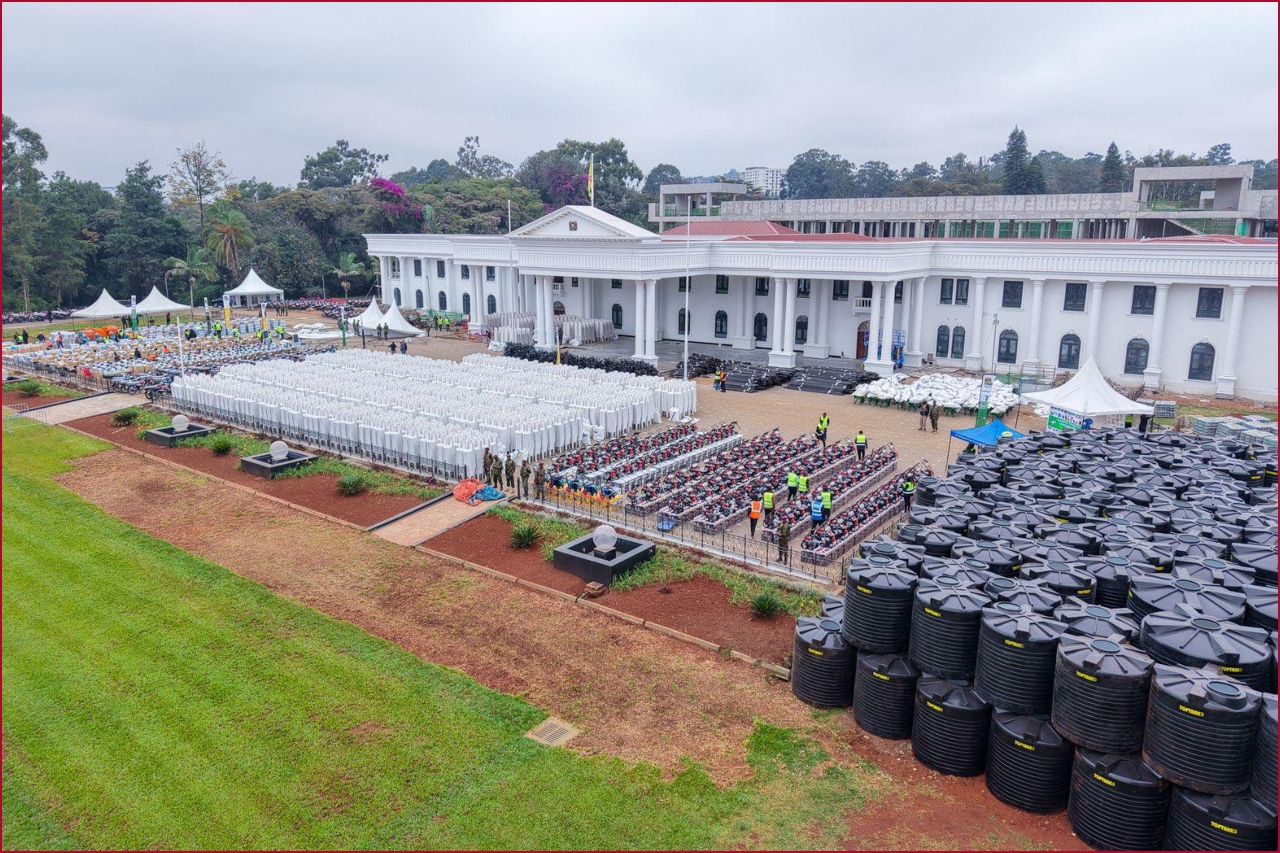
State House spent Sh18.55 billion in the financial year ending June 2026, more than double the amount originally approved by Parliament, according to figures attributed to the Controller of Budget.
More than a third of that expenditure—Sh6.73 billion—was recorded under the broad heading of “other expenses”.
The description does not identify the programmes, services or beneficiaries for which the money was used.
That gap has prompted questions about transparency at the centre of government, particularly after President William Ruto announced in June 2024 that confidential budgets in public offices would be abolished.
But while the expenditure has widely been described as “secret”, the available figures do not establish that all the Sh6.73 billion was formally classified as confidential spending.
What they show is that a substantial amount of public money was placed under a category that provides little information about what taxpayers received in return.
Budget more than doubled
State House entered the 2025-26 financial year with an allocation of about Sh8.58 billion.
By the end of June, its reported expenditure had reached Sh18.55 billion—an increase of almost Sh10 billion, or about 116% above the original allocation.
The figures mean State House spent an average of approximately Sh50.8 million every day during the financial year.
The Sh6.73 billion listed as “other expenses” accounted for about 36% of the institution’s entire expenditure. Spread across the year, that category alone was equivalent to more than Sh18 million a day.
The Controller of Budget’s findings indicate that State House had already used more than 90% of its annual allocation by December 2025, halfway through the financial year.
The National Treasury subsequently authorised additional expenditure under Article 223 of the Constitution. The expenditure was later presented to and approved by Parliament.
Article 223 allows the government to spend money that Parliament has not initially appropriated when the allocated amount is insufficient or when an unforeseen need arises.
Its use has repeatedly attracted scrutiny because money can be withdrawn before lawmakers approve it retrospectively.
The central question is therefore not only how State House exceeded its original budget, but why the additional requirements were not fully anticipated and presented to Parliament before the financial year began.
What is included in ‘other expenses’?
The published accounts do not offer a detailed breakdown of the Sh6.73 billion.
“Other expenses” can cover legitimate government costs that do not fit neatly into standard budget lines. However, such a broad classification makes it difficult for the public to determine how much went towards hospitality, official events, visiting delegations, transport, security or other operations.
State House hosted numerous delegations during the year, including political leaders, religious groups, traders, teachers and representatives of professional organisations.
One of the largest gatherings brought about 10,000 teachers to State House in September 2025. Those attending were reportedly given Sh10,000 each as transport reimbursement, potentially placing the payments alone at about Sh100 million before catering, tents, transport, security and production expenses were considered.
The available accounts do not establish whether those payments came from the Sh6.73 billion recorded under “other expenses”.
An itemised disclosure would be needed to make that connection.
Was the confidential vote abolished?
Following the deadly anti-Finance Bill demonstrations in June 2024, President Ruto announced several austerity measures, including the removal of confidential budgets from executive offices.
The latest accounts have raised questions about how fully that promise was implemented.
However, describing the entire “other expenses” allocation as a confidential vote risks going beyond what the published figures prove.
The two terms are not automatically interchangeable. A budget line may be poorly explained without necessarily being legally classified as confidential.
The accountability concern remains: a public institution should ordinarily provide enough information for Parliament, auditors and taxpayers to understand the purpose of significant expenditure.
State House has not publicly provided a complete itemised account explaining the Sh6.73 billion.
Spending comes as public debt rises
The expenditure was recorded during a period of growing pressure on Kenya’s public finances.
According to the Controller of Budget figures, public debt rose from Sh11.8 trillion in June 2025 to approximately Sh13 trillion in June 2026.
Debt servicing increased from Sh1.59 trillion to Sh1.77 trillion over the same period. Domestic borrowing accounted for the larger share of the country’s debt stock.
That borrowing competes with businesses and households for credit and leaves the government with less money for hospitals, schools, roads and county services.
The report also points to substantial spending on security operations.
The National Treasury reportedly spent Sh12.62 billion on emergency security operations, compared with Sh11.39 billion recorded by the National Police Service.
The State Department for Internal Security and National Administration recorded expenditure of Sh21.53 billion.
Some security expenditure cannot be disclosed publicly without compromising operations. But confidentiality does not remove the need for oversight by authorised institutions, including Parliament and the Auditor-General.
Questions State House must answer
The figures leave several questions unresolved:
- What goods, services and activities were financed through the Sh6.73 billion?
- How much was spent on official functions, visiting delegations and reimbursements?
- Why did State House require almost Sh10 billion more than its original allocation?
- Which needs arose after Parliament approved the budget?
- What proportion of the additional expenditure was authorised under Article 223?
- What auditing arrangements were used where expenditure could not be disclosed publicly?
The Controller of Budget has placed the total expenditure in the public record. What remains missing is a detailed explanation of what a substantial portion of that money purchased.
Until that information is provided, the debate will remain centred on a simple question: how did an institution allocated Sh8.58 billion end the year spending Sh18.55 billion?
You may also like
Category: Business
Related Video: Dolly Parton’s Family Announces Her Passing in Emotional Tribute
Related Explainer: EXPLAINER: How can one mother give birth to five babies? The science behind Kenya’s rare quintuplets
 Facebook
 Twitter / X
 WhatsApp
 LinkedIn
 Telegram
 Reddit