
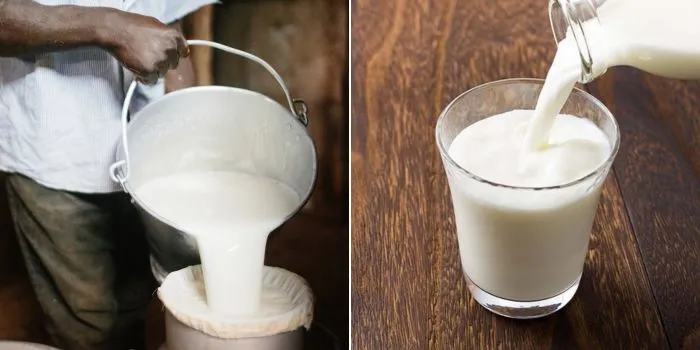
Kenya’s milk shortage has produced an apparent contradiction.
Consumers are finding empty supermarket shelves and paying more for milk, while farmers in some parts of the country say milk is still available.
Both things can be true.
The shortage is increasingly looking like a problem involving not only how much milk cows produce, but how milk moves from farmers through chilling centres, processors and distributors before reaching shops.

The Kenya Dairy Board says formal deliveries to processors declined by 3.7%, from 84.4 million litres in June to 81.3 million litres in July. Preliminary indications suggest another decline in August.
Dry and cold conditions in important dairy-producing regions have reduced pasture and fodder.
The National Drought Management Authority reported that 52.2% of monitored arid and semi-arid counties recorded milk production below the long-term average in July.
Consumers are now seeing the consequences.
A survey of Nairobi retailers found empty or partially stocked shelves. Some wholesalers restricted customers to five packets instead of a carton, while some milk dispensers limited customers to one litre.
Fresh milk was selling at about Sh61 to Sh65 in some outlets, while Waithaka Dairy Centre had increased fresh milk from Sh70 to Sh80 a litre.
But drought alone does not explain everything.
Kieni Dairy Products chief executive Solomon Maina told The Star that working capital, processing costs and distribution problems may also be contributing.
“The shortage may not necessarily be caused by farmers,” he said, pointing to areas such as Nyandarua where conditions have been better.
Another factor is where farmers sell their milk.
If informal traders offer Sh70 or Sh80 a litre and pay immediately, farmers have an incentive to bypass processors offering lower prices or delayed payments.
Processors can also decide how to use scarce raw milk. Higher-value products such as yoghurt, cheese and ice cream may offer different commercial returns from ordinary pasteurised milk.
That helps explain why “there is milk on farms” does not necessarily mean packets will appear in supermarkets.
The dairy chain depends on aggregation, refrigeration, transport, processing, packaging and distribution. A bottleneck anywhere along that route can create a shortage at retail level.
The Kenya Dairy Board expects conditions to improve when the October to December rains restore pasture and fodder.
Until then, the real story may not simply be “Where did Kenya’s milk go?”
It may be: why is Kenya’s dairy system struggling to move available milk from the right farms to the consumers who need it?
You may also like
Category: Business
Related Video: Dolly Parton’s Family Announces Her Passing in Emotional Tribute
Related Explainer: Explainer: Your car burns at a garage: Who pays for the damage?
 Facebook
 Twitter / X
 WhatsApp
 LinkedIn
 Telegram
 Reddit