
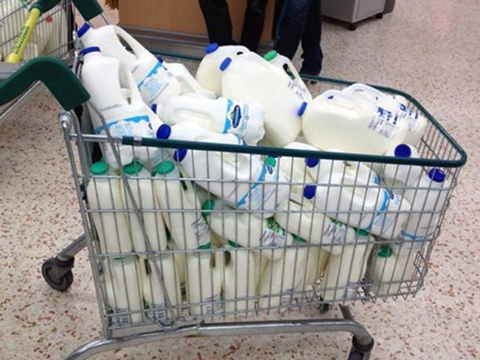
Kenyans are being urged not to empty supermarket shelves in response to reports of milk shortages, even as declining supplies from farmers put pressure on some processors and retailers.
The Kenya Dairy Board (KDB) says the country is not facing a major milk shortage and that current supply constraints are temporary.
KDB chairperson Genesio Mugo said the shortfall was about 3 per cent, describing it as too small to justify panic buying.
“We want to send a message that the shortage is not big at all; it is minimal, and therefore there is no cause for alarm and no need for panic buying,” Mugo said on Thursday.
His comments come days after the Board acknowledged that some parts of the country were experiencing low stocks, fewer milk brands and pack sizes, and delays in restocking shops.
So while there may not be a nationwide shortage, some consumers are already seeing the effects.
Several outlets have reported thin or empty shelves, with some retailers restricting the number of packets customers can buy.
That difference is important.
The milk is still available. The problem is that supply has tightened in parts of the market.
Milk deliveries to processors have fallen
The latest figures from the Dairy Board show that the pressure is real.
Formal milk deliveries to processors fell from 84.4 million litres in June to 81.3 million litres in July 2026, a decline of 3.7 per cent.
The Board is still compiling August figures but says preliminary indications point to a further fall.
KDB has attributed the decline largely to seasonal production conditions in major dairy-producing areas.
Pasteurised milk has been more affected than some longer-life products, including extended shelf-life and UHT milk.
The Board says retail prices remain generally stable, although some areas experiencing tighter supplies have recorded price increases.
Consumers have reported increases of around Sh3 to Sh5 for some 500ml packets in parts of the country.
For households already dealing with high food and transport costs, even a small increase matters.
Why farmers are producing less milk
The bigger problem starts much earlier than the supermarket shelf.
Principal Secretary for Livestock Development Jonathan Mueke says inadequate rainfall has put pressure on pasture and animal feed.
“The real issue is fodder pressure due to lack of rains, and we need to ensure that our cows do not go hungry,” Mueke said.
When pasture dries up, farmers have to buy more feed or reduce the amount given to their animals.
That can quickly affect milk production.
The timing is also significant.
Kenya is coming out of a relatively dry period in several parts of the country, while farmers are waiting for the October–December rains to improve pasture and water availability.
The Kenya Meteorological Department's forecasts show that rainfall patterns will vary considerably across the country, meaning not every dairy-producing area will get relief at the same time.
For dairy farmers, therefore, the issue is not simply whether it rains.
It is whether there is enough pasture and affordable feed to keep cows producing consistently.
Government turns to animal feed
The government says it is working on both immediate and longer-term measures.
Mueke said a drought mitigation meeting chaired by President William Ruto agreed to ease pressure on the animal-feed market by allowing yellow maize to supplement maize used for livestock feed.
The intention is to improve access to feed during the difficult production period.
The government is also looking at what farmers earn for their milk.
Mueke said farmers need better returns if they are to remain in the formal dairy market.
“We will ensure the farmers get the right pricing for their milk so that they do not send it informally,” he said.
The Kenya Dairy Board is expected to monitor milk movement more closely and work with industry players to ensure available supplies reach consumers through formal channels.
Why panic buying could make the problem worse
Mugo's warning about panic buying is not without reason.
When consumers buy more than they normally would because they fear a shortage, retailers can run out faster.
That can create the appearance of a deeper shortage and encourage even more people to stock up.
The result is a cycle that can put additional pressure on already stretched supplies.
Mugo urged consumers to continue buying according to their normal household needs.
“Let us just buy the normal amount that you require, because there will be milk tomorrow,” he said.
But the reassurance does not mean consumers' concerns are imaginary.
The Dairy Board itself has acknowledged low stocks and delayed replenishment in some outlets.
Consumer groups have also raised concerns over intermittent shortages and possible price increases if supply constraints persist.
The more immediate question is therefore whether processors and distributors can keep shelves stocked while farmers cope with rising feed pressure.
Dairy farmers are caught in the middle
The current situation exposes a problem that is bigger than supermarket shelves.
Farmers need feed and a price that makes milk production worthwhile.
Processors need enough raw milk to keep their plants running.
Retailers need reliable deliveries.
And consumers want affordable milk every day.
A disruption at any point in that chain can eventually reach the household.
This is particularly important for Kenya because milk is a daily staple for millions of families, while the dairy sector supports a large network of smallholder farmers.
The government has announced interventions such as improved milk collection and cooling infrastructure and measures aimed at improving dairy herd productivity.
But these are longer-term solutions.
For now, the immediate pressure remains feed.
Dairy Board warns against unsafe milk
As consumers search for alternatives, Mugo has also warned against buying unpasteurised milk from hawkers or outlets that are not authorised to sell processed milk.
He cautioned against traders who alter milk by adding water, chemicals or other substances before selling it.
“We are sending a warning to you that please, that is not right, don’t do that, and if you are caught by the law, then the law will take its course,” he said.
The warning comes as consumers look for milk wherever they can find it.
The Board's message is that a shortage on one supermarket shelf should not push shoppers towards unsafe or unregulated products.
The real test comes with the rains
For now, Kenya's milk situation appears to be one of tightened supply rather than a nationwide shortage.
That distinction should matter to consumers.
There is no need to stockpile milk.
But there is also a real supply problem that the government and dairy industry need to address.
The 3.7 per cent fall in formal deliveries is already visible in parts of the retail market, while preliminary August figures suggest the decline may have continued.
The coming weeks will therefore be crucial.
If the October–December rains improve pasture and water supplies as expected in many parts of the country, farmers could get some relief.
If feed pressure persists, however, the strain could continue to move along the supply chain — from the cow, to the processor, to the shop and eventually to the family breakfast table.
For consumers, Mugo's message is simple: buy what you need, but don't panic.
For the dairy sector, the bigger challenge is making sure there is enough milk to buy in the first place.
You may also like
Category: News
Related Video: What Dangote’s proposed Lamu oil refinery could mean for East Africa
Related Explainer: Inside Kenya’s crude supply puzzle as Dangote prepares to break ground in Lamu
About the Author
Maureen Onyango is a journalist passionate about storytelling, life coaching and spiritual lessons. She studied at the Kenya Institute of Management and enjoys telling stories that inform, inspire and empower communities.
 Facebook
 Twitter / X
 WhatsApp
 LinkedIn
 Telegram
 Reddit