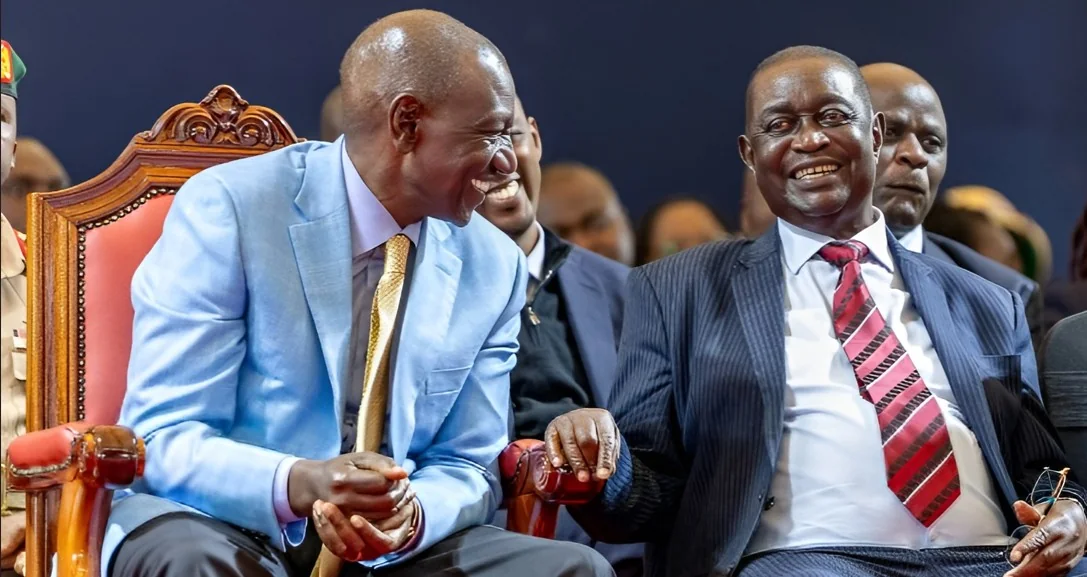
The United Democratic Alliance (UDA) and the Orange Democratic Movement (ODM) are stepping up efforts to build a common platform for the 2027 General Election, with a joint manifesto intended to turn their broad-based government partnership into a shared campaign agenda.
UDA said on Tuesday, 27 October, that the committee drafting the document had made significant progress. The manifesto will be based on President William Ruto’s Bottom-Up Economic Transformation Agenda (BETA), with the coalition promising to build on existing programmes and address areas where delivery has fallen short.
But beyond the policy language, the exercise faces a bigger political test: whether the two parties can agree on how power will be shared and convince voters that their partnership can deliver tangible results.
In its statement, UDA said the manifesto would be guided by the philosophy of “Usawa Ni Sawa”, which it describes as a commitment to equity and wider prosperity across the country.
“The new coalition manifesto will be anchored on the Usawa Ni Sawa philosophy, accelerating national transformation by building on existing achievements, addressing outstanding challenges, and delivering greater prosperity for every Kenyan,” the party said.
The document is expected to set out the coalition’s priorities ahead of the August 2027 polls. However, the statement did not provide a final list of commitments or a publication date for the completed manifesto.
From government partnership to election alliance
The manifesto process follows months of negotiations between UDA and ODM as they seek to formalise their political cooperation ahead of the next election.
At a joint leaders’ retreat in Naivasha in August, Ruto and ODM leader Oburu Oginga agreed to establish separate technical teams: one to develop the joint manifesto and another to work on the proposed coalition agreement and power-sharing arrangements.
Ruto said at the time that the manifesto should draw on the parties’ shared priorities and the aspirations expressed by Kenyans through national consultations. The aim was to create a common programme that could be presented to voters in 2027.
The manifesto committee has five nominees from each side. The team includes Isaac Wanuge, Mariam Abdullahi Mbaruk, Leonida Kerubo Omosa, Carey Orege and Bernard Muok from ODM, alongside Emmanuel Nzai, Daniel Mwai, Bramwell Simiyu, Mohammed Hassan and Cecilia Ngetich from the Kenya Kwanza side. Party executive directors Nicodemus Bore and Oduor Ong’wen also participate in the process in ex-officio roles.
The team is expected to examine the parties’ previous policy commitments, identify areas of agreement and propose priorities for the next term.
That work could prove politically sensitive. A joint manifesto must reconcile the two parties’ policy positions while also assessing what the current administration has delivered since the 2022 election.
BETA faces a test of delivery
UDA says the new manifesto will build on BETA, the economic programme that has guided the Ruto administration.
The agenda has focused on areas including agriculture, affordable housing, small businesses, healthcare and employment. The coalition says it wants to consolidate progress while addressing outstanding challenges.
Yet a manifesto is only as persuasive as its record of delivery. The drafting process will need to distinguish between programmes already implemented, commitments still in progress and new promises for the next administration.
For voters, that distinction matters. A document that repeats existing policy goals without explaining what has been achieved, what remains unfinished and how future commitments will be funded may struggle to answer concerns about the cost of living, jobs and access to public services.
The committee’s task, therefore, is not simply to combine two parties’ policy statements. It must produce a credible programme that explains what the coalition intends to do differently and how it will measure progress.
Running-mate question remains unresolved
The manifesto talks are also unfolding alongside negotiations over political positions in a possible joint election campaign.
ODM leaders have argued that the party’s support for Ruto’s re-election should translate into a meaningful share of power. The deputy president’s position has emerged as one of the main points of contention, with ODM figures backing Cooperatives Cabinet Secretary Wycliffe Oparanya as a possible running mate.
Deputy President Kithure Kindiki currently holds the office and has supporters within the UDA camp who favour his retention. The competing interests mean that a policy agreement alone may not be enough to settle the coalition’s future arrangements.
The two parties have not publicly announced a final running-mate agreement. It would therefore be premature to treat any individual as the confirmed choice.
The coalition must also navigate disagreements over other political arrangements, including whether its partners will coordinate candidates in particular regions. ODM has pushed for discussions on joint tickets and electoral zoning, while UDA has resisted some of those proposals.
These questions go to the heart of whether the partnership can function as a unified electoral alliance rather than simply an arrangement between parties sharing government.
NADCO commitments add pressure
The coalition is also under pressure to demonstrate progress on reforms linked to the National Dialogue Committee (NADCO), whose recommendations helped shape cooperation between political rivals.
A recent report by the Daily Nation identified stalled reforms and disagreements over power-sharing as major challenges facing the emerging alliance. The report noted that delays in electoral reforms could complicate preparations for the 2027 election. <Cite refs={["turn186616search5","turn186616search7"]}/>
That leaves the parties with two related tasks: agreeing on what they want to promise voters and showing what they have already delivered.
For ODM, the challenge is to demonstrate that its participation in the broad-based government has produced meaningful policy gains and political influence. For UDA, the task is to show that the partnership strengthens its governing agenda without creating uncertainty over leadership and accountability.
The final manifesto could provide a framework for addressing those questions, but the document itself will not resolve every dispute.
A promise that voters will judge
The coalition’s emphasis on Usawa Ni Sawa places equity at the centre of its proposed message. To make that promise meaningful, the manifesto will need to explain how the government intends to distribute opportunities, improve services and address regional disparities.
The parties will also need to show how they plan to finance their commitments and assess progress. Those details will matter more to many voters than the slogans attached to the campaign.
For now, UDA says the drafting committee has made progress. The next challenge is to turn that work into a document that both parties can support and that voters can scrutinise.
As the 2027 election approaches, the coalition will be judged not only on whether it can agree on a common manifesto, but also on whether it can settle its internal differences and offer a convincing account of what it has delivered—and what it intends to do next.
You may also like
Category: Politics · Related Topic: William Ruto
Related Video: What Dangote’s proposed Lamu oil refinery could mean for East Africa
About the Author
Maureen Onyango is a journalist passionate about storytelling, life coaching and spiritual lessons. She studied at the Kenya Institute of Management and enjoys telling stories that inform, inspire and empower communities.
 Facebook
 Twitter / X
 WhatsApp
 LinkedIn
 Telegram
 Reddit