
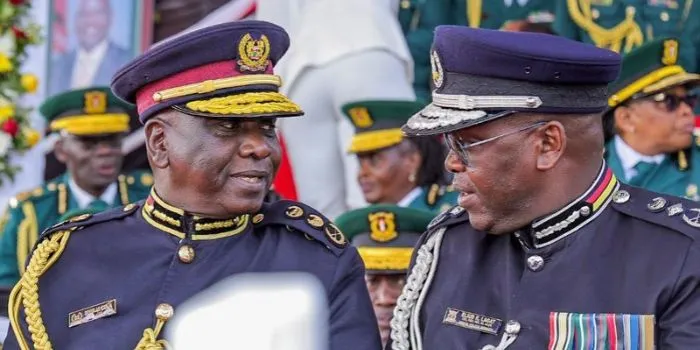
Kenya’s General Service Unit (GSU) wants modern drones, surveillance equipment and a formally established tactical unit to strengthen its response to security threats. But as the country prepares for the 2027 General Election, senior officers have also raised concerns about unpaid allowances and poor living conditions at remote camps.
The concerns emerged during a parliamentary oversight visit to a police facility in Magadi, Kajiado County, where officers appealed for additional funding to improve both operational capacity and staff welfare.
GSU Superintendent of Police Dr Benard Kibet Yegon told the National Assembly’s Departmental Committee on Administration and Internal Security that the unit needed better equipment, advanced training and a permanent specialised tactical formation to handle emergencies beyond the capacity of regular police officers.
“Strengthening GSU capability through targeted modernisation and technological advancement is essential to enhance operational effectiveness and preparedness in addressing the evolving national security environment,” Yegon told the committee.
The requests come as security agencies prepare for election-related deployments and continue to confront threats including attacks by Al-Shabaab militants.
GSU wants a permanent specialised tactical unit
Yegon asked the government to formally establish the specialised tactical unit as a permanent formation within the Kenya Police Service.
He argued that a dedicated unit would strengthen the police response to high-risk incidents and emergencies requiring specialist skills. He also called for more funding for tactical training, modern ammunition, drones and surveillance technology to improve intelligence gathering and operational readiness.
The GSU further proposed establishing five operational commands and strengthening coordination with other security agencies.
The requests reflect the unit’s desire to improve its ability to respond to changing security threats. However, the proposal for a permanent tactical formation would require consideration by the relevant authorities, and the committee has not announced that it has been approved.
Kenya has already been expanding some specialised police capabilities. In September, 495 newly trained officers were posted to the GSU’s Recce Tactical Sub Unit, which handles high-risk operations. The officers were expected to undergo further specialised training before qualifying for full deployment.
The new requests therefore point to a broader question for the security sector: whether equipment, training, staffing and funding can keep pace with the demands placed on specialised police teams.
Officers report poor housing in remote camps
Alongside the demand for modern equipment, GSU officers told the committee that some personnel deployed to remote and harsh environments were living in deteriorating tents that offered inadequate protection from the weather.
Yegon called for funding to construct semi-permanent accommodation, saying officers needed suitable places to rest between assignments.
“The tents are really wearing us out. We could put up some semi-permanent structures in these camps. It requires a little funding,” he said.
The appeal highlights a practical challenge facing officers deployed far from established police facilities. Poor accommodation can affect their welfare and recovery between demanding assignments, even as they are expected to remain ready for emergencies.
The officers also sought a review of the monthly deployment allowance paid to members of the specialised unit. Yegon said they currently receive KSh2,000 and asked the government to consider increasing it in view of the risks and demands of their duties.
He also called for the implementation of a special operations allowance previously approved for another specialised formation, saying GSU officers had yet to benefit from the arrangement.
The requests would require budgetary consideration. No new allowance rate has been announced.
Lagat discloses KSh70 million allowance arrears
Deputy Inspector-General of the Kenya Police Service Eliud Lagat told MPs that the service was struggling with KSh70 million in outstanding allowances, with some officers reportedly going two or three months without payment.
“I would humbly ask that you have a look at it in the next supplementary budget. Already, we have arrears of Sh70 million. Most officers have not been paid for the last two or three months, and we are struggling with that issue,” Lagat said.
The disclosure adds urgency to the funding debate. While the GSU is seeking investment in advanced equipment and new operational structures, the police service is also asking for money to meet existing obligations to officers.
Lagat separately requested KSh60 million to support the transfer and rotation of officers across the country, including those serving in Mandera, Busia and Narok.
He said the movements should be completed before December 2026 to give officers time to familiarise themselves with their new areas of deployment ahead of the 2027 elections.
The request is intended to help officers understand local conditions before polling-related operations begin. However, the proposed transfers and the funding needed to support them have not yet been confirmed.
MPs consider requests ahead of supplementary budget
The committee, chaired by Narok West MP Gabriel Tongoyo, said it would review the requests and identify priorities for possible inclusion in the forthcoming supplementary budget. Other proposals would be considered during the next financial year’s budget estimates.
That leaves several demands competing for funding: tactical equipment, training, accommodation, improved allowances and the transfer of officers ahead of the elections.
The visit was part of Parliament’s oversight role in assessing whether public funds allocated to the security sector are meeting operational needs. The committee’s response indicates that the requests will be considered, but it does not guarantee that every proposal will receive funding.
For the GSU, the challenge is twofold. It wants technology and specialised capabilities to respond to increasingly complex threats, while also seeking better conditions for officers expected to carry out those operations.
As the country approaches the 2027 General Election, the outcome of the budget discussions will help determine which of those priorities can be addressed first.
You may also like
Category: News
Related Video: What Dangote’s proposed Lamu oil refinery could mean for East Africa
About the Author
Maureen Onyango is a journalist passionate about storytelling, life coaching and spiritual lessons. She studied at the Kenya Institute of Management and enjoys telling stories that inform, inspire and empower communities.
 Facebook
 Twitter / X
 WhatsApp
 LinkedIn
 Telegram
 Reddit