
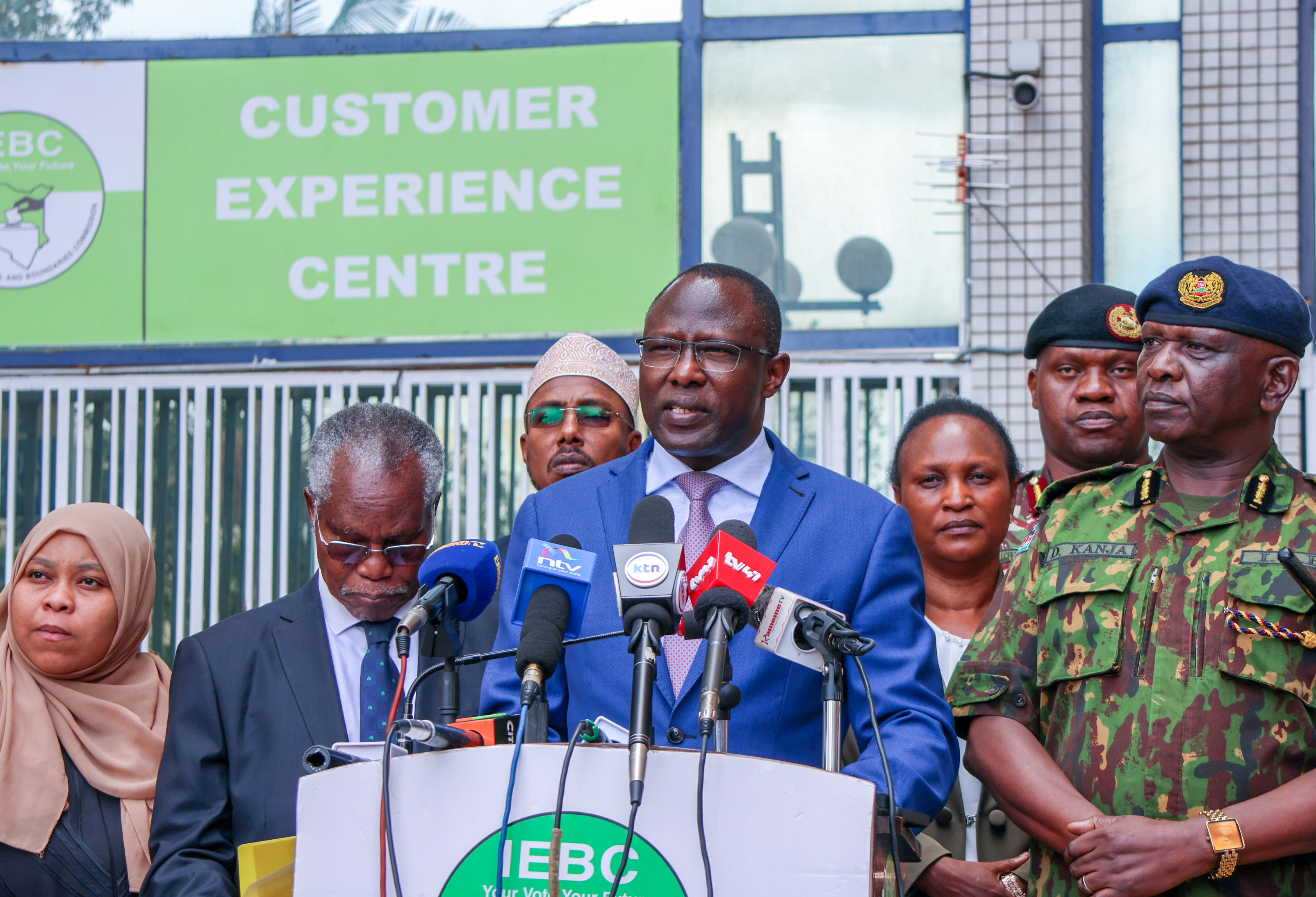
The Independent Electoral and Boundaries Commission is facing growing pressure over the credibility of the 2027 General Election as political leaders raise questions about voter registration, election technology and the integrity of the voters’ roll.
The scrutiny comes as the commission accelerates preparations for the August 10, 2027 election, with less than a year remaining before Kenyans return to the polls.
Political leaders from different camps have increasingly focused their attention on the voter register.
Some politicians have alleged that foreigners could be illegally registered as voters, particularly in border areas. IEBC has rejected previous claims of voter smuggling along the Kenya-Uganda border, saying no credible evidence had been presented to the commission to substantiate the allegations.
The debate has nevertheless placed the electoral body under pressure to demonstrate transparency throughout the registration process.
Questions have also emerged over the technology that will be used to identify voters, transmit results and manage other critical parts of the election.
Kenya's recent elections have repeatedly been accompanied by disputes over electoral technology, voter registers and the handling of presidential results.
That history means IEBC will be under intense scrutiny long before polling stations open.
Political leaders have increasingly called for greater public access to the voter register to allow parties, candidates and citizens to scrutinise the data.
The commission faces the difficult task of preparing an election while simultaneously rebuilding public confidence in the institution.
The credibility battle is therefore likely to move beyond political rallies.
Procurement decisions, voter registration figures, technology contracts, election regulations and the handling of disputes are expected to become major political issues over the coming months.
For IEBC, the challenge will be demonstrating that its systems can withstand scrutiny from competing political interests while protecting the integrity of the electoral process.
With campaigns intensifying, virtually every major decision taken by the commission is likely to be examined through the increasingly competitive politics of 2027.
You may also like
Category: News · Related Topic: 2027 Elections
Related Video: What Dangote’s proposed Lamu oil refinery could mean for East Africa
Related Explainer: Kenya G-to-G Oil Deal Explained: How It Works, Who Supplies the Fuel and Why It Is Controversial
 Facebook
 Twitter / X
 WhatsApp
 LinkedIn
 Telegram
 Reddit