
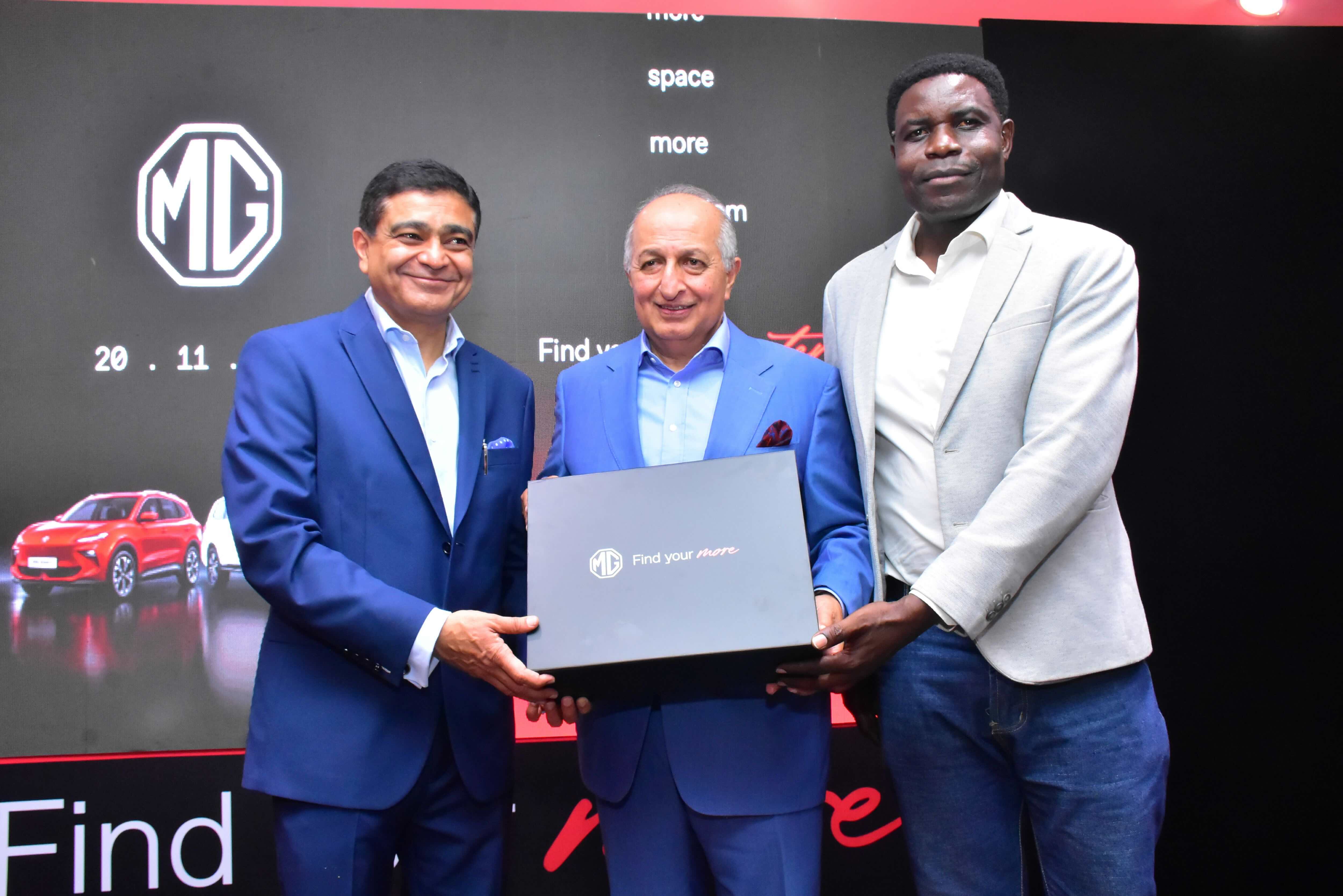
The automotive group is targeting Kenya’s growing electric mobility market with locally assembled vehicles, new servicing infrastructure and partnerships with institutional fleet operators.
Simba Corporation has officially launched British-origin automotive brand MG in Kenya, announcing plans to expand local vehicle assembly and strengthen the country's transition to electric mobility.
The company, which will serve as MG's exclusive distributor in Kenya, unveiled a range of electric and petrol-powered vehicles targeting private motorists, businesses and institutional fleet operators.
The launch builds on a previously announced KSh 1 billion investment in a dedicated electric vehicle assembly line at Associated Vehicle Assemblers (AVA) in Mombasa.
According to Simba Corporation, the production line employs 60 technicians trained in battery handling and electrical systems and is already assembling electric vehicles for public transport and ride-hailing operators.
The company plans to extend production to MG models as part of efforts to strengthen domestic automotive manufacturing and reduce reliance on fully imported vehicles.
Simba Corporation Group Chairman Adil Popat said the investment reflects the company's long-term commitment to developing Kenya's electric mobility industry.
"Kenya has an opportunity to build more of this industry at home, and we are committed to playing our part through sustained investment and partnerships," Popat said.
The company also plans to transform its Aspire Centre in Westlands, Nairobi, into a specialised electric vehicle workshop offering charging facilities, diagnostics and maintenance services.
The investment comes as Kenya's automotive industry increasingly explores electric mobility, although charging infrastructure, vehicle affordability and maintenance capacity remain important considerations for prospective buyers.
Simba Corporation says MG has already secured more than 40% of Kenya's new electric passenger car and SUV sales in 2026, a market share figure that could not be independently verified.
Institutional customers are emerging as an important market for the brand.
Drive Electric has purchased 25 MG vehicles, while Kenya Power has acquired four electric vehicles for its fleet, delivered to its Ruaraka Transport Hub.
Simba Corporation Group Chief Executive Dinesh Kotecha said the company's strategy focuses on making electric vehicles commercially viable by addressing purchase costs, operating expenses and aftersales support.
"Customers want to know what the car costs, what it will cost to run and what support they will get long after they drive away," Kotecha said.
Four models have been introduced to the Kenyan market.
The fully electric MG S5 SUV starts at KSh 7.2 million and offers a manufacturer-stated range of up to 450 kilometres, while the MG4 EV Urban hatchback starts at KSh 4.5 million.
The petrol-powered MG ZS SUV is priced from KSh 4.5 million, while the seven-seat MG D90 starts at KSh 8.3 million.
The company is offering introductory prices on the first 100 vehicles.
Simba Corporation also previewed the MG S6 EV AWD, an electric SUV expected to enter the Kenyan market in 2027, with pre-bookings already open.
Founded in Britain in 1924, MG is now owned by Chinese automotive manufacturer SAIC Motor.
The Kenyan launch marks another step in the country's developing electric vehicle market, with local assembly and reliable aftersales services likely to play an increasingly important role in consumer adoption.
Category: Business
Related Video: What Dangote’s proposed Lamu oil refinery could mean for East Africa
Related Explainer: Explainer: Your car burns at a garage: Who pays for the damage?
 Facebook
 Twitter / X
 WhatsApp
 LinkedIn
 Telegram
 Reddit