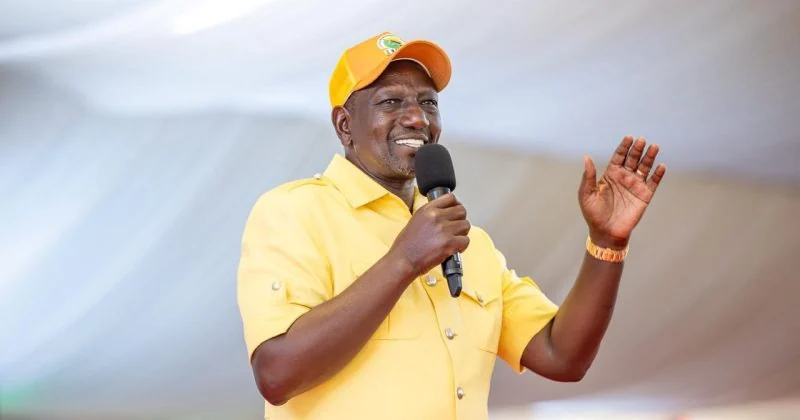
President William Ruto has presented his administration’s fourth State of the Nation Address as evidence that his Bottom-Up Economic Transformation Agenda is delivering results. But when the claims are measured against the promises in his 2022 election manifesto, the picture is more complicated.
The Government points to cheaper fertiliser, higher maize production, millions registered under the Social Health Authority, thousands of homes under construction and new employment opportunities.
These are significant developments. Yet they do not answer a more difficult question: how many of the specific targets promised to Kenyans have actually been achieved?
The November 18 address offers a useful opportunity to examine that question as the administration enters the final stretch of its five-year term.
The Kenya Kwanza manifesto, titled The Plan: The Bottom-Up Economic Transformation Agenda 2022–2027, identified five central areas for economic change: agriculture, micro, small and medium enterprises (MSMEs), housing, healthcare, and the digital superhighway and creative economy.
It also made wider commitments on education, infrastructure, manufacturing, employment and governance. Some came with clear numerical targets, financial allocations and deadlines.
A comparison of those promises with the President’s latest account reveals progress in several areas, but also important gaps in the information presented.
Agriculture: More maize, but has the farmer transformation target been met?
Agriculture is one of the sectors where the President offered figures that can be compared directly with the manifesto.
The 2022 plan identified high production costs, low farm productivity and reliance on food imports as major challenges. It promised to turn two million food-deficit farmers into surplus producers, with a target of at least KSh50,000 in revenue per acre.
It also committed to reducing dependence on basic food imports by 30 per cent. This included raising domestic oil-crop production from five to 25 per cent and increasing the share of rice supplied locally from 18 to 40 per cent.
In his address, Ruto said the price of a 50-kilogramme bag of fertiliser had fallen from KSh7,500 in 2022 to KSh2,000 this year. He reported that 38.5 million bags of subsidised fertiliser had been distributed and nearly nine million farmers registered.
The President also said maize production had increased from 44.3 million bags in 2022 to 71 million bags last year. Imports, he added, had fallen from 9.9 million to 3.3 million bags.
He cited improved earnings in coffee, tea and dairy as further evidence that agricultural reforms were benefiting producers.
The figures point to progress in maize production and access to subsidised farm inputs. However, they do not establish whether the two-million-farmer target has been achieved.
Nor did the address provide a clear update on the manifesto’s specific commitments for rice and edible-oil production.
The next test is whether higher national output is translating into better and more reliable earnings for ordinary farmers, while keeping food affordable for consumers.
Housing: Construction activity is not the same as completed homes
Affordable housing remains one of the administration’s most visible programmes.
The manifesto promised to raise annual housing supply to 250,000 units and increase the proportion of affordable homes from two per cent to 50 per cent. It also set an ambitious target of growing the number of mortgages from about 30,000 to one million.
Ruto reported that more than 313,000 homes were at different stages of construction across the 47 counties. More than 1.37 million Kenyans had registered on the Boma Yangu platform, while over 18,000 had been allocated homes.
He also said the programme had generated more than 1.1 million employment opportunities and reserved over KSh61 billion in orders for Jua Kali artisans.
The figures show the scale of the programme, but they need to be read carefully.
The 313,000 figure includes homes at different stages of construction. It cannot be treated as the number of completed houses available for occupation.
Similarly, registering on Boma Yangu does not mean an applicant has secured a home. An allocation is also different from a completed purchase and occupation.
The address did not provide a breakdown of completed units, homes handed over, the proportion of total housing supply that is affordable, or progress towards the one-million-mortgage target.
The distinction matters because the manifesto promised an annual delivery rate of 250,000 homes. The public needs to know how many units have actually been completed each year, rather than only how many have entered the construction pipeline.
Jobs: More than two million opportunities, but what counts as employment?
Employment was central to the 2022 manifesto.
The document estimated that about 800,000 young Kenyans joined the labour market every year after completing school, college and university. It argued that formal businesses could absorb only a fraction of them, leaving many others in unstable or informal work.
In his address, Ruto cited three major employment figures: 350,000 Kenyans who had secured work in the digital economy, 707,000 who had obtained jobs abroad through international labour mobility, and more than 1.1 million employment opportunities generated by the affordable housing programme.
Added together, the figures amount to about 2.16 million reported opportunities.
But that total should not automatically be presented as 2.16 million separate people in sustained employment.
The categories measure different things. The housing figure refers to employment opportunities generated by construction activity, while the digital and overseas figures are presented as people who secured work. The address did not provide enough information on the reporting periods, duration of employment, repeat engagements or possible overlap between categories.
The manifesto did not set one overall numerical job-creation target against which the three figures can simply be judged. It did, however, describe the annual pressure from new entrants into the labour market.
The real test is whether these opportunities provide stable incomes, decent working conditions and lasting livelihoods. For Kenyans who remain unemployed or dependent on irregular work, the quality and sustainability of the jobs matter as much as the headline total.
Healthcare: SHA registration has expanded, but access remains the real test
The transition from the National Hospital Insurance Fund (NHIF) to the Social Health Authority (SHA) is among the administration’s most significant policy changes.
The manifesto promised wider health insurance coverage, including full public health insurance coverage for senior citizens within three years and people living with disabilities within 18 months.
Ruto said 33.7 million Kenyans had registered with SHA, compared with approximately eight million people registered under NHIF in 2022.
He also reported that 53,465 cancer patients were receiving treatment under the scheme, alongside 24,468 dialysis patients. Another 89 people had undergone kidney transplants.
The President described the expansion as a major step towards protecting families from the financial burden of illness.
“Today, 25.7 million more Kenyans, our brothers and sisters, are part of this same system,” he said. “People we may never meet, families whose names we may never know, but when illness comes to their door, we'll be there.”
The figures suggest a substantial expansion in registration and reported treatment support. However, registration is not the same as effective health cover.
The public also needs to know how many registered members are actively contributing or receiving government-funded cover, whether patients can access services when they need them, and whether hospitals are being paid promptly.
The address did not provide a specific account of whether the manifesto’s time-bound coverage commitments for older people and persons with disabilities had been met.
For SHA, the most meaningful measure will be whether Kenyans can obtain treatment without facing unexpected bills, denied services or long delays.
Education: More teachers and classrooms, but wider reforms remain
Education was another area in which the President highlighted increased public investment.
Ruto said the Government had employed 100,000 teachers over four years and was preparing to recruit another 20,000. He also reported that 23,000 classrooms had been built, with 1,600 laboratories under construction and being equipped.
The annual education allocation, he said, had risen from KSh521 billion in the 2022/23 financial year to KSh784 billion in the current financial year.
The manifesto had promised to address the teacher shortage within two financial years. It also committed to improving teacher training, connecting schools to the internet, strengthening technical education and increasing investment in research and development.
The recruitment figures represent a substantial expansion of the teaching workforce. However, the address did not provide a detailed assessment of the remaining teacher shortage, distribution of new teachers between schools, or progress on the wider commitments involving school connectivity and technical training.
A larger education budget is important, but it does not automatically translate into better learning outcomes. The public also needs evidence on whether schools have enough teachers, learning materials, laboratories and reliable funding to deliver quality education.
MSMEs: Hustler Fund activity does not answer the KSh250 billion pledge
The manifesto placed small businesses at the centre of its economic plan.
It promised to commit KSh50 billion annually to affordable financing for MSMEs. Over the five-year period, that represented a financial commitment of KSh250 billion.
It also promised to establish an MSME Business Development Centre in every ward, alongside an industrial park and business incubation centre in every TVET institution.
In his address, Ruto reported that borrowers had accumulated KSh94 billion in borrowing through the Hustler Fund. More than seven million Kenyans had established credit records, while about 700,000 had become established borrowers with access to higher credit limits.
He also said more than 133,000 young entrepreneurs had received training, mentorship and KSh50,000 each through the NYOTA programme.
These initiatives demonstrate activity in small-business financing and youth enterprise support. But the KSh94 billion in cumulative borrowing is not the same as a verified KSh250 billion allocation to MSMEs under the manifesto.
The address did not provide a consolidated account of how much of the promised annual financing was made available, how many businesses benefited, or whether the ward-level business centres and TVET industrial parks had been established as planned.
The distinction is important. Access to credit can help a business get started, but affordable financing, business support, markets and the ability to expand are what determine whether enterprises can survive and employ more people.
Digital economy: A major fibre target remains short of completion
The digital economy was presented in the manifesto as both an infrastructure and employment priority.
The plan promised a 100,000-kilometre national fibre-optic network within five years. It also committed to making 80 per cent of government services available online through digitisation and automation.
Ruto highlighted the growth of digital employment, saying 350,000 Kenyans had secured work in the digital economy.
However, the address did not provide an updated figure for the length of fibre laid or the proportion of government services available online.
There is already evidence that the fibre target remains a significant work in progress. A September 2026 report by the Daily Nation, citing ICT Cabinet Secretary William Kabogo, said 37,000 kilometres had been installed against the 100,000-kilometre target.
A separate Government progress report for the 2024/25 financial year said the national project combines 52,000 kilometres under the Government component with 48,000 kilometres expected from the private sector. It reported that 5,910 kilometres of Government fibre had been laid during the period under review.
The digital employment figures are important, but connectivity is the infrastructure on which much of that growth depends. Without a clear account of fibre coverage and online public services, it is difficult to measure how close the country is to the manifesto’s original digital targets.
Infrastructure: Projects announced, but completion needs clearer reporting
The President also cited thousands of kilometres of roads under construction and outlined further plans for major transport corridors, dams and irrigation.
The manifesto had promised to complete all roads that were already under construction, while also setting out a wider infrastructure programme.
The November address highlighted ongoing work and future ambitions, including major water and irrigation projects. But it did not provide a comprehensive project-by-project account showing which original road commitments had been completed, which remained under construction and which had stalled.
The distinction between a project being announced, funded, started and completed is essential.
For communities waiting for roads, water or irrigation infrastructure, the real measure is whether the project is finished and delivering the promised service.
Governance and human rights: Compensation is not the same as institutional reform
Some of the manifesto’s most consequential promises were not about construction or economic growth. They concerned the independence of public institutions, police accountability and the protection of human rights.
The 2022 plan pledged to establish and operationalise the Judiciary Fund, strengthen the financial independence of the police and anti-corruption institutions, and create a Special Tribunal for Gross Human Rights Violations and Enforced Disappearances.
It also promised stronger police oversight, action against extrajudicial killings and the establishment of the Coroner-General’s Office.
In his address, Ruto acknowledged that State wrongdoing had occurred during protests and said officers who used unlawful force should be held accountable.
He reported that KSh1.2 billion had been paid to 1,476 verified beneficiaries from a KSh2 billion allocation for compensation of protest-related victims.
The compensation programme is a significant development for people affected by demonstrations and their families. But it does not, on its own, answer the manifesto’s wider commitments on accountability and institutional reform.
The address did not provide a detailed status report on the proposed special tribunal, the Judiciary Fund or the other specific institutional pledges.
The President also cited the passage of the Conflict of Interest Act and legislation on Government-owned enterprises, as well as the expansion of digital government services.
These are relevant governance developments. Still, the public needs a clearer account of how the wider promises on institutional independence, police accountability and human rights have been implemented.
The absence of a detailed update in the address does not prove that a commitment has been abandoned. It does, however, leave an important gap in the administration’s own assessment of its record.
The bigger question: What has been completed, and what remains on paper?
Ruto’s November 18 address presents a Government that can point to measurable activity in agriculture, healthcare, education, housing and employment.
The reduction in fertiliser prices, higher reported maize production, expansion of SHA registration, recruitment of teachers and construction of homes are all important parts of that record.
But the 2022 manifesto set out more than broad ambitions. It included specific targets: transforming two million farmers, delivering 250,000 homes annually, expanding mortgages to one million, committing KSh50 billion a year to MSME financing and laying 100,000 kilometres of fibre.
It also made time-bound promises on health insurance and detailed commitments on governance and human rights.
Several of these targets were not addressed with enough detail in the latest speech to establish whether they have been met.
There is also a need to distinguish between money allocated and money spent, people registered and people served, homes under construction and homes completed, and job opportunities announced and stable employment secured.
That is not to dismiss the progress reported by the President. It is to apply the same standard to the Government’s record that voters should apply to any administration seeking another mandate.
Ruto urged leaders to judge proposals by evidence and commitments by results. His 2022 manifesto provides the benchmarks for that assessment.
With the 2027 election approaching, Kenyans will need more than a list of programmes and headline figures. They will need a clear account of what was promised, what was delivered, what fell short and why.
You may also like
Category: News · Related Topic: William Ruto
Related Video: Dolly Parton’s Family Announces Her Passing in Emotional Tribute
Related Explainer: Ebola contact tracing: Why the 21-day window matters in Kenya’s response
About the Author
Maureen Onyango is a journalist passionate about storytelling, life coaching and spiritual lessons. She studied at the Kenya Institute of Management and enjoys telling stories that inform, inspire and empower communities.
 Facebook
 Twitter / X
 WhatsApp
 LinkedIn
 Telegram
 Reddit