
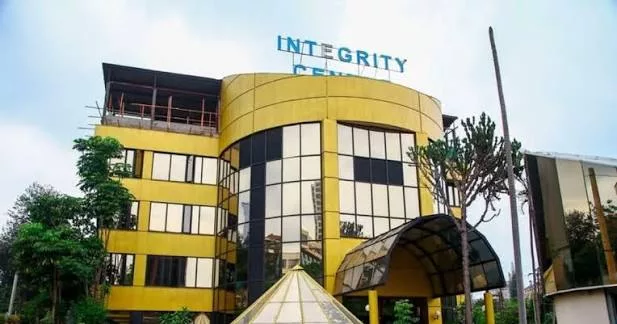
The long-running Ruaraka land saga has entered a new phase, with the Ethics and Anti-Corruption Commission (EACC) demanding about Sh2.5 billion from 25 individuals and companies over a compensation payment that courts have now found unlawful.
Among those served with demand notices are former Education Cabinet Secretary Fred Matiang’i, former Education Principal Secretary Richard Belio Kipsang, and former National Land Commission (NLC) chairperson Muhammad Abdalla Swazuri.
The notices give the recipients seven days from August 10, 2026, to repay the money. The amount comprises the Sh1.5 billion principal, together with interest calculated at 12 per cent a year, according to the EACC.
The commission says it will move to court if the demands are not met.
This is no longer simply a dispute over who owned the land. The latest development puts the focus squarely on who should bear the financial cost of a compensation deal that Kenya's courts have declared unlawful.
Why the EACC is demanding the money
The dispute centres on about 13.5 acres of land in Ruaraka, Nairobi, where Ruaraka High School and Drive-In Primary School stand.
The Court of Appeal, in a judgment delivered on July 3, 2026, upheld an earlier Environment and Land Court decision that the land was already public property and therefore could not lawfully be compulsorily acquired by the government.
The appellate court found that the land had been surrendered to the government without payment as a condition attached to the subdivision of the larger parcel.
The EACC says this meant there was no legal basis for the government to pay compensation for the same land years later.
The commission has now moved from seeking accountability to attempting to recover the public money.
EACC says its demand notices seek recovery from the recipients jointly and severally, meaning it is seeking to hold them collectively responsible for the amount claimed.
The commission has also warned that its criminal investigations are at an advanced stage and that those found culpable could face prosecution.
Matiang’i and Kipsang named in recovery push
In its notice to Matiang’i, the EACC alleges that the former Education CS initiated the compulsory acquisition process despite being aware that the land was public and was occupied by two government schools.
The commission has accused him of conduct it says amounted to abuse of office and a breach of public trust.
Kipsang has received a similar demand.
According to the EACC, he was involved in initiating the acquisition process during his tenure as PS in the State Department for Early Learning and Basic Education.
These are allegations by the anti-graft agency and are not findings of criminal guilt against the individuals named. Any criminal liability would have to be established through the appropriate legal process.
The NLC's role
The recovery effort also targets former NLC officials.
Swazuri, who chaired the commission at the time, is accused by the EACC of approving a compensation valuation of about Sh3.27 billion and directing the Ministry of Education to release funds to the NLC.
The EACC says Sh1.5 billion was eventually paid to a private company.
The commission alleges that procedures under the Land Act were not properly followed.
Former NLC officials Tom Konyimbih and Joash Oindo have also been named in the recovery process over their alleged involvement in approving or recommending the valuation.
The case has a long paper trail.
A 2018 Senate inquiry into the transaction recorded that Sh1.5 billion had already been paid and raised questions about the acquisition of land occupied by the two public schools.
An Auditor-General's report for the 2018/19 financial year also raised concerns over the government's expenditure of Sh1.5 billion on the compensation, including whether the spending had received the required budgetary approval.
Court ruling changed the stakes
The latest court decision is particularly significant because it settled a central question in the dispute: whether the state could compulsorily acquire the land.
The Court of Appeal agreed that the land had already become public property through its earlier surrender to the government.
The judges therefore found that the state could not subsequently treat the same parcel as private land and pay compensation for acquiring it.
The EACC says the ruling effectively clears the way for recovery of the Sh1.5 billion.
The commission welcomed the judgment in July, saying it confirmed findings from its investigations and allowed it to pursue both financial recovery and possible criminal proceedings.
The next battle could be in court
The seven-day deadline does not automatically mean the government will recover the entire Sh2.5 billion.
Those named in the notices can challenge the EACC's demands through the courts.
Indeed, two companies linked to the late businessman Francis Mburu have already gone to court seeking to stop the commission from recovering the Sh1.5 billion paid in the transaction.
That means the next stage of the Ruaraka saga could shift from the question of whether the compensation was lawful to whether and how the money can be recovered from those the EACC has identified.
For taxpayers, the stakes are substantial.
The original compensation involved Sh1.5 billion. With interest now pushing the EACC's demand to roughly Sh2.5 billion, the dispute has grown into one of the more closely watched public asset recovery cases in Kenya.
The outcome will also test how effectively public institutions can recover money after courts determine that a government transaction was unlawful.
You may also like
Category: News · Related Topic: Kenya Politics
Related Video: Dolly Parton’s Family Announces Her Passing in Emotional Tribute
About the Author
Maureen Onyango is a journalist passionate about storytelling, life coaching and spiritual lessons. She studied at the Kenya Institute of Management and enjoys telling stories that inform, inspire and empower communities.
 Facebook
 Twitter / X
 WhatsApp
 LinkedIn
 Telegram
 Reddit