
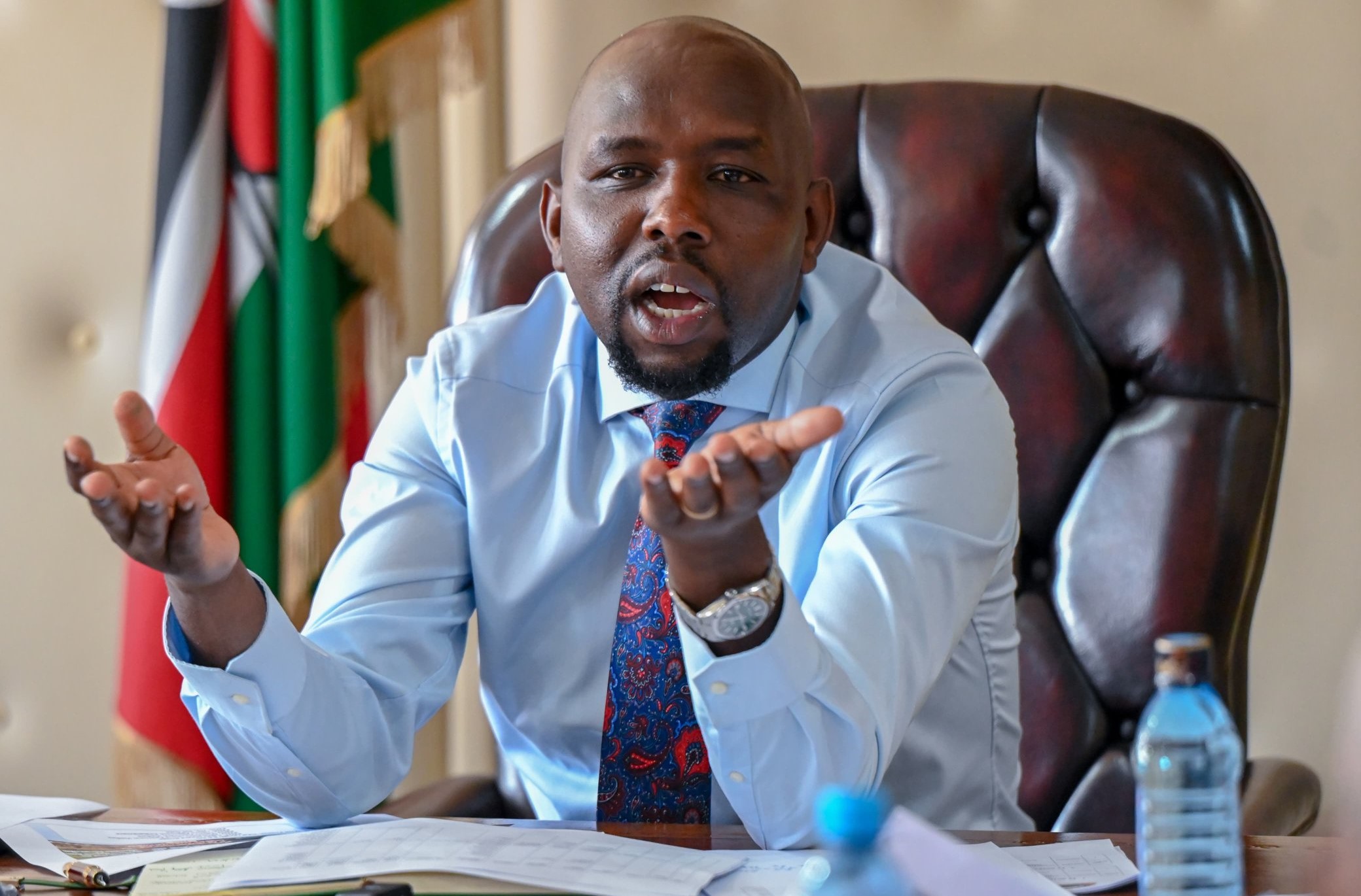
Interior Cabinet Secretary Kipchumba Murkomen has dismissed growing concerns over political violence and the presence of alleged goons at political events, insisting that Kenya is safe and accusing politicians of manufacturing a national crisis.
But coming from the Cabinet secretary responsible for the country’s internal security, Murkomen’s remarks raise a more troubling question: at what point does dismissing concerns about political violence become part of the problem?
In the speech, Murkomen repeatedly insisted that there is “no crisis in Kenya” and accused unnamed politicians of exaggerating isolated incidents for political purposes.
“Kenya is safe and we must focus,” he said.
He went further, describing the alleged crisis as “the bankruptcy of ideas of politicians who are unable to campaign” and accusing them of fighting among themselves before attempting to turn their disputes into a national issue.
The comments place the Interior CS in an increasingly political role in the debate over security, particularly at a time when concerns about political intimidation and the use of organised groups at political gatherings are becoming harder to separate from the broader national conversation.
‘Stop creating a crisis’
Murkomen appeared particularly dismissive of calls for greater attention to alleged goons.
“You expect I have not talked about goons,” he said, arguing that the issue should not distract the security establishment from its wider responsibilities.
He told his audience that the Inspector-General of Police, the Principal Secretary and himself were doing their jobs, insisting that the country remained secure.
“Please stop that conversation,” he said.
The repeated insistence that Kenya is safe, however, does not by itself answer concerns about whether political actors are using violence, intimidation or organised groups to influence political competition.
For an Interior CS, the responsibility is arguably not merely to reassure the public, but to demonstrate that allegations threatening public order are being independently investigated and that those responsible—regardless of their political affiliation—will face the law.
A troubling message on political violence
Perhaps the most consequential part of Murkomen’s remarks was his suggestion that some of those raising concerns about goons were themselves politically connected to people associated with violence.
He said:
“When I keep quiet, don't think that I don't know. We know. I'm just laughing at them.”
That statement may have been intended as a warning to political actors who, in his view, are manufacturing controversy. But it also raises questions about what exactly the security agencies know, what evidence they possess and why the public should be satisfied with assurances rather than enforcement.
If security agencies know that particular individuals or political networks are linked to organised violence, the public interest is not served by officials merely saying they know. The expectation should be that investigations are conducted, evidence is presented where appropriate and the law is applied without political favour.
Security cannot become a political argument
The Interior Ministry occupies a uniquely sensitive position in Kenya's political environment. Its mandate includes maintaining public order and protecting citizens, making neutrality essential.
That makes politically charged language from the person in charge of internal security particularly significant.
Rather than treating concerns over political violence as “hype” or a “figment of your imagination”, the government faces a more constructive test: can it convincingly demonstrate that every political actor enjoys equal protection, that violence will not be tolerated and that security agencies will act independently when allegations arise?
Kenya's history has shown the potentially devastating consequences when political competition becomes intertwined with intimidation and violence. Dismissing warnings without addressing their substance risks deepening public distrust—particularly among citizens who expect the state to protect them from politically motivated violence rather than debate whether the threat exists.
Murkomen's message was unequivocal: there is no national security crisis and Kenya is safe.
The harder question is whether that assurance is supported by sufficient transparency and action—or whether repeatedly declaring that there is no crisis risks making the security debate itself a political contest.
For the country's top security officials, the standard should be higher than political rhetoric. Security must be demonstrated through impartial enforcement, accountability and protection of every Kenyan, including political opponents of those in power.
You may also like
Category: News
Related Video: What Dangote’s proposed Lamu oil refinery could mean for East Africa
Related Explainer: Ebola contact tracing: Why the 21-day window matters in Kenya’s response
 Facebook
 Twitter / X
 WhatsApp
 LinkedIn
 Telegram
 Reddit