
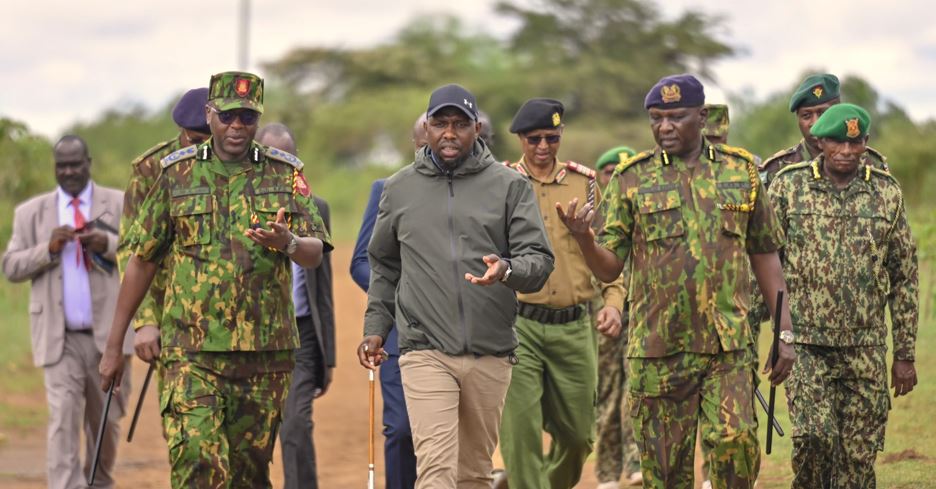
A new group of General Service Unit officers is preparing to formally enter police service after months of intensive training, bringing fresh attention to one of Kenya's most visible and sometimes controversial policing units.
The recruits are due to take part in a passing-out parade on Friday following training at the National Police College campuses.
Their training has covered physical fitness, tactical operations, discipline and other aspects of paramilitary policing.
But the message from the country's police leadership ahead of graduation has focused on something less physical: impartiality.

Inspector-General of Police Douglas Kanja told recruits during a final rehearsal that their loyalty must be to the Constitution rather than political interests.
“As members of the National Police Service, you should never take political sides,” Kanja said.
“Our allegiance is to the Constitution of Kenya and the rule of law.”
It is a significant instruction as Kenya moves closer to the 2027 General Election.
The GSU is deployed in some of the country's most difficult security situations, including public disorder, high-risk operations and areas facing serious security threats.
That means the public often encounters its officers at moments of tension.
The recruits have undergone about nine months of physical, tactical and intellectual training.
Deputy Inspector-General Eliud Lagat has said the officers have reached the required standards of proficiency, discipline and preparedness.
For the new officers, however, graduation marks the beginning rather than the end of their test.
Police officers operate under the Constitution and the National Police Service Act, which require policing to respect human rights and fundamental freedoms.
Public confidence therefore depends not only on whether an officer can respond to danger, but also on how that officer treats an unarmed civilian, a suspect, a protester or someone whose political views differ from their own.
Kanja told the recruits to act lawfully and ethically, protect vulnerable people and treat members of the public with dignity.
Those principles will become especially important as political activity increases ahead of the next election.
Kenya does not lack heavily trained police officers.
The larger challenge for every graduating class is turning that training into professional, impartial policing when the uniform meets the public.
You may also like
Category: News
Related Video: Dolly Parton’s Family Announces Her Passing in Emotional Tribute
Related Explainer: EXPLAINER: Why Kenya’s aviation workers are striking — and what travellers need to know
 Facebook
 Twitter / X
 WhatsApp
 LinkedIn
 Telegram
 Reddit