
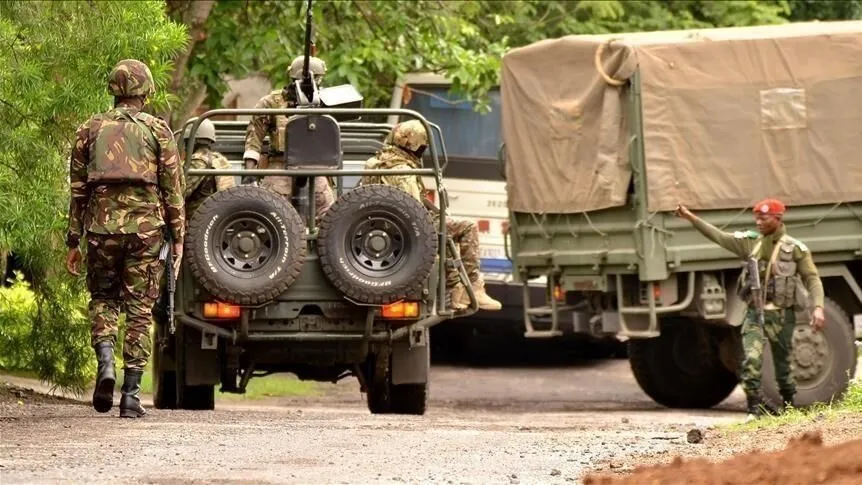
KINSHASA — A ceasefire monitoring mission has begun work in eastern Democratic Republic of Congo, marking a potentially important step in efforts to end a conflict that has displaced communities, disrupted trade and drawn in regional powers.
The mission deployed Monday to Minembwe in South Kivu, becoming the first field operation under a monitoring mechanism established through the Qatar-mediated peace process between the Congolese government and the Rwanda-backed AFC/M23 rebel movement.
Its arrival comes at a critical moment.
The two sides have agreed to a new roadmap for peace negotiations, but fighting has continued in eastern Congo, with both sides accusing the other of violating previous ceasefire commitments.
That leaves the monitors with a difficult task: establishing what is actually happening on the battlefield and giving the peace process a mechanism for responding when the ceasefire is broken.
Why the monitors matter
Peace agreements are only as effective as their ability to change what happens on the ground.
The monitoring mission is designed to verify allegations of ceasefire violations and provide a more standardised way of reporting incidents.
That could help reduce one of the biggest problems in the conflict: competing claims.
When fighting occurs, the Congolese government and AFC/M23 can each accuse the other side of starting the violence.
An independent verification mechanism could provide evidence about what happened, when it happened and who was responsible.
The first mission is taking place in Minembwe, an area that has experienced renewed fighting in recent weeks.
But the ceasefire is already under pressure
The timing of the deployment is significant.
AFC/M23 accused Congolese government forces on Monday of shelling a village near Minembwe, saying civilians were killed and residents displaced.
The Congolese army had not immediately responded to Reuters' request for comment.
That means the monitors are arriving in an environment where the ceasefire is already being contested.
Their first challenge will therefore be establishing whether reported incidents represent genuine violations and, if so, how the peace process responds.
How did Congo get here?
The current peace process follows a major AFC/M23 offensive last year in which the group seized eastern Congo's two largest cities.
The fighting dramatically worsened an already long-running conflict in the country's mineral-rich east.
The government has accused Rwanda of backing M23, while Rwanda has repeatedly rejected the accusation and raised concerns about armed groups such as the Democratic Forces for the Liberation of Rwanda, or FDLR, operating in eastern Congo.
The conflict has displaced large numbers of civilians and created a humanitarian crisis across North and South Kivu.
The peace effort therefore involves much more than simply getting two armed groups to stop shooting.
It involves the security concerns of Congo, Rwanda and neighbouring countries, as well as the interests of international powers seeking access to the region's mineral resources.
Qatar's role
Qatar has been mediating the talks between the Congolese government and AFC/M23.
The two sides signed a peace framework in Doha in November 2025, establishing the basis for negotiations towards a comprehensive settlement and ceasefire monitoring.
The latest development follows five days of meetings in Switzerland from August 17 to 21.
The parties agreed on a roadmap setting out the sequence and timelines for further negotiations and welcomed progress in operationalising the Expanded Joint Verification Mechanism Plus, known as EJVM+.
A reconnaissance mission was conducted on August 20 with logistical support from the United Nations mission in Congo ahead of Monday's deployment.
There is also a US angle
The Congo peace process is not being handled through a single diplomatic channel.
The Qatar-led talks are running alongside US-mediated negotiations between Congo and Rwanda.
Washington hopes those discussions can help stabilise eastern Congo and encourage Western investment in the region's mineral sector.
That makes the conflict strategically important well beyond the Great Lakes region.
Eastern Congo contains minerals that are important to modern industries, including technologies linked to batteries, electronics and the energy transition.
Greater stability could potentially unlock investment.
But investors are unlikely to commit heavily to an area where armed groups control territory and transport routes remain vulnerable.
A small but important confidence-building step
There have already been some signs of movement.
Earlier this month, Congolese authorities released 15 prisoners and handed them over to AFC/M23, the first known prisoner transfer under the peace arrangement.
The development does not mean the conflict is ending.
But prisoner transfers, ceasefire monitoring and an agreed negotiating roadmap are the kinds of practical steps that can build confidence between enemies who have spent years fighting.
The challenge is making sure those steps continue.
What happens if the monitors succeed?
If the verification mechanism works, it could give diplomats something they have lacked: a more credible picture of what happens when fighting breaks out.
That could make it easier to pressure whichever side is found responsible for violating the ceasefire.
It could also help create conditions for humanitarian access and the eventual return of displaced people.
For eastern Congo's civilians, that is ultimately the measure that matters.
Not how many meetings diplomats hold.
Not how many agreements are signed.
But whether families can return home without fearing another attack.
And if it fails?
The consequences could be serious.
If fighting continues despite the monitoring mechanism, confidence in the Doha process could collapse.
A return to major fighting could trigger fresh displacement and deepen tensions between Congo and Rwanda.
It could also make it harder to attract investment into eastern Congo's mining sector and prolong the region's humanitarian crisis.
The monitors therefore face a test that is bigger than simply recording ceasefire violations.
They have to help turn a peace agreement on paper into a change in the lives of people on the ground.
What to watch next
The next few weeks will reveal whether the mechanism can operate effectively in an active conflict zone.
Watch for:
- Verified ceasefire violations
- Whether both sides accept the monitors' findings
- Further prisoner transfers
- Progress in the Doha negotiations
- Humanitarian access to affected communities
- Whether fighting around Minembwe and other areas decreases
- Progress in US-mediated Congo-Rwanda talks
For now, the deployment represents cautious progress rather than a peace breakthrough.
Eastern Congo has had many peace agreements before. The real test of this one begins where the fighting is happening.
You may also like
Category: International
Related Video: What Dangote’s proposed Lamu oil refinery could mean for East Africa
Related Explainer: Ebola contact tracing: Why the 21-day window matters in Kenya’s response
 Facebook
 Twitter / X
 WhatsApp
 LinkedIn
 Telegram
 Reddit