
Kenya is preparing to release 98 people being monitored for Ebola in phases from November 3, as health officials report progress in containing the outbreak.
The planned releases come after the first 20 contacts completed the mandatory 21-day monitoring period and returned home on October 26 without developing symptoms.
The Ministry of Health has maintained that the remaining contacts will be cleared in four groups, subject to individual health assessments. This means the release process will be gradual rather than a single discharge of everyone still under observation.
Kenya has recorded nine confirmed cases of Bundibugyo virus disease, the Ebola strain responsible for the outbreak, including two deaths. The last confirmed case was reported on October 20.
All nine cases have been linked to the same cluster. Health authorities have not reported evidence of wider community transmission.
Two patients test negative
Health Director-General Patrick Amoth said two of the seven patients receiving treatment in isolation had tested negative for the virus. They were awaiting repeat tests after 72 hours to establish whether they had cleared the infection.
The other five patients were reported to be stable and continuing to receive treatment.
The Ministry has traced all 135 identified contacts, including nine outside Kenya. The international contacts were followed up through coordination with the relevant authorities.
The first 20 people discharged on October 26 had remained symptom-free throughout the required monitoring period. The World Health Organization said they had also undergone final health assessments and received counselling before returning to their communities.
Dr Amoth urged Kenyans to welcome those released from quarantine and avoid stigmatising them. People who complete the required monitoring period without developing symptoms are not considered a risk to others.
Kenya still has a long way to go
Despite the progress, the country cannot yet be declared free of the outbreak.
The 42-day countdown towards an Ebola-free declaration can only begin once the last patient has recovered and the required conditions have been met. The period is intended to cover twice the maximum incubation period of the virus.
An infectious disease modelling expert, Professor Shem Otoi, told the Daily Nation that Kenya would need to have no active Ebola patients and complete the 42-day period before seeking recognition as Ebola-free by the World Health Organization and Africa Centres for Disease Control and Prevention.
The outbreak began with an imported case involving a Kenyan national who had travelled from the Democratic Republic of Congo through Uganda. The patient died in Nairobi on October 5. Eight additional infections were subsequently confirmed among relatives and healthcare workers linked to the first patient.
The regional picture also calls for continued vigilance. The Democratic Republic of Congo is still reporting community transmission of the Bundibugyo virus, while Nigeria confirmed an imported case on October 20 involving a traveller with a history of travel through Uganda.
The European Centre for Disease Prevention and Control has urged continued surveillance and monitoring of contacts across the affected countries.
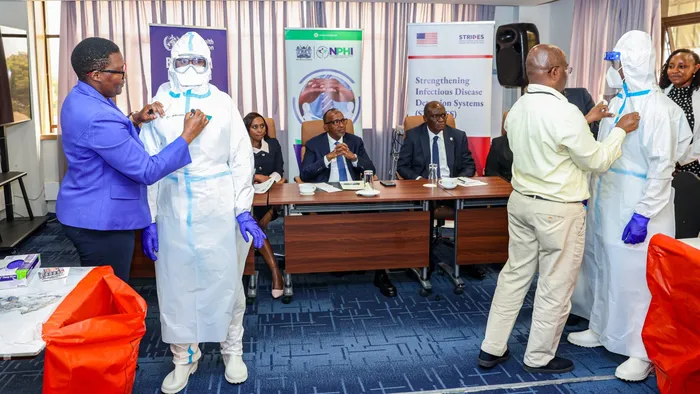
Health authorities have also emphasised the need to protect frontline workers through adequate supplies of protective equipment and continued coordination between national and county response teams.
The Ministry continues to urge the public to report suspected Ebola symptoms and follow guidance from health professionals. Members of the public can seek assistance through the Ministry’s toll-free line 719, by dialling *719# or through WhatsApp on 0700 719 719.
For now, the planned release of the remaining contacts will be an important milestone. But health officials still need to maintain surveillance, identify any new infections quickly and ensure that no further transmission occurs.
You may also like
Category: Health
Related Explainer: Ebola contact tracing: Why the 21-day window matters in Kenya’s response
About the Author
Maureen Onyango is a journalist passionate about storytelling, life coaching and spiritual lessons. She studied at the Kenya Institute of Management and enjoys telling stories that inform, inspire and empower communities.
 Facebook
 Twitter / X
 WhatsApp
 LinkedIn
 Telegram
 Reddit