
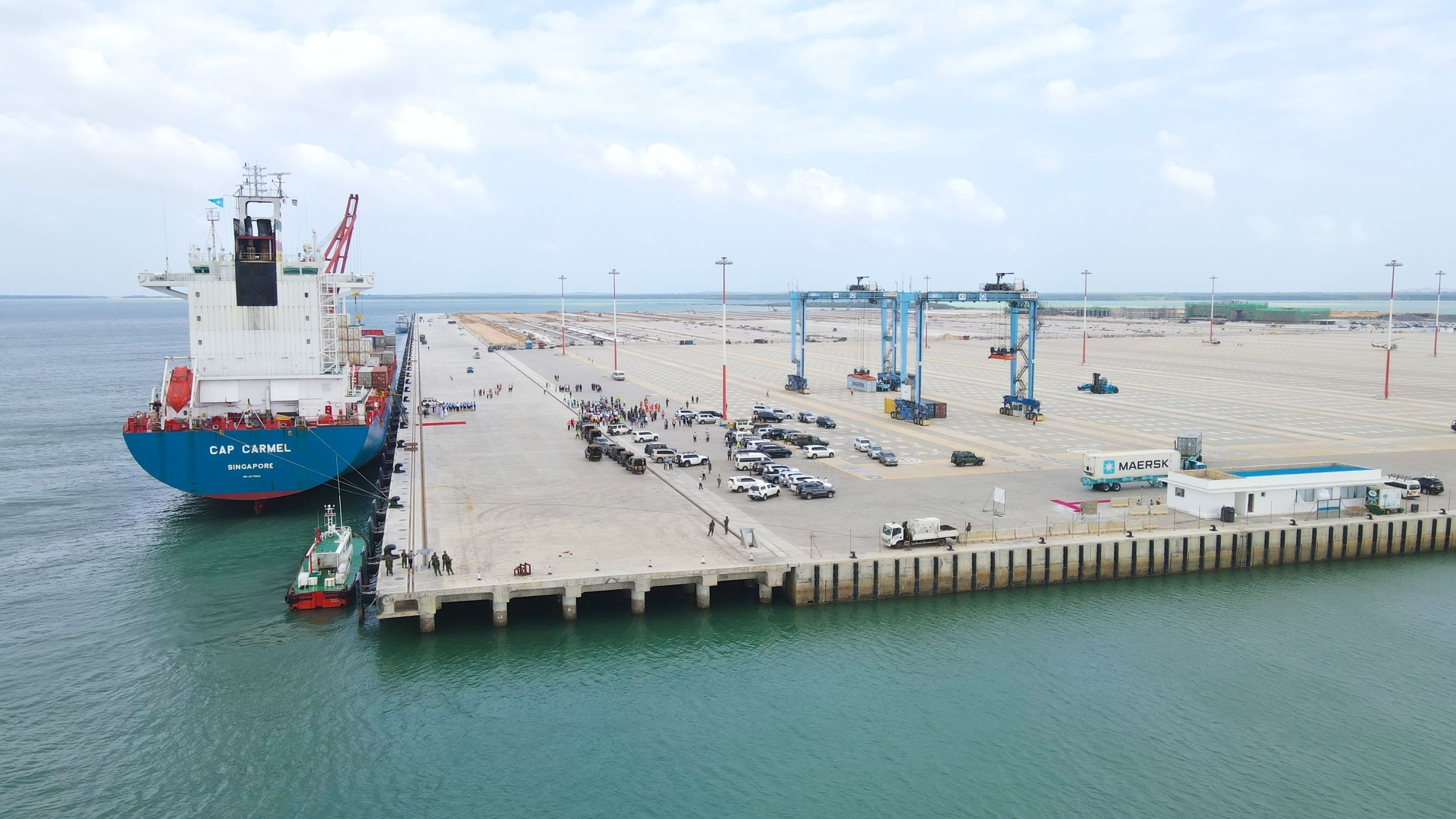
Lamu Port has recorded its biggest single-vessel container discharge since operations began, strengthening Kenya's ambitions to turn the facility into a major regional maritime and transshipment hub.
The milestone was achieved after MV Hamouna, a 366-metre container vessel arriving from China, docked at the port and delivered about 5,200 twenty-foot equivalent units.
The vessel has an overall capacity of about 14,500 TEUs.
Some of the cargo unloaded at Lamu is expected to be transferred to smaller vessels for onward shipment to other destinations, demonstrating the port's potential as a transshipment hub.
Kenya Ports Authority Managing Director Captain William Ruto described the call as an important demonstration of Lamu's ability to accommodate some of the world's largest container vessels.
Lamu's natural deep-water harbour is one of its main competitive advantages.
Its berths have depths of about 17.5 metres, allowing large vessels to dock without some of the restrictions experienced at shallower ports.
The latest milestone comes at a particularly significant time for Lamu.
Only days earlier, President William Ruto and Nigerian billionaire Aliko Dangote presided over the groundbreaking of the proposed Dangote East Africa Petroleum Refinery and Petrochemicals complex.
The refinery is expected to dramatically increase industrial and shipping activity around Lamu if completed as planned.
Lamu Port is a central component of the wider Lamu Port-South Sudan-Ethiopia Transport corridor, commonly known as LAPSSET.
The long-term plan connects the port with highways, railways, pipelines and other infrastructure intended to serve Kenya, Ethiopia, South Sudan and the wider region.
Development of several components has progressed more slowly than originally envisioned, but increasing vessel traffic could strengthen the commercial case for further investment.
The challenge now is turning individual milestones into sustained cargo growth.
For Lamu to become a major regional competitor, Kenya will need reliable transport links, efficient customs processes, competitive shipping costs and consistent volumes of imports, exports and transshipment cargo.
The arrival of MV Hamouna provides evidence that the physical port can accommodate extremely large vessels.
The next test is ensuring enough of them keep coming.
You may also like
Category: Business · Related Topic: Kenya Economy
Related Video: What Dangote’s proposed Lamu oil refinery could mean for East Africa
Related Explainer: Explainer: Why Kenya is moving hospitals to HMIS and what it means for SHA patients
 Facebook
 Twitter / X
 WhatsApp
 LinkedIn
 Telegram
 Reddit