
For decades, Kenya has been known around the world for tea. But much of the value has been created after the tea leaves leave the country.
A new experiment involving Equity Group, Murang’a tea producers and French speciality tea house Palais des Thés is trying to change that.
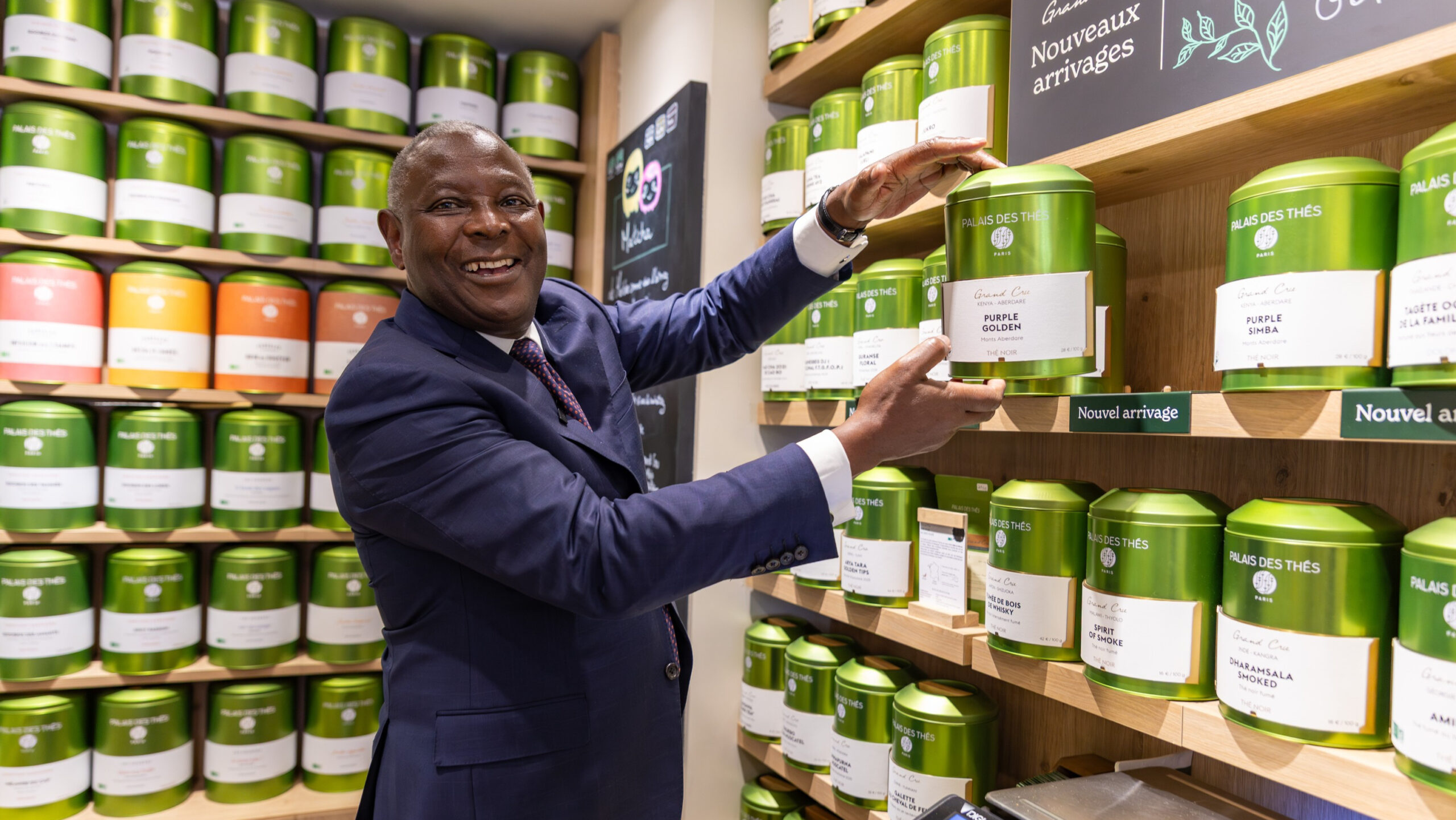
The latest step came in June when Kenya’s distinctive purple tea was unveiled at the Hôtel de Crillon in Paris, putting a product grown in Murang’a in front of French consumers, tea specialists and international buyers.
The event was more than a showcase.
It was a test of whether Kenya can sell its tea as a premium product with a name, a place and a story — rather than mainly as bulk tea competing on price.
The Paris launch followed an agreement signed in Nairobi in May between Gatanga Industries, Palais des Thés and Equity Group during the Africa Forward Summit.
Under the agreement, Palais des Thés will buy Kenyan speciality purple teas and promote them through its retail and education platforms. The varieties include Purple White, Purple Golden, Purple Simba and Purple Black.
Equity says it brought the producer and French buyer together through its Africa Recovery and Resilience Plan.
Why a bank is getting involved in tea
Equity's role is unusual because the deal is not simply about financing a farmer.
The bank is trying to connect producers to a buyer before the tea reaches the international market.
That means the focus shifts from lending alone to helping farmers find markets for higher-value products.
Equity Group CEO James Mwangi said the partnership is intended to connect small-scale farmers to international buyers and make value addition part of the production process.
“This agreement is about transforming the livelihoods of our small-scale tea farmers,” Mwangi said when the deal was signed.
He said farmers should become participants in international value chains rather than remaining producers whose tea is sold without a strong connection to the final consumer.
That approach matters because Kenya's tea industry remains heavily dependent on bulk exports.
A Ministry of Agriculture regulatory impact assessment cited by the Tea Board says about 99 per cent of Kenya's tea exports were being shipped in bulk, with only a small share exported in value-added form. The same government document identifies greater value addition and diversification into speciality teas such as purple and green tea as opportunities for the sector.
The Tea Board's own strategy also identifies value-added and speciality teas among the products expected to support future export growth.
That is the market Equity is trying to enter.
Murang'a's unusual tea
Purple tea is not simply ordinary black tea with a different colour.
The variety was developed through Kenya's tea research system and has become one of the country's speciality tea products. It is known for its distinctive colour and flavour profile and contains naturally occurring antioxidants.
For farmers in Murang'a, the opportunity lies in selling those characteristics directly to consumers who are willing to pay for speciality products.
Palais des Thés founder François-Xavier Delmas said the French company sees Kenyan purple tea as a product whose identity is closely tied to its origin and production.
The company plans to promote Kenyan speciality tea in France and other European markets.
“This is only the first step,” Delmas said at the Paris launch.
He said the broader aim was to increase the visibility and value of Kenyan tea in European markets.
The company's involvement is significant because it gives the tea a route beyond a traditional commodity auction and into a speciality retail market.
Equity said Palais des Thés is already packaging and selling Kenyan speciality purple tea in France and other European markets.
The price question
The biggest question for farmers is not how impressive the Paris launch looks.
It is how much more money reaches the farm.
Kenya's traditional tea model exposes producers to international commodity prices. A speciality model can potentially change that by allowing the product's origin, processing and brand to influence what consumers pay.
But a premium retail price does not automatically mean a premium farmgate price.
For the model to make a lasting difference, farmers need reliable buyers, consistent quality, traceability and transparent arrangements showing how much of the additional value reaches producers.
That is where the partnership will ultimately be judged.
Equity says the agreement is expected to improve farmgate earnings and encourage a gradual move towards higher-value tea production. Gatanga Industries chairman Karanja Kinyanjui has also said the deal could help farmers secure better pricing and greater stability.
Those are expectations, however, rather than a guaranteed increase in farmers' incomes.
Kenya wants a name for its tea
Another part of the strategy is geographical identity.
Kenya is pursuing Geographical Indication (GI) protection for its speciality purple tea.
GI protection can link a product's reputation or characteristics to a defined geographical area. In practical terms, it can help consumers identify authentic products and give producers a stronger basis for differentiating them in international markets.
The process is not yet complete.
The Paris launch therefore comes while Kenya is still working towards stronger legal and commercial recognition of the tea's origin.
This could become important as Kenya competes in a global speciality tea market where provenance matters.
A buyer is not simply purchasing leaves.
They are buying a product associated with a particular place and production story.
For Murang'a, that could turn the county itself into part of the product's identity.
The G7 connection
Kenyan tea has also found its way into another high-profile French setting.
During the G7 Summit in Évian, French chefs prepared dark chocolate infused with Kenyan Grand Cru tea selected by Palais des Thés.
The example points to another route for Kenyan tea: using it as an ingredient in premium foods rather than limiting it to a cup of tea.
That opens possibilities for products such as chocolates, extracts and other speciality food and beverage products.
It is the kind of value addition Kenya's tea authorities have been encouraging as the country looks for ways to earn more from its agricultural exports.
A model Equity wants to take further
The purple tea project is also becoming a test case for Equity's wider agricultural strategy.
The bank has been presenting itself as more than a source of credit for farmers and agribusinesses, with its Africa Recovery and Resilience Plan focused on market connections, value addition and access to international trade.
The question is whether the Murang'a model can work beyond one speciality producer and one French buyer.
Kenya has thousands of tea farmers and a large existing processing and export system.
Moving a meaningful share of that industry into speciality products will require more than branding.
It will require consistent quality, reliable supply, market development, processing capacity and financing.
It will also require consumers abroad to keep buying Kenyan speciality tea at prices that make the model worthwhile for farmers.
From a Paris showcase to a farmer's income
That is why the most important part of the purple tea story may not have happened in Paris.
It will happen in Murang'a.
If the French market continues to buy the tea, if more speciality products are developed and if farmers receive a meaningful share of the premium, the model could offer a new route for Kenyan tea.
If those links do not materialise, the Paris launch risks remaining another high-profile export showcase without changing the economics of tea farming.
For now, Kenya has secured something valuable: a buyer willing to put Murang'a purple tea on premium shelves in Europe.
The next challenge is turning that visibility into sustained orders — and turning those orders into better returns for the farmer who grows the tea.
You may also like
Category: Business
Related Video: What Dangote’s proposed Lamu oil refinery could mean for East Africa
Related Explainer: Kiharu Technical College September Intake 2026: Courses, Skills and New Opportunities
About the Author
Maureen Onyango is a journalist passionate about storytelling, life coaching and spiritual lessons. She studied at the Kenya Institute of Management and enjoys telling stories that inform, inspire and empower communities.
 Facebook
 Twitter / X
 WhatsApp
 LinkedIn
 Telegram
 Reddit