
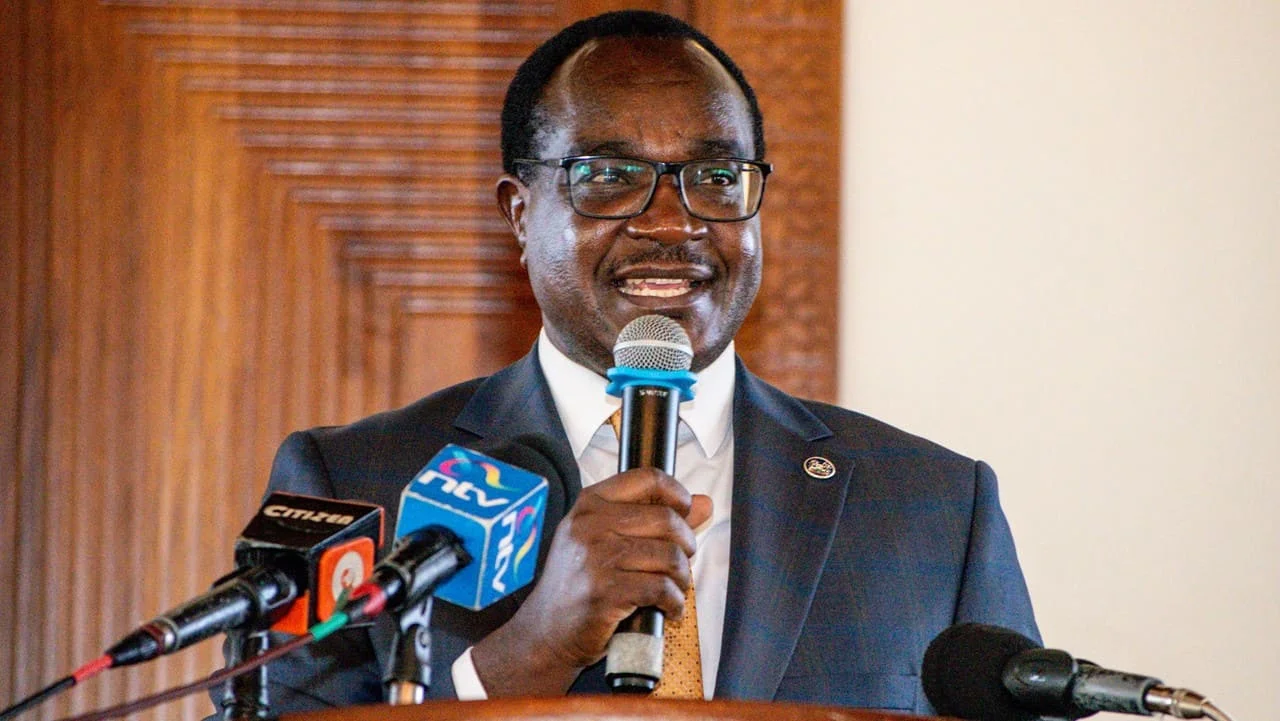
Education Cabinet Secretary Julius Ogamba has acknowledged a major gap in Kenya’s response to teenage pregnancies: the Ministry of Education cannot give a complete account of how many schoolgirls become pregnant, who is responsible for the pregnancies or how many teenage mothers successfully return to class.
Appearing before the Senate, Ogamba said the ministry does not have comprehensive, disaggregated data showing the number of learners who became pregnant between 2023 and 2025, those who dropped out as a result, or those who later resumed their education.
The admission came after Senator Catherine Mumma pressed the ministry for county and sub-county figures on teenage pregnancies involving schoolgirls.
She also wanted to know whether teachers were among those accused of getting learners pregnant, how many related defilement cases had reached court and how many teenage mothers had been re-admitted to school.
Ogamba said the ministry's current records are not sufficient to answer those questions.
“The ministry lacks comprehensive and disaggregated data to provide the exact number of child mothers who have been successfully re-enrolled per county or the total number who remain out of school,” he said.
Health figures reveal the scale, but not the school dropout picture
The Education Ministry is instead relying heavily on figures from the health sector to understand the wider teenage pregnancy problem.
Ogamba cited Kenya Health Information System data showing 110,821 pregnancies among adolescents aged 10 to 19 between January and May 2023.
Of these, 6,110 involved girls aged 10 to 14, while 104,711 involved adolescents aged 15 to 19.
The figures, however, cover the general population and are not a count of pregnancies among schoolgirls.
That distinction is important.
The 2022 Kenya Demographic and Health Survey found that 15 per cent of girls aged 15 to 19 had ever been pregnant. The rate varied sharply across the country, reaching 50 per cent in Samburu compared with 5 per cent in Nyeri and Nyandarua. Teenage pregnancy was also much more common among girls from poorer households and those with lower levels of education.
This means national health statistics can show the size and distribution of the adolescent pregnancy problem, but they cannot by themselves tell policymakers how many affected girls were enrolled in school, whether they dropped out or whether they returned.
Ogamba links pregnancies to poverty and lack of information
Ogamba identified poverty, inadequate sexual and reproductive health information, early sexual activity and weak parental guidance among the factors contributing to teenage pregnancies.
He also cited peer pressure, failure by families to meet basic needs, alcohol and drug abuse, illicit brews, limited community awareness and incest.
The CS further pointed to situations where learners live away from their families because their schools are far from home.
Some students rent accommodation around nearby trading centres, he said, potentially increasing their exposure to circumstances in which sexual activity can occur.
He also mentioned practices such as disco matanga among the factors the government is concerned about.
Ogamba told senators that research cited by government agencies and partner organisations indicates that pregnancy is a major contributor to girls leaving school. He said the research showed early pregnancy accounted for 66 per cent of teenage school dropouts, while 93 per cent of affected girls reported that their pregnancies were unintended.
Those figures should be read as findings from the research cited by the CS rather than as a current national administrative count of all pregnant schoolgirls.
Who is responsible? Government records remain fragmented
Mumma's questions also exposed another difficulty: the government does not have one system that brings together information on pregnancies, alleged perpetrators, disciplinary action and criminal prosecutions.
Ogamba said reports from schools alone cannot provide a complete picture.
Cases involving teachers fall under the Teachers Service Commission's disciplinary structures, while criminal matters may involve the National Police Service, the Office of the Director of Public Prosecutions and the Judiciary.
“We are working on a system that brings together all these agencies for purposes of sharing data,” Ogamba said.
He added that the ministry is working to improve its records through the Kenya Education Management Information System, which is intended to capture information on teenage pregnancies among learners.
Until such systems are fully linked, however, the government risks seeing different parts of the same problem through separate sets of records.
Policy allows teenage mothers back to school
The data gap comes despite Kenya having a formal policy framework for keeping pregnant learners in education.
The National Guidelines for School Re-Entry in Early Learning and Basic Education require learners who leave school because of pregnancy to be re-admitted to the same class, form or grade they were in before leaving. The guidelines also allow a pregnant learner to remain in school for as long as possible, subject to existing education policies and her health needs.
The guidelines also require schools to report cases where an adult is identified as responsible for a learner's pregnancy to the relevant authorities, including the police and Children's Department.
The problem, Ogamba said, is that having a policy does not necessarily mean a teenage mother will make it back to the classroom.
Poverty, stigma and childcare keep girls out
The CS cited financial difficulties, stigma, discrimination, childcare responsibilities, limited awareness of the re-entry policy and inconsistent implementation as barriers facing teenage mothers.
“Many teenage mothers, their parents and communities are unaware of the right of teen mothers to return to school,” Ogamba said.
For a young mother, returning to school can mean finding someone to care for her baby, paying for basic school requirements and dealing with attitudes from classmates, teachers or members of the community.
The result is that pregnancy can become more than a temporary interruption to education.
It can permanently alter a girl's chances of completing school.
The bigger question for government
Kenya has made progress in reducing teenage pregnancy at the national level. The 2022 KDHS recorded a decline from 18 per cent in 2014 to 15 per cent in 2022 among girls aged 15 to 19 who had ever been pregnant. But the national average masks large differences between counties and socioeconomic groups.
The Senate questioning therefore raises an issue beyond the number of teenage pregnancies.
Kenya needs to know what happens to a girl after pregnancy.
Is she still in school? Has she returned after giving birth? Did she transfer to another school? Has she left education permanently? Was an adult responsible for the pregnancy, and if so, was the case reported and prosecuted?
Without that information, it remains difficult to measure whether the country's re-entry policy is actually keeping teenage mothers in education.
Ogamba's commitment to improve data collection could help close that gap. But the real test will be whether better records translate into earlier intervention, accountability for perpetrators and practical support for girls trying to complete their education.
Category: Education
Related Video: Dolly Parton’s Family Announces Her Passing in Emotional Tribute
Related Explainer: Kenya’s short rains: What the 2026 forecast means for you
About the Author
Maureen Onyango is a journalist passionate about storytelling, life coaching and spiritual lessons. She studied at the Kenya Institute of Management and enjoys telling stories that inform, inspire and empower communities.
 Facebook
 Twitter / X
 WhatsApp
 LinkedIn
 Telegram
 Reddit