
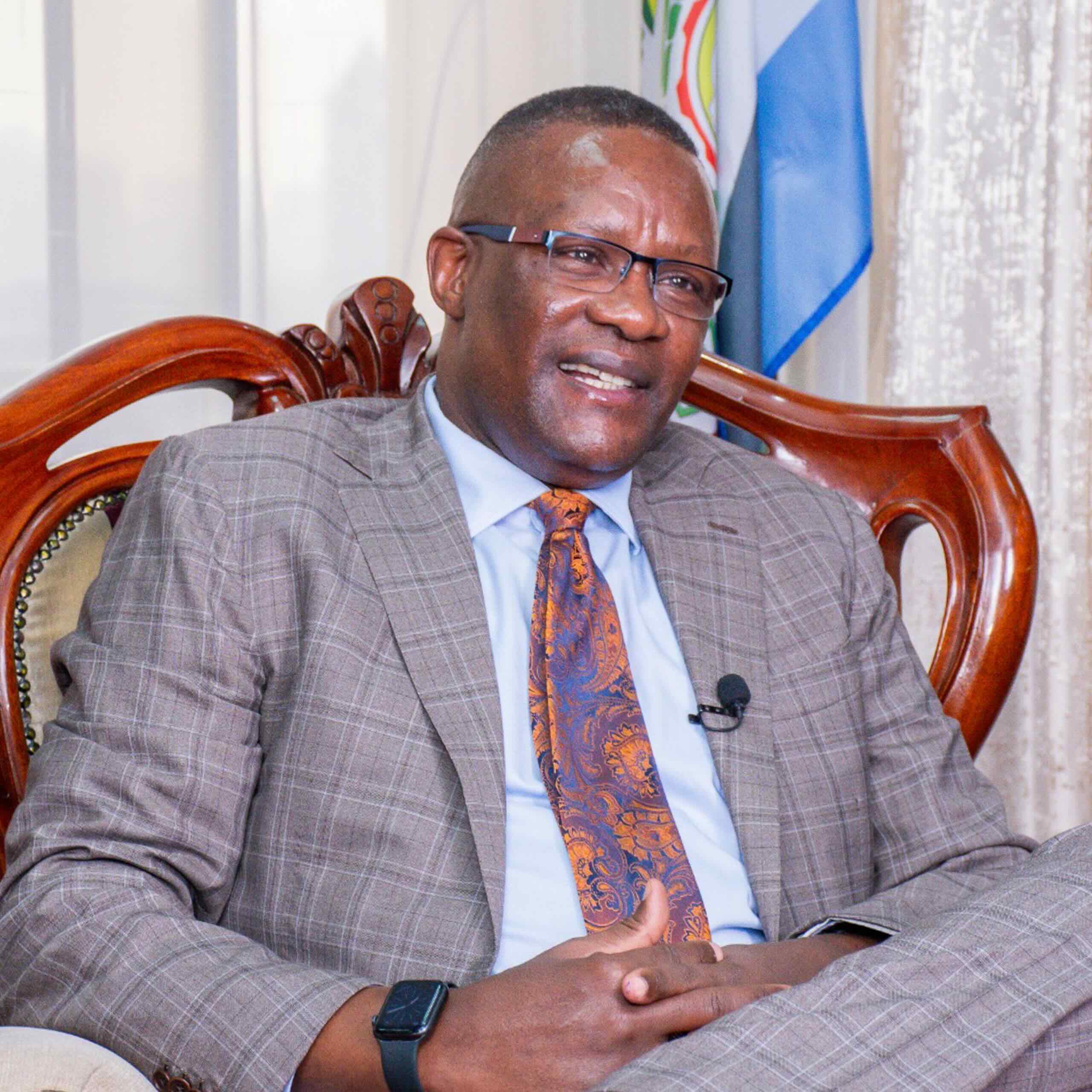
Presidential aspirant Eliud Owalo has stepped up his campaign for 2027 with a message aimed at breaking Kenya’s longstanding dependence on ethnic political blocs, promising what he describes as a “Third Liberation” focused on economic emancipation and transformational leadership.
Speaking during a live interview on Citizen TV’s JKL, Owalo presented himself as a candidate seeking to take national politics beyond the traditional contest for ethnic strongholds, arguing that Kenyans should be free to choose leaders on the basis of their track records, policies and ability to deliver.
His intervention comes as political realignments ahead of the 2027 General Election begin to take shape, with established parties and emerging formations positioning themselves for a contest that is already drawing intense interest.
Owalo, who is running on the People's Prosperity Party (PPP) ticket, was particularly emphatic on the question of political competition in Nyanza, a region long associated with ODM.

He argued that no region should be treated as the exclusive preserve of one political party.
“Why, if you are popular, are you afraid of political competition?” Owalo asked.
He said voters should have multiple candidates to choose from at every level, from the MCA to the presidency, and should be able to make their decisions based on individual performance and competing development agendas rather than what he called “tribal hero worship.”
Owalo's argument is not simply about opening up political space in Nyanza. It is central to the political proposition he is building around his presidential bid: that Kenya's next political transition should be about issues rather than ethnic arithmetic.
A different kind of political stronghold
Asked where his political stronghold lies, Owalo rejected the conventional answer of identifying a particular community or region.
Instead, he pointed to constituencies he said cut across the country—unemployed young people, women without access to financing, civil servants struggling under taxation and people working within value chains.
“I'm not running for the presidency of Nyanza,” he said, insisting that his political base is defined by the issues affecting Kenyans rather than ethnicity.
It was perhaps the clearest articulation of Owalo's attempt to position himself as a national candidate rather than a regional political actor.
His pitch is that the political conversation should move away from who gets which position and towards what a coalition or government intends to do for Kenyans.
He dismissed the traditional practice of forming political alliances primarily around the distribution of positions, saying Kenya has been doing so since independence without resolving the country's fundamental problems.
Instead, he said future political formations should be built around an agenda addressing the cost of living, punitive taxation, corruption, wastage, education, healthcare and youth unemployment.
Owalo's case for a fresh political generation

Owalo also used the interview to defend his own record and answer questions about his time in government.
He acknowledged that he had served in the current administration but said he eventually left because he was uncomfortable with developments in government and did not want to compromise his conscience.
He argued that his record should be assessed independently of the broader performance of the administration.
As ICT Cabinet Secretary, Owalo said he spearheaded a digital transformation programme that expanded government services available online from about 350 to more than 20,000 in approximately 18 months. He also cited the rollout of digital hubs, Wi-Fi hotspots and the digital superhighway as elements of his record.
Owalo's argument is essentially that his presidential bid should be judged on what he has previously delivered, rather than simply on political rhetoric.
He also pointed to his legislative record, saying he introduced 18 amendments to the 2024 Finance Bill, 17 of which he said were adopted. He further said he opposed aspects of the Social Health Authority financing structure and the university funding model.
The ‘Third Liberation’
At the centre of Owalo's political message is his call for what he describes as Kenya's Third Liberation.
In his formulation, the first liberation was independence, while the second was the restoration of multiparty democracy. The unfinished task, he argues, is economic emancipation.
That means confronting the issues he says continue to define ordinary Kenyans' lives: high taxation, unemployment, corruption, public debt, poor public services and limited economic opportunity.
He said his proposed government would seek to reduce taxation, eliminate corruption and wastage, expand opportunities in the digital and creative economy and sports, and reform education and healthcare.
He also reiterated his position that Kenya can provide free primary education, free day secondary education and free public healthcare in public hospitals if government resources are better managed and leakages addressed.
For Owalo, therefore, the 2027 election should not merely determine who occupies State House. It should determine whether Kenya changes the way it is governed.
Politics after the old political alliances
Owalo also suggested that the current political landscape remains fluid and that the final shape of the 2027 contest is yet to emerge.
Drawing from his experience in previous presidential campaigns, he said serious political formations normally crystallise much closer to elections.
He cited his involvement in the 2013 and 2018 presidential campaigns and said Kenya's political “tectonic plates” would continue shifting before the major alliances settle.
But while the alliances may change, Owalo argued that the underlying question for voters should remain constant: what will the next government actually deliver?
That distinction could become increasingly important as politicians begin assembling coalitions ahead of 2027.
The interview also featured competing views from other political participants on the future of Kenya's opposition and the evolution of political parties. One recurring theme was the need for parties to develop credible leaders and clear programmes rather than relying solely on personalities and electoral arithmetic.
For Owalo, however, the answer is more fundamental.
He wants Kenyans to reject the politics of ethnic entitlement and judge presidential contenders by their record, ideas and capacity to transform the country.
His challenge to voters is therefore straightforward: do not simply ask who a politician represents—ask what the politician has done, what they propose to do, and whether they can be held accountable for delivering it.
And that is the political space Owalo is attempting to occupy as he seeks to turn the idea of Kenya's “Third Liberation” into a presidential campaign for 2027.
Related Stories
- Eliud Owalo Condemns Political Violence, Calls for Protection of Constitutional Rights Ahead of 2027
- Ndindi Nyoro joins opposition: What his PPK move means for 2027
- Ndindi Nyoro Makes Presidential Bid Clear as PPK Emerges in 2027 Political Calculus
Category: Politics · Related Topic: Eliud Owalo
 Facebook
 Twitter / X
 WhatsApp
 LinkedIn
 Telegram
 Reddit