
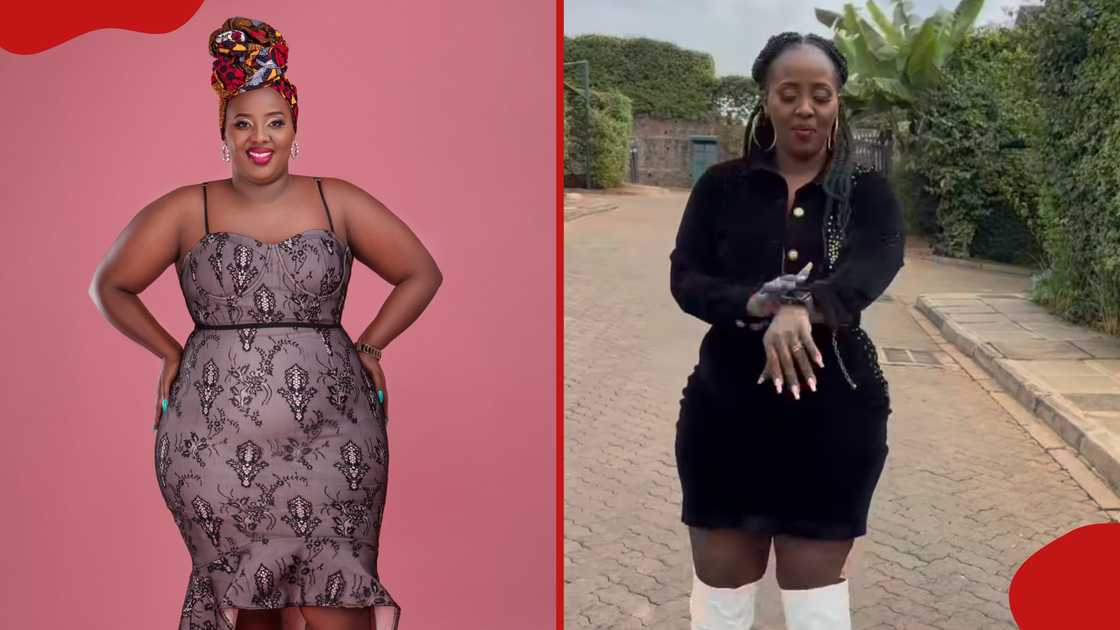
Kenyan celebrities are changing more than their bodies. They are changing the way the country talks about fitness, wellness and appearance.
For years, weight loss was often treated as a private matter. Now, before-and-after photographs, gym videos and fitness updates are becoming part of the daily social media diet.
Content creators such as Milly Chebby and Celestine Ndinda have attracted attention for their changing physiques and increasingly visible fitness journeys. Their posts have triggered praise, curiosity and, at times, intense scrutiny from thousands of followers.
But beneath the compliments and viral reactions is a bigger question: when does inspiration become pressure?
The transformation everyone can see
Milly Chebby has become one of the most visible examples.
The content creator recently shared a video showing off a noticeably slimmer figure, drawing a wave of reactions from fans. Her latest appearance comes after she previously spoke publicly about pursuing medical options for weight loss.
In 2022, Chebby disclosed that she was considering procedures to help reduce her weight after consulting medical professionals. She later continued documenting aspects of her personal wellness journey online.
That openness has made her transformation more than a personal story. It has become something thousands of people follow, comment on and compare with their own bodies.
Some followers see encouragement.
Others ask for the secret.
And some simply want to know how quickly the results were achieved.
That is where the conversation becomes more complicated.
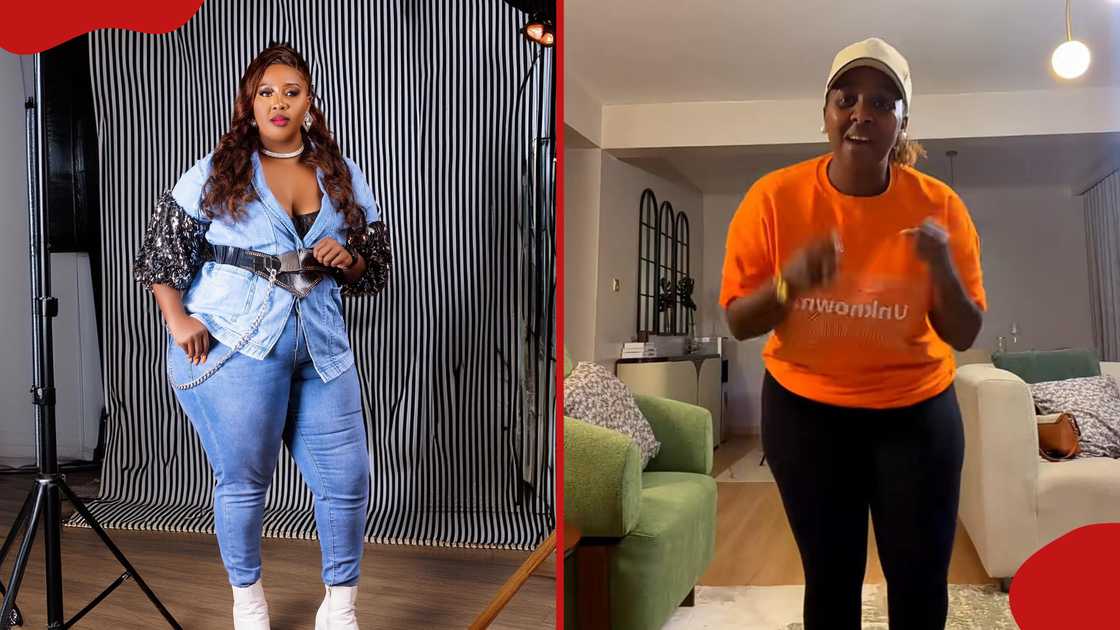
Celestine Ndinda is taking a different route
For content creator and actress Celestine Ndinda, the fitness conversation has increasingly centred on movement rather than simply changing body size.
Ndinda has been spotted taking part in fitness activities and has spoken enthusiastically about Nairobi's growing running culture.
“I love seeing more people embrace movement,” she said recently, stressing that people do not have to become runners to benefit from being active. She encouraged people to walk, run, dance, cycle or go to the gym.
Her message is significant because it shifts the conversation from how a body looks to what a body can do.
That distinction matters.
A person can become fitter without dramatically changing their appearance. Likewise, a smaller body is not automatically proof of better health.
Nairobi is becoming a fitness playground
The celebrity conversation is happening alongside a much broader change in urban Kenya.
On Saturday mornings, parts of Nairobi now fill with runners rather than the usual weekend traffic. Running groups have grown into social communities where exercise, friendship and networking often happen at the same time.
We Run Nairobi, which began in 2022 with a small group of friends, now attracts hundreds of participants to its regular runs. Business Daily reported in April that the group could draw more than 1,200 runners on a good day.
Other groups, including Urban Swaras and Karura Running Club, have also helped make running more accessible to ordinary Nairobi residents.
For some participants, the attraction is not competition.
It is community.
A 2026 report by Citizen Digital found that some young people were joining running clubs not simply to improve their fitness but to make friends, manage stress and create a sense of belonging.
That helps explain why fitness content has found such a receptive audience online.
People are not only watching celebrities exercise. They are increasingly looking for their own ways to participate.
But social media has another side
The danger is that the fitness conversation can easily become a comparison game.
A celebrity posts a slimmer waist. Another shares a gym session. Someone else reveals a dramatic before-and-after photograph.
The audience sees the result.
What it may not see is the full journey.
There may be professional trainers, medical advice, dietary changes, surgery, private healthcare, childcare support, flexible working arrangements or simply months of effort that never appear in a 30-second video.
Social media can therefore create an illusion that physical transformation is quick, straightforward and available to everyone in the same way.
It is not.
There is also a difference between pursuing better health and pursuing a particular body shape because the internet says it is desirable.
That distinction is becoming increasingly important as fitness content becomes more commercial and more visible.
The male fitness conversation is growing too
The shift is not limited to women.
Kenyan male public figures and fashion personalities are also increasingly presenting fitness, grooming and physique as part of their public image.
The change reflects a wider cultural movement in which men's appearance is becoming a bigger part of social media conversations.
For public figures, the body is now often part of the brand.
A transformation can attract followers, generate conversations and create opportunities for partnerships.
But that also means the pressure to maintain a particular appearance can become difficult to escape.
From weight loss to wellness
Perhaps the most useful lesson from Kenya's celebrity fitness boom is that health should not be reduced to the number on a weighing scale.
The country's growing running culture offers one alternative.
A recent report by The Star described how Nairobi's running communities are creating accessible spaces where people exercise, socialise and build friendships. Some groups have deliberately kept participation free or affordable, making fitness less dependent on expensive gym memberships.
Fitness apps and wearable technology are also changing how Kenyans track their workouts. Business Daily reported that runners are increasingly using platforms such as Strava and wearable devices to monitor pace, heart rate and other measures of performance.
The message is slowly shifting from “How do I look?” to “How do I feel, move and live?”
That may be the healthier conversation.
The pressure to transform
Celebrity fitness journeys can inspire people to start walking, join a running club, eat more mindfully or seek professional advice.
But they can also make people feel that their bodies are unfinished projects.
For someone scrolling through hundreds of carefully selected images, the line between motivation and insecurity can be very thin.
The answer is not to stop celebrating people who work towards healthier lifestyles.
It is to remember that there is no single picture of health.
A body does not need to look like a celebrity's body to be healthy. And a transformation shared online is only one part of a much longer, more personal story.
Kenya's fitness movement is clearly growing.
The challenge now is making sure the conversation remains about health, strength, confidence and quality of life — rather than turning every body into a before-and-after photograph.
You may also like
Category: Entertainment
Related Video: Dolly Parton’s Family Announces Her Passing in Emotional Tribute
About the Author
Maureen Onyango is a journalist passionate about storytelling, life coaching and spiritual lessons. She studied at the Kenya Institute of Management and enjoys telling stories that inform, inspire and empower communities.
 Facebook
 Twitter / X
 WhatsApp
 LinkedIn
 Telegram
 Reddit