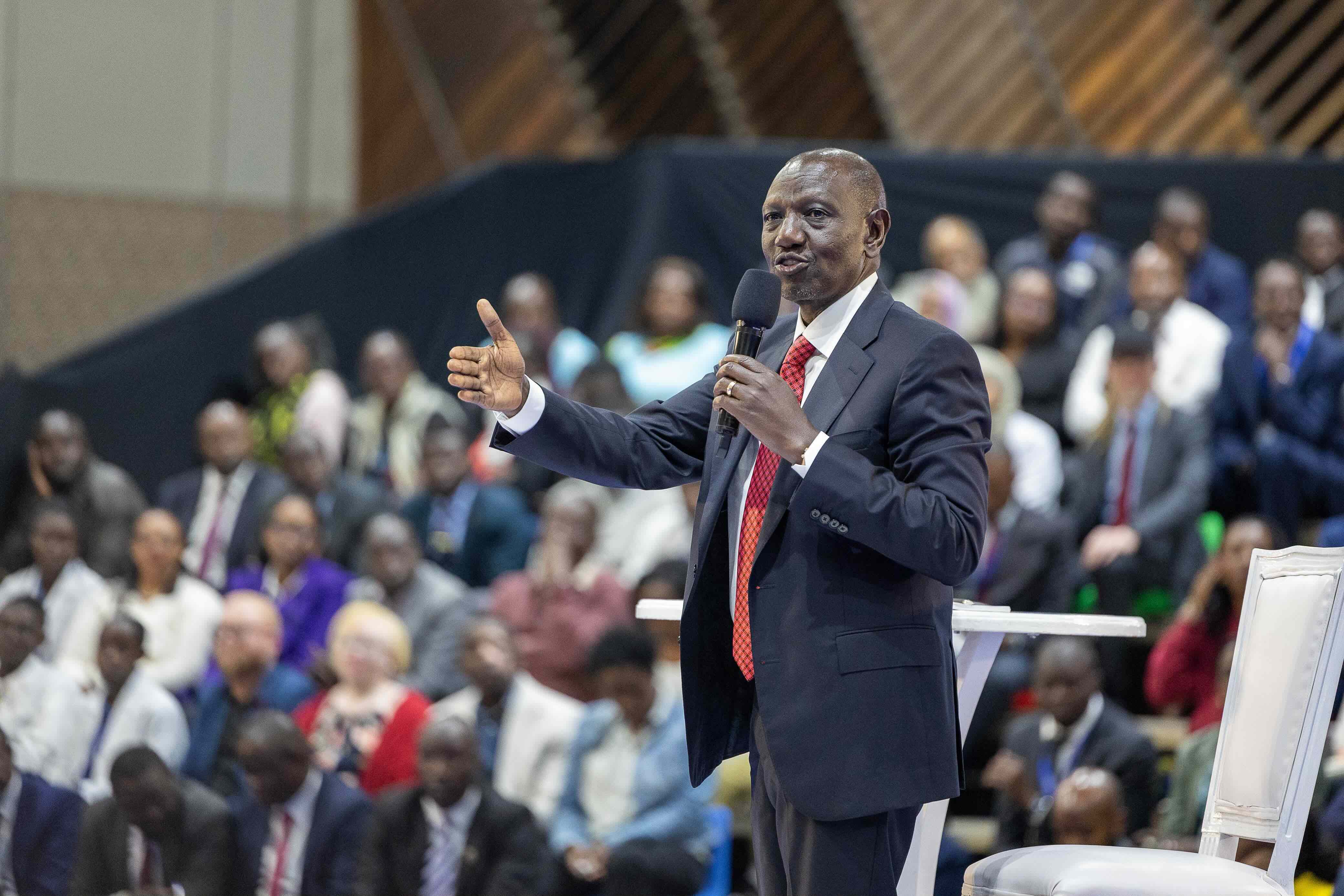
President William Ruto challenged claims attributed to cardiologist Dr Dan Gikonyo over Social Health Authority reimbursements to Karen Hospital, directing SHA officials to produce the facility's payment records during Tuesday night's presidential health town hall at KICC.
President William Ruto on Tuesday night demanded specific evidence after Nairobi Woman Representative Esther Passaris raised concerns attributed to cardiologist and Karen Hospital proprietor Dr Dan Gikonyo over alleged delays in SHA reimbursements to hospitals.
The exchange occurred during a presidential town-hall session held at the Kenyatta International Convention Centre (KICC) as part of the 2026 National Health Summit.
Passaris told the President that she had received concerns from Gikonyo regarding hospitals that had allegedly not been reimbursed by SHA.
Rather than respond to the claim in general terms, Ruto asked Passaris to identify the specific hospitals and suggested that Gikonyo be contacted directly.
The President's response reflected one of the central themes of the town hall — that claims about the performance of SHA should be tested against facility-level data rather than general assertions.
Ruto demands specifics
As Passaris relayed the concerns, the President interrupted to ask for concrete details.
“Let's not talk generalities. Many hospitals have not been reimbursed. Which ones? It's good to be candid.”
Passaris attempted to reach Gikonyo by telephone during the live session, but he did not respond.
The discussion then shifted from the general allegation to Karen Hospital specifically.
Ruto asked SHA officials to check the Authority's records and provide the audience with the hospital's payment position.
The SHA team accessed the system and presented figures relating to Karen Hospital's claims.
According to the figures presented during the town hall, Karen Hospital had submitted claims worth approximately KSh302.6 million since the beginning of SHA operations.
SHA said it had paid 66.5% of those claims, amounting to approximately KSh201.6 million.
The Authority said approximately KSh9.5 million, representing about 3% of the claims, had been rejected.
A further KSh40.28 million had been returned to Karen Hospital for action, including provision of additional documentation required to process the claims.
SHA said the amount it was holding pending further action or documentation stood at approximately KSh51 million.
The figures were presented by SHA officials during the live presidential session and represent the Authority's records as presented at the town hall.
Ruto tells Gikonyo: “It's good to be truthful”
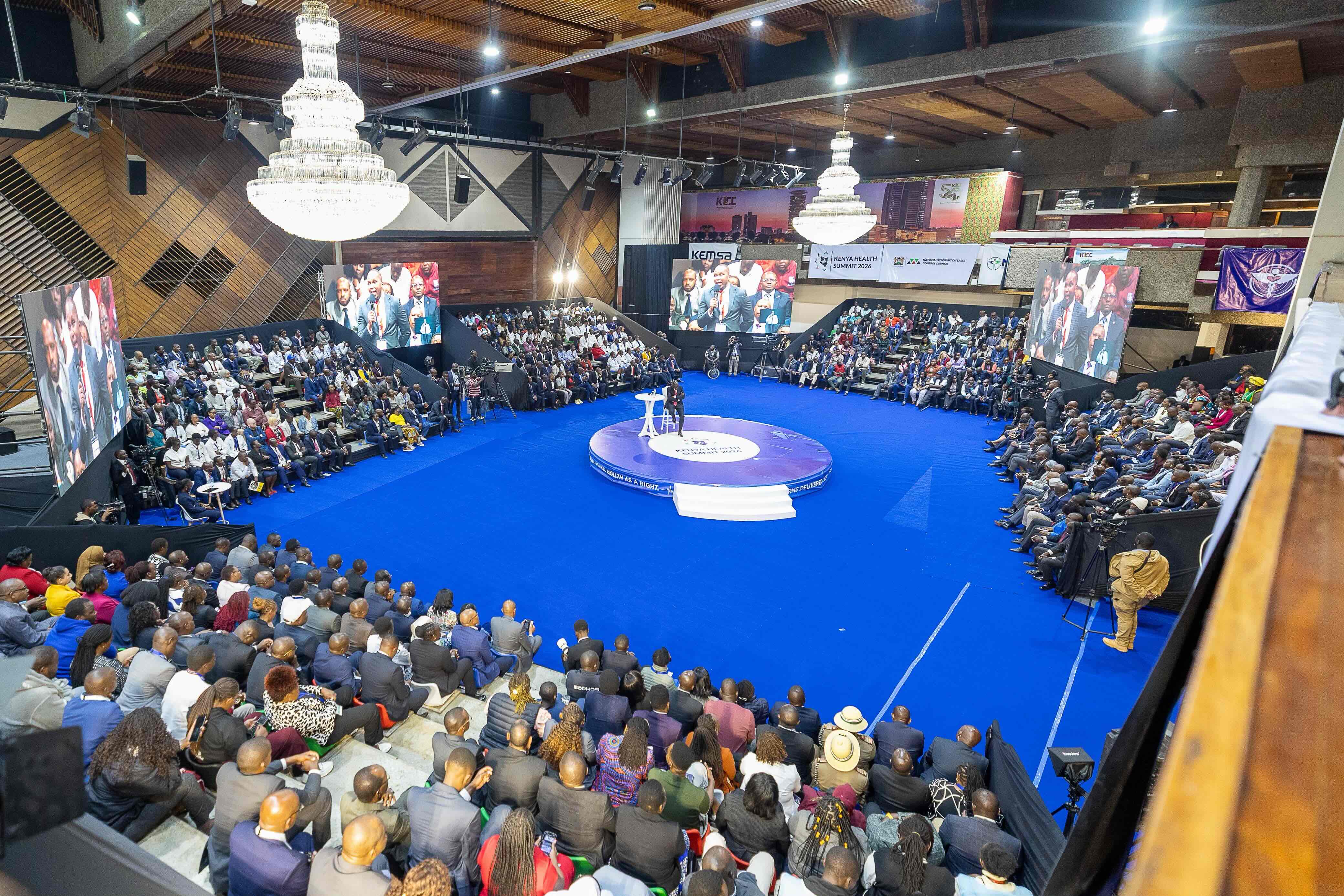
After hearing the figures, Ruto directly addressed Gikonyo, who was not present in the auditorium.
“Dr Gikonyo, wherever you are, it's good to be truthful.”
The President said the debate around SHA had too often been dominated by broad statements about what was or was not working.
“I have had this conversation with people with many generalities… this is not working, that is not working. We want to answer to facts.”
The exchange became one of the clearest examples of the President's approach throughout the town hall: rather than relying solely on political statements, he repeatedly asked officials to identify individual facilities and produce figures from the government's digital systems.
But Karen Hospital later gives a different perspective
Importantly, the town hall did not end with the President's challenge to the claims attributed to Gikonyo.
Later in the session, Juliet Gikonyo Nyaga, the Chief Executive Officer (CEO) of the Karen Hospital, was invited to explain the facility's experience with SHA.
Her account was substantially more positive.
Gikoyo said Karen Hospital had been working closely with SHA and that the relationship had enabled the hospital to expand several specialised cardiac services.
She said the hospital had been able to undertake cardiac procedures through its catheterisation laboratory, including angiographies and angioplasties.
She also highlighted electrophysiology studies, saying Karen Hospital was among the few facilities in the East and Central African region offering the specialised service.
The hospital was also undertaking open-heart surgeries for both children and adults through its partnership with SHA.
Asked to compare the hospital's experience under SHA with the former NHIF system, Kono said the hospital had developed a better working relationship with the Authority.
She cited meetings involving the hospital, SHA leadership and officials responsible for claims management and payments.
“We have had collaborative meetings with the office around things to do with the operations, the claim management and also payments.”
That testimony provides important context to the earlier exchange.
While concerns about outstanding claims were raised, Karen Hospital's representative also told the President that SHA had enabled the facility to provide specialised services that it considered important.
Karen Hospital not the only facility reporting payments

The Karen Hospital exchange came amid a broader discussion in which several healthcare facilities reported receiving reimbursements from SHA.
A representative from Mater Hospital, for example, said the facility had received close to KSh200 million between the previous quarter and the current quarter.
The official said the payments were helping the hospital continue providing services, including paediatric surgeries, while calling for reimbursements to continue consistently.
At Kenyatta National Hospital, an official told the President that approximately 900,000 outpatients had passed through the facility during the previous year and that SHA had paid for their services, including emergency patients.
The official also said the hospital had received approximately KSh900 million at Jaramogi Oginga Odinga Teaching and Referral Hospital compared with about KSh266 million under NHIF during the period he was referring to.
These accounts formed part of the government's broader argument that the new financing system is increasing payments to health facilities.
SHA says digital system is changing claims processing
The Karen Hospital exchange also fed into a larger discussion about the role of technology in SHA's operations.
The Digital Health Authority CEO told the President that SHA receives approximately 26,000 claims a day, representing close to one million claims a month.
He said a claims-management team of about 35 people was able to process the volume using the digital system.
According to the official, SHA had inherited an organisation with approximately 1,737 workers but currently had an establishment of about 815, which he attributed partly to efficiencies created by digitisation.
The official argued that the new digital infrastructure allows individual claims to be tracked and creates greater accountability around patients, facilities and healthcare providers.
He said the system had also been designed to prevent unlicensed facilities and health workers from providing services outside their authorised areas of practice.
Ruto's broader argument: follow the money
The confrontation over Karen Hospital fitted into the President's broader defence of SHA.
Throughout the town hall, Ruto repeatedly asked officials to demonstrate what had changed at individual facilities since the new system was introduced.
Under the Facility Improvement Financing framework, officials told the President, facilities can spend reimbursements at source instead of waiting for county-level decisions over how funds should be allocated.
One facility manager told Ruto that the arrangement allowed hospitals to respond directly to their own priorities because they could spend the money once reimbursements were received.
In Kilifi, officials reported that Kilifi Referral Hospital's monthly collections had risen from approximately KSh1.7 million to KSh30 million, while Malindi's had increased from about KSh1 million to KSh16.5 million.
County officials said the increased revenue was being used for staffing, infrastructure and other facility improvements.
The bigger question remains
The Karen Hospital exchange nevertheless illustrates the complexity of assessing SHA.
On one side, SHA's own records presented during the town hall showed that the Authority had paid more than 66% of Karen Hospital's submitted claims.
On the other, more than KSh40 million had been returned to the hospital for further action and approximately KSh51 million remained outstanding according to the Authority's figures.
At the same time, a Karen Hospital representative told the President that the facility was working closely with SHA and had expanded specialised cardiac and surgical services through the partnership.
The exchange therefore did not establish that all reimbursement problems had been resolved.
Instead, it exposed a more complicated picture: SHA is making substantial payments to facilities, but claims can still remain unpaid because of rejection, missing documentation, verification and other processing requirements.
That distinction is likely to remain central to the debate over whether SHA is delivering on its promise to transform Kenya's healthcare financing system.
You may also like
Category: Health · Related Topic: William Ruto
Related Video: Dolly Parton’s Family Announces Her Passing in Emotional Tribute
Related Explainer: Ebola contact tracing: Why the 21-day window matters in Kenya’s response
 Facebook
 Twitter / X
 WhatsApp
 LinkedIn
 Telegram
 Reddit