Kenya is preparing for a potentially punishing rainy season, with health authorities warning counties to get ahead of flooding, contaminated water and disease outbreaks.
The warning comes as the World Meteorological Organisation (WMO) says El Niño is almost certain to persist through February 2027 and is expected to strengthen into a very strong event.
For Kenya, the regional outlook is particularly important.
The IGAD Climate Prediction and Applications Centre (ICPAC) forecasts a wetter-than-normal October-to-December season across much of the Greater Horn of Africa. It puts the probability of enhanced rainfall at 90 per cent over north-eastern Kenya, while parts of central Kenya and the Lake Victoria Basin have a high likelihood of receiving more than 400mm during the season.

The Ministry of Health is now asking counties to treat the weather outlook as a public health preparedness issue, not simply a rain forecast.
Counties told to prepare before the water rises
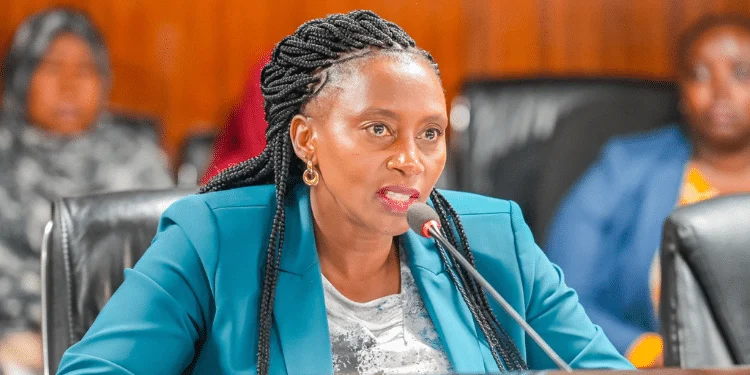
Public Health and Professional Standards Principal Secretary Mary Muthoni has urged county health departments to strengthen surveillance and prepare for outbreaks associated with heavy rain and flooding.
The ministry's message includes protecting drinking-water sources, checking drainage and sanitation systems, ensuring health facilities remain accessible and strengthening the ability to detect and respond to disease outbreaks.
Muthoni has also warned that major urban centres such as Nairobi, Mombasa, Kisumu and Eldoret need particular attention because heavy rainfall can overwhelm drainage systems, trigger sewage leaks and contaminate water supplies.
The concern is not limited to what happens during a flood.
Floodwater can carry human and animal waste into water sources. Standing water can create breeding sites for mosquitoes. Roads can become impassable, cutting off patients from hospitals and health workers from facilities.
That can turn a weather event into a health emergency.
Cholera is not the only concern
The Ministry of Health has identified water- and vector-borne diseases among the key risks associated with the coming rains.
These include cholera, typhoid and other diarrhoeal illnesses, as well as malaria and dengue.
Health authorities are also keeping an eye on Rift Valley fever, a disease that can affect both animals and people and whose transmission can increase under certain conditions associated with heavy rainfall and mosquito activity.
But the risks will not be identical across the country.
Rainfall forecasts are seasonal probabilities, not guarantees that every county will experience flooding or disease outbreaks.
ICPAC's latest forecast shows considerable regional variation. Some areas are expected to receive significantly more rain, while the timing and intensity of rainfall will differ from place to place. The centre has urged governments and other users to combine seasonal forecasts with shorter-term weekly and monthly forecasts.
That distinction is important.
A strong El Niño signal does not mean every part of Kenya will be underwater.
It means the likelihood of certain weather patterns and related hazards is higher, giving authorities an opportunity to prepare before events occur.
The warning comes as Kenya already faces health pressures
The timing also matters for Kenya's wider public health system.
As of September 12, the country had recorded 1,309 confirmed mpox cases and 19 deaths across 40 counties, according to the Ministry of Health. Kenya has also reported measles cases and a circulating vaccine-derived poliovirus type 2 case in Dadaab, Garissa County.
That means county health teams are not preparing for the rainy season in isolation.
They are already dealing with disease surveillance, vaccination and outbreak-response demands.
Heavy rains could add another layer of pressure.
Health facilities in flood-prone areas may need contingency plans for patients, medicines, staff and equipment. Communities cut off by flooded roads may struggle to reach hospitals. Emergency response teams may also face difficulties moving through affected areas.
Nairobi faces a particular flood risk
The capital is among the areas that require close attention.
A recent assessment cited by Daily Nation estimated that between 22,000 and 25,000 households in Nairobi could be affected under a medium flooding scenario, with the number potentially rising to 100,000 under a worst-case scenario. A preliminary national assessment estimated that about 1.5 million people could be affected across all 47 counties, although the full preparedness report had not yet been released.
Nairobi's large paved areas make the problem harder.
When rain falls faster than drainage systems can carry it away, water can accumulate rapidly on roads and in built-up neighbourhoods.
For residents, that can mean flooded homes and roads.
For health authorities, it can mean disrupted ambulance movements, difficult access to clinics and greater pressure on emergency services.
El Niño could also bring benefits — if the rains are managed
There is another side to the forecast.
Above-normal rainfall can replenish water sources, support crops and improve pasture in areas that have been dry.
ICPAC's outlook therefore should not be read simply as a disaster warning. The organisation's seasonal guidance covers agriculture, water, livestock, energy, health and disaster management because the same rainfall can create both opportunities and risks.
The challenge is managing the extremes.
Too little rain can deepen drought.
Too much, too quickly can destroy crops, flood homes and contaminate water.
The real test is what happens before October
The latest forecasts give Kenya something previous disasters often lacked: time to prepare.
The WMO says the current El Niño is firmly established and could become very strong, with an exceptionally high likelihood of continuing into early 2027.
ICPAC is already calling for enhanced preparedness across sectors.
For Kenya's health system, that means the success of the response will be measured long before the heaviest rains arrive.
Are vulnerable facilities identified?
Are emergency supplies in place?
Can clean water be protected?
Can disease alerts move quickly from villages to county health teams?
And can patients still reach care when roads disappear under floodwater?
Those questions may matter more than the eventual rainfall total.
The forecast cannot tell Kenya exactly where every flood will occur.
But it is giving the country a clear warning that the next few months could put both communities and the health system under unusual pressure.
You may also like
Category: News
Related Video: Human Ladder Reaches Dangerous Heights as Climbers Keep Going
Related Explainer: Explainer: Your car burns at a garage: Who pays for the damage?
About the Author
Maureen Onyango is a journalist passionate about storytelling, life coaching and spiritual lessons. She studied at the Kenya Institute of Management and enjoys telling stories that inform, inspire and empower communities.
 Facebook
 Twitter / X
 WhatsApp
 LinkedIn
 Telegram
 Reddit