
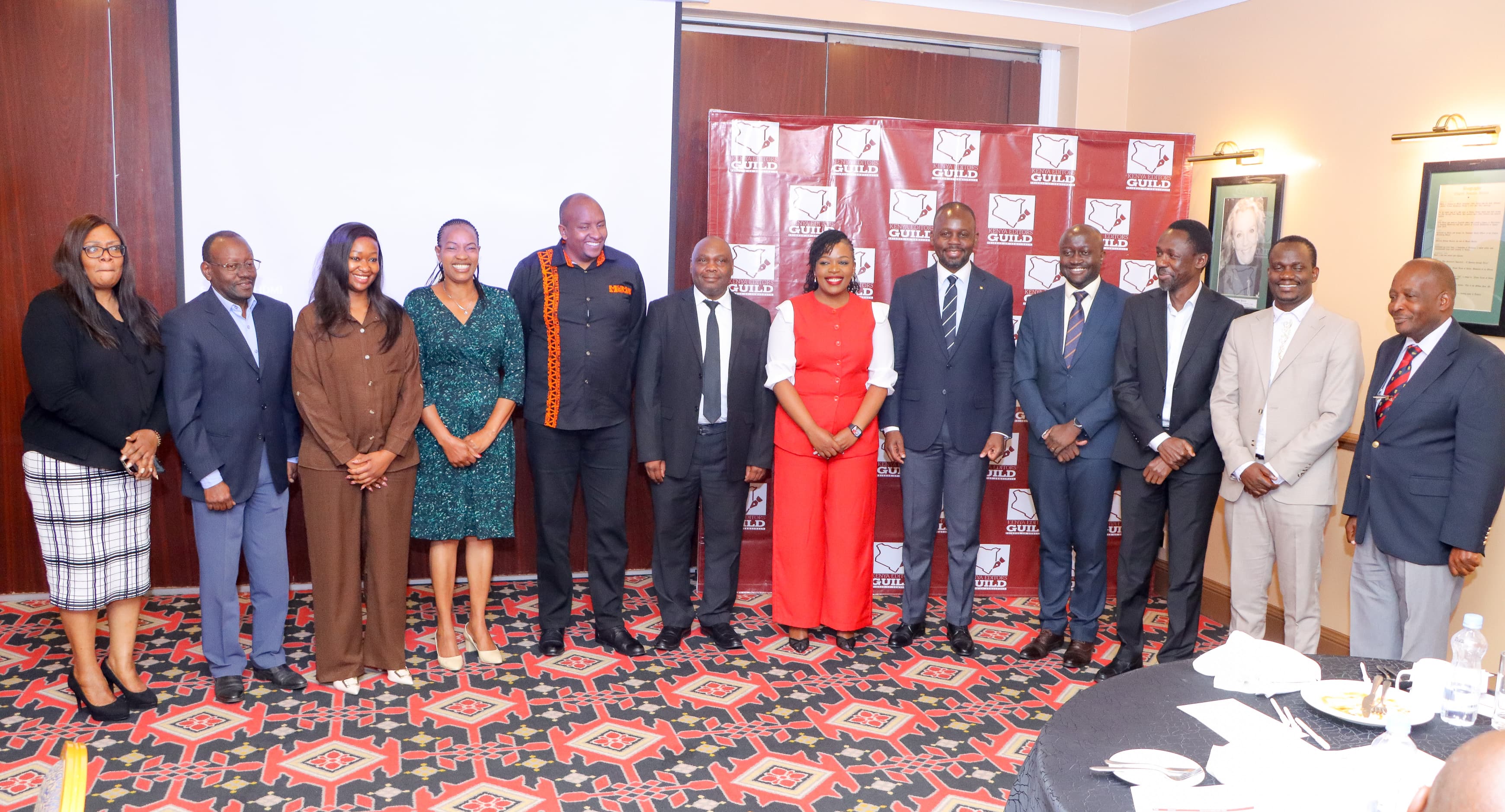
Journalists have been urged to intensify scrutiny of Kenya’s public debt and complex public financing arrangements, with experts and oversight actors warning that gaps in government reporting, limited access to information and weak accountability continue to undermine public trust.
Speaking during an Institutional Dialogue on Media Challenges, Concerns and Recommendations on Complex and High-Risk Public Financing held on Tuesday, speakers challenged journalists to go beyond reporting debt figures and interrogate how public money is borrowed, spent and accounted for.
Francis Rodgers, whose remarks were read by IRI Programmes Lead Apollo Edewa, said many young people have strong views on public debt but often lack accurate, sufficient and contextualised information.
“For IRI, accountability is not simply about the size of debt. It is about the quality of the decisions being followed, the transparency of financing arrangements, the effectiveness of institutional oversight, and the public value ultimately being generated,” Rodgers said.
He said journalists have a responsibility to ask difficult questions and communicate complex financing issues accurately, while institutions must make authoritative information accessible and understandable to citizens.
“When information is fragmented, inaccessible, or highly technical, the resulting vacuum can easily be filled by speculation, misunderstanding, or misinformation,” he said.
The dialogue also focused on the challenges journalists face when reporting on sensitive financial matters.
Kenya Editors Guild president Zubeidah Kananu said journalists should remain firm in the face of harassment and intimidation, arguing that rigorous reporting and verification remain essential tools for protecting independent journalism.
She said national financial decisions have a direct impact on ordinary citizens through public services, household costs and livelihoods.
“When public funds are opaque or mismanaged, it is the ordinary citizen who pays the price through higher living costs and reduced public services,” Kananu said.
Homabay county Senator Moses Kajwang said weak oversight systems at the county level continue to undermine accountability, noting that county assemblies are the primary oversight bodies while the Senate operates as a secondary oversight institution.
He said pending county debts remain a major concern, with liabilities not always being disclosed clearly enough for incoming governors to understand what they have inherited.
“Counties are not disclosing their liabilities. So you come in as a new governor, you don’t know what you are supposed to pay,” Kajwang said.
He also raised concerns over irregular and unsupported expenditure, questioning why spending flagged by the Auditor-General could later appear to have been supported.
“If the Auditor-General is an expert and says it is irregular and it is unsupported, how then does it get supported one month later?” he asked.
Kajwang said the Senate has resisted pressure to limit public access to its proceedings, saying governors had previously asked for livestreams to be stopped because they felt they were being overexposed.
“We are not going to turn off the livestream,” he said, arguing that the public has a right to access real-time information on government accountability proceedings.
Economist and the CEO, Institute of Economic Affairs (IEA) Kwame Owino called for stronger government reporting and external verification of public debt and budget records, saying differences in debt figures can arise from the timing and method used to measure the debt.
“The total public debt in nominal terms is not reported in a single number. Different sources can give different figures depending on the timing and the measurement used,” Owino said.
He said journalists and the public need to understand the distinction between nominal value and present value, particularly when assessing long-term borrowing.
Owino also questioned the lack of accountability for debt thresholds, noting that Kenya established a 55 per cent debt threshold but continues to operate above it.
He warned that expensive borrowing could increase the country’s financial burden and called for greater scrutiny of the government’s borrowing decisions.
“The government cannot necessarily borrow simply because the money is available. You have to look at whether the investment is responsible and whether it will generate enough value,” he said.
Owino further warned that heavy government borrowing can crowd out the private sector by encouraging banks to lend to the government rather than businesses.
“As long as it remains as such, business vitality will not be as strong as we wish,” he said.
He urged journalists to develop long-term expertise in public finance, saying public debt is likely to remain a major economic policy issue for years to come.
Head of Research, Capital A Investment Bank Churchill Ogutu said government borrowing has continued to rise, increasing the pressure on investors to demand higher returns.
He said heavy government borrowing can make it difficult for banks to provide credit to businesses and individuals because lending to government is perceived as safer.
“Because of the higher yield and the government borrowing heavily, even banks, which primarily fund government borrowings, are not able to lend to borrowers like you and me,” Ogutu said.
He, however, noted that reductions in Central Bank lending rates since August 2024 have contributed to an increase in private-sector credit.
Ogutu also identified limited access to information on external borrowing as a major challenge, noting that domestic Treasury bills and bonds are more easily tracked through Central Bank records.
Peter Wakaba said public institutions continue to withhold important information relating to public spending and procurement despite legal requirements for disclosure.
“The law requires information about the service provider, the contract sum and the timeline to be disclosed,” Wakaba said.
He said institutions sometimes publish lists of tenders but fail to disclose the contracts awarded, making it difficult for citizens and journalists to track how public funds are ultimately spent.
Simon Nzioka of the Commission on Administrative Justice said a culture of secrecy and poor records management remains a major barrier to access to information.
He said journalists and citizens have a right to lodge complaints when public institutions fail to provide information required by law.
Nzioka urged journalists not to stop at obtaining documents but to interrogate and verify the information.
“Once you get that information, go beyond that, interrogate it,” he said.
He said journalists should establish whether information is complete, accurate, up-to-date and timely.
According to Nzioka, the Access to Information Act gives the Commission powers to issue binding orders requiring public institutions to release information.
Head of Programmes TISA, Alexander Riithi said the lack of transparency surrounding Kenya’s debt contracts remains a major concern.
He cited a High Court ruling that directed the National Treasury to provide debt contracts within 45 days, saying the order had not been complied with.
“The High Court ruled in our favour and gave the National Treasury 45 days to provide us with the debt contracts. However, this did not happen,” Riithi said.
He said the matter had returned to the High Court through contempt of court proceedings.
“We need to be able to tell Kenyans who we actually owe, how much we owe them and what the payment details are,” he said.
Riithi also raised concerns about beneficial ownership, saying complex layers of companies can make it difficult to establish who ultimately benefits from public financing.
He proposed making beneficial ownership searches free to enable citizens and researchers to trace ownership without financial barriers.
On the controversial Kenren loan, Riithi said Kenya should question its continued repayment if the loan was acquired illegally and the intended fertiliser factory was never constructed.
The dialogue also examined the pressure created by debt servicing, the cost of borrowing, commitment fees on undrawn loans, securitisation and future Eurobond borrowing.
Owino said commitment fees should also be treated as part of the country’s debt burden because they create financial obligations even where projects have not been implemented.
Speakers further called for stronger mechanisms to track beneficial ownership, improve debt data and strengthen cooperation between oversight institutions and the media.
Francis, IRI Country Director, said communicating complex financial issues requires presenting facts in a way that informs the public rather than politicising the debate.
“It is about how the issue is handled, how it is processed, and how it is communicated to the public in ways that present the truth and bring out the appropriate problems rather than just politicising it,” he said.
He said the partnership between institutions and the media should continue growing to improve public understanding of complex financial matters.
The dialogue concluded with calls for stronger institutional transparency, more rigorous journalism and informed public debate as Kenya continues to grapple with debt and broader public financing challenges.
By Joan vata Musyoka
Category: News
Related Video: What Dangote’s proposed Lamu oil refinery could mean for East Africa
Related Explainer: Kenya’s inflation holds near 30-month high as transport and food costs squeeze households
 Facebook
 Twitter / X
 WhatsApp
 LinkedIn
 Telegram
 Reddit