
As Kenya prepares for the 2027 General Election, a fundamental question confronts the country: Will our media be strong, independent and resilient enough to fulfil its democratic responsibilities when Kenyans need it most?
The warning signs are already evident.
Newsrooms are shrinking, experienced journalists are leaving the profession, and media organisations are struggling to remain financially viable. Those who remain are expected to deliver more with fewer resources, often while confronting intimidation, physical threats and online harassment.
At the same time, political tensions are rising, public trust is under pressure, and artificial intelligence is rapidly changing how information is created, distributed and consumed.
Together, these pressures present an unprecedented challenge to Kenyan journalism. Yet it is precisely at such a moment that the country needs a credible, independent and accountable media.
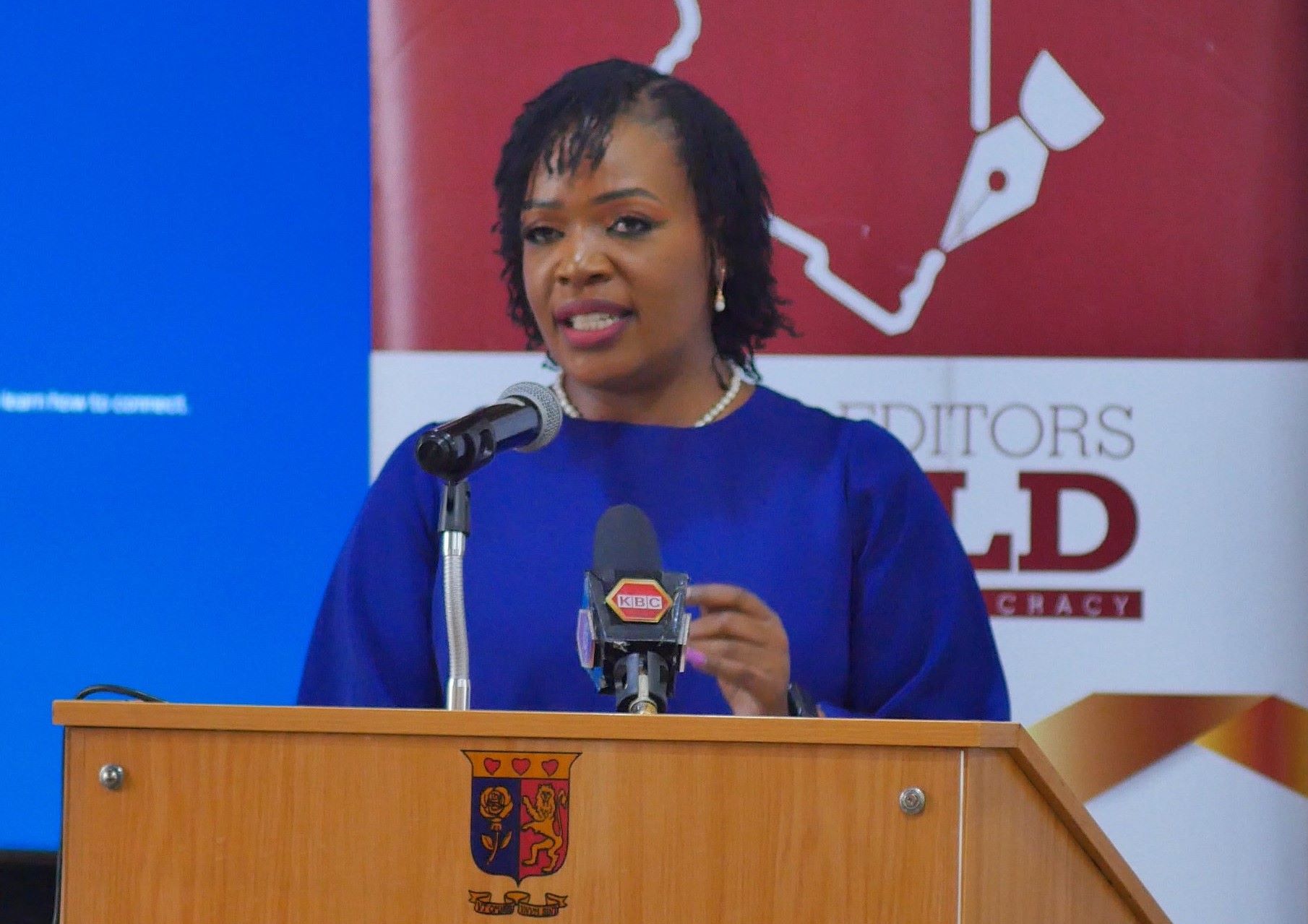
Against this backdrop, the Kenya Editors’ Guild will convene its 9th Annual Editors’ Convention in Mombasa from 25 to 29 November 2026, under the theme “Navigating the Storm: Media Resilience on the Road to 2027.”
The convention is more than an annual gathering of editors. It is an opportunity to confront difficult questions about the future of journalism and, ultimately, the health of our democracy.
Elections are not simply about casting ballots. They are about ensuring citizens have access to accurate, verified and meaningful information before making decisions that will shape their lives.
When politicians promise jobs, affordable healthcare or lower taxes, who interrogates those promises? Who examines their feasibility, follows public money and holds leaders accountable for commitments made during previous campaigns?
Consider a parent struggling to pay school fees, a patient unable to access essential medication or a young graduate searching for employment. Their circumstances are directly influenced by decisions on taxation, public borrowing, resource allocation and governance.
Journalism must therefore go beyond amplifying political promises. It must examine their costs, feasibility and consequences, helping citizens distinguish credible policy proposals from campaign rhetoric.
Preparing for 2027 also requires an honest assessment of our performance during previous elections, particularly in 2022.
The criticism surrounding the media’s involvement in election results tallying raised legitimate questions about accuracy, transparency, verification and public confidence.
What did we get right? Where did we fall short? And how do we strengthen editorial safeguards to ensure that the pressure to report results quickly never comes at the expense of accuracy?
These questions may be uncomfortable, but they cannot be avoided.
We must recognise and address editorial bias, distinguish legitimate political communication from propaganda, and expose attempts by domestic or foreign actors to manipulate public opinion.
Equally important is our responsibility to avoid inflaming political tensions.
The headlines we publish, the language we use and the voices we amplify can either deepen divisions or contribute to informed, peaceful public discourse.
Our duty is to report political conflict accurately and responsibly, without fuelling hostility or compromising the truth.
But how effectively can we fulfil these responsibilities when newsrooms lack the resources to sustain investigative reporting and financial pressures threaten editorial independence?
A financially weakened newsroom is not merely a struggling business. It is a warning sign for democracy.
When newsrooms shrink, specialised reporting disappears, institutional memory is lost, and communities are deprived of information essential to holding power accountable.
Media sustainability must therefore be recognised as a public interest issue, not simply a commercial concern.
Artificial intelligence adds another dimension to this challenge.
AI-generated images, videos and audio recordings are becoming increasingly convincing, making it easier to manufacture false narratives and mislead audiences. Misleading content can spread widely before journalists have an opportunity to establish the facts.
The consequences extend beyond individual falsehoods. When citizens can no longer distinguish credible reporting from fabricated information, trust in journalism and democratic institutions is undermined.
Investing in verification systems, strengthening digital literacy, adopting emerging technologies responsibly and rebuilding public confidence must become urgent priorities.
Yet economic and technological challenges are only part of the storm.
We cannot discuss credible election coverage without confronting the safety, preparedness and welfare of the journalists expected to deliver it.
Journalists have been assaulted, threatened and injured, while others have had their equipment damaged or destroyed in the course of covering political events. Too often, public condemnation and promises of investigations are followed by little visible accountability.
Consider a young reporter deployed to a politically charged demonstration without adequate training, protective equipment or clear safety protocols, yet expected to navigate potential violence, verify competing claims and deliver accurate coverage.
We cannot send journalists into dangerous situations unprepared and expect them to emerge unharmed, physically or psychologically.
Training and capacity building must be central to preparations for 2027.
Journalists need practical skills in conflict-sensitive reporting, fact-checking, election verification, physical security and digital safety. Editors must also be equipped to assess risks, establish clear deployment procedures and make decisions that place the safety of their teams above the pressure to break a story.
Repeated exposure to violence, intimidation and traumatic events can leave lasting psychological effects. Yet too many journalists are expected to move from one distressing assignment to another without adequate psychosocial support.
Behind every headline is a human being.
Our duty of care cannot end when a story is filed. It must include ensuring journalists return safely, have access to appropriate support and work in environments free from intimidation, discrimination and abuse.
This also means confronting sexual harassment and technology-facilitated violence, which disproportionately affect women journalists and can drive experienced professionals out of the industry.
Resilience must not become another word for asking journalists to endure greater hardship. It must mean equipping, protecting and supporting them to practise journalism safely, independently and with dignity.
The Mombasa convention will bring together media leaders, government representatives, constitutional commissions, regulators, technology companies and development partners to examine these challenges and identify practical solutions.
We are honoured that Chief Justice Martha Koome is scheduled to preside over the official opening as Chief Guest. Her participation will underscore the importance of constructive engagement between the media and institutions entrusted with safeguarding constitutionalism and the rule of law.
However, the success of the convention will not be measured by the prominence of its speakers, the number of discussions held or the resolutions adopted.
It will be measured by what changes afterwards.
We must leave Mombasa with clear, actionable commitments: stronger election reporting and verification protocols, sustained newsroom training, enforceable journalist safety measures, accessible mental health support and greater accountability for attacks against media professionals.
We must also advance practical responses to the financial challenges threatening independent journalism, including sustainable business models that protect editorial integrity.
As editors, we have responsibilities of our own.
We cannot demand transparency and accountability from public institutions while resisting scrutiny of our editorial decisions, professional standards, workplace practices and treatment of journalists.
Rebuilding public trust requires us to acknowledge our shortcomings, correct our mistakes and demonstrate that the principles we demand of others also guide our own conduct.
Ultimately, this conversation is about protecting every Kenyan’s constitutional right to information and ensuring that journalism continues to serve the public interest.
When a newsroom closes, a community loses a watchdog. When a journalist is silenced, a story that could expose wrongdoing may never be told. When misinformation goes unchallenged, citizens are denied the facts they need to make informed decisions.
The 2027 General Election will come and go. Political leaders will compete, some will win and others will lose. But the institutions that sustain our democracy must remain strong long after the votes are counted.
The media is one of those institutions.
A resilient media is not one that merely survives the storm. It is one that emerges stronger, more credible, more independent and better equipped to serve the public.
That is the challenge before us in Mombasa. It is also the responsibility we owe the Kenyan people.
Because when journalism is weakened, it is not journalists alone who lose their voice. It is the nation that risks losing its conscience.
You may also like
Category: Opinion
Related Video: Murkomen Says Kenya Is Safe: “Stop Creating a Crisis” | Political Goons & Security Under Scrutiny
About the Author
Zubeidah Kananu Koome is a veteran Kenyan journalist, editor and media leader with more than 18 years of experience in broadcast journalism, editorial management and strategic communication. She is the President of the Kenya Editors’ Guild (KEG), becoming the first woman to lead the organisation in 2023 and securing re-election in May 2025. A former senior editor and news anchor at KTN News, Kananu has extensive experience in political reporting, public affairs and media leadership. She holds a Master’s degree in Governance, Peace and Security and is a strong advocate for press freedom, ethical journalism, media sustainability and journalists’ welfare.
 Facebook
 Twitter / X
 WhatsApp
 LinkedIn
 Telegram
 Reddit