
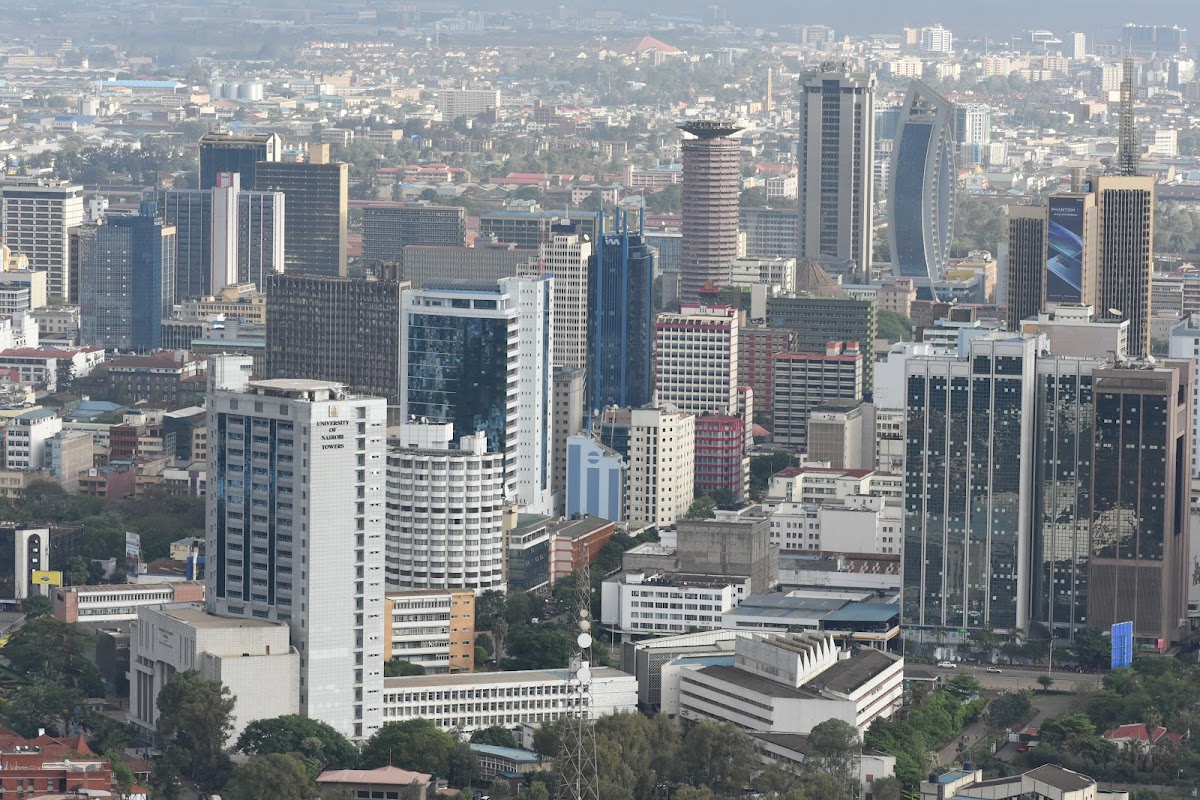
Nairobi property owners will be required to pay their 2027 land rates from January 1, under a structure that calculates charges according to either the size or assessed value of a property.
The county says the rates will remain unchanged from those applied in 2026.
Properties in designated flat rate zones will attract annual charges of between Sh2,560 and Sh4,800. Residential, commercial and agricultural properties listed in the 2019 Draft Valuation Roll will generally be charged 0.115% of their assessed value.
The notice also introduces safeguards for owners whose new bills are significantly higher than what they paid in 2022.

Here is what property owners need to know.
Charges for flat rate zones
In areas where properties are charged according to the size of the land, the annual rates will be:
| Size of land | Annual rate |
|---|---|
| Up to 0.1 hectares | Sh2,560 |
| More than 0.1 hectares but not exceeding 0.2 hectares | Sh3,200 |
| More than 0.2 hectares but not exceeding 0.4 hectares | Sh4,000 |
| More than 0.4 hectares | Sh4,800 |
A tenth of a hectare is approximately a quarter of an acre.
This means a property measuring a quarter of an acre or less in a flat rate zone will attract a charge of Sh2,560 for the year. A property larger than one acre will fall within the highest band of Sh4,800.
These flat charges do not apply to every property in Nairobi. Owners should check whether their land is in a flat rate zone or is assessed through the county valuation roll.
How the 0.115% rate works
For residential, commercial and agricultural properties covered by the 2019 Draft Valuation Roll, the county has set the annual rate at 0.115% of the assessed property value.
The valuation roll is a county register containing rateable properties and the values assigned to them for taxation purposes.
The calculation is made by multiplying the assessed value by 0.00115.
For example:
| Assessed property value | Estimated annual rate |
|---|---|
| Sh2 million | Sh2,300 |
| Sh5 million | Sh5,750 |
| Sh10 million | Sh11,500 |
| Sh20 million | Sh23,000 |
| Sh50 million | Sh57,500 |
These examples are estimates. The final amount will depend on the value recorded against the property and any applicable protection under the county notice.
Property owners should use the valuation shown on their official invoice rather than the current selling price of their land.
Can a bill be more than double the 2022 amount?
The county has included a limit intended to protect property owners from sudden increases.
Where the new rate is more than twice the amount charged in 2022, the 2027 bill will be capped at two times the 2022 rate.
For example, if an owner paid Sh10,000 in 2022 and the new calculation produces a bill of Sh26,000, the amount payable should be limited to Sh20,000.
However, where the new calculation results in a lower bill than the amount paid in 2022, the property owner will continue paying the 2022 amount.
This means the safeguards prevent steep increases but do not necessarily allow owners to benefit from a lower valuation.
The rates become due on January 1, 2027, according to a Gazette notice issued by the Nairobi County Built Environment and Urban Planning Lands Subsector.
What happens to disputed valuations?
Property owners who objected to their inclusion or valuation in the 2019 Draft Valuation Roll will continue paying their previous rates.
That arrangement will remain in place until the Valuation Board hears and determines their objections.
Owners should retain their objection documents, payment records and correspondence with the county. These may be needed to establish that a dispute was lodged and remains unresolved.
Continuing to pay the previous rate does not mean the objection has been allowed. It is a temporary arrangement pending a formal decision.
What sectional title owners must do
Owners of apartments, offices or other units registered under sectional titles have been directed to open individual land rates accounts.
This separates each unit owner’s obligation from the account previously attached to the larger parcel on which the development stands.
A sectional title owner should check whether an individual account has already been created before making payment. Paying into the developer’s, management company’s or original mother title account could make it difficult for the county to credit the payment to the correct property.
What if a property is missing from the valuation roll?
Owners whose properties were not valued or do not appear in the 2019 Draft Valuation Roll have been asked to contact the Chief Valuer at City Hall.
They may be required to provide the title document, identification details, property location and other ownership records before an account is opened or corrected.
Owners should also confirm that the name, title number, land size, property use and account balance shown in county records are accurate.
Errors should be raised before payment, particularly where a property has been subdivided, transferred, converted to sectional ownership or assigned to the wrong category.
Could the rates affect tenants?
Land rates are charged to property owners, not tenants.
However, landlords may consider land rates and other operating expenses when reviewing rent. The announcement does not automatically authorise a rent increase.
Any change in rent should follow the tenancy agreement and applicable law.
Tenants should therefore be cautious if a landlord claims that the county has introduced a large new charge. Nairobi says the rates announced for 2027 are unchanged from 2026.
County targets Sh50 billion in arrears
The announcement comes as City Hall steps up the recovery of unpaid land rates, penalties and interest estimated at about Sh50 billion.
Nairobi has approximately 250,000 registered parcels, but only about 50,000 owners are reported to pay their rates consistently.
The county has appointed six private debt collection firms to pursue accounts that have been in arrears for more than three years.
Owners with outstanding balances should first request an official statement and confirm that every payment previously made has been credited.
Any demand from a private debt collector should include sufficient details to identify the property, the principal amount owed, penalties and the authority under which the collection is being made.
Payments should only be made through official county channels.
How to obtain an invoice
Property owners can obtain their invoices through the Nairobi County online services portal at nairobiservices.go.ke.
The portal provides services for land rates and other property related payments.
Before paying, an owner should confirm:
- The property and title numbers
- The registered owner’s name
- The assessed value or applicable flat rate
- Any arrears, penalties or interest
- Payments already credited to the account
- Whether the increase has been capped correctly
- The official payment reference
Owners should download the invoice and retain the payment receipt for future transactions such as a property sale, transfer, financing application or application for a rates clearance certificate.
Category: Business
Related Video: Dolly Parton’s Family Announces Her Passing in Emotional Tribute
Related Explainer: Explainer: Your car burns at a garage: Who pays for the damage?
 Facebook
 Twitter / X
 WhatsApp
 LinkedIn
 Telegram
 Reddit