
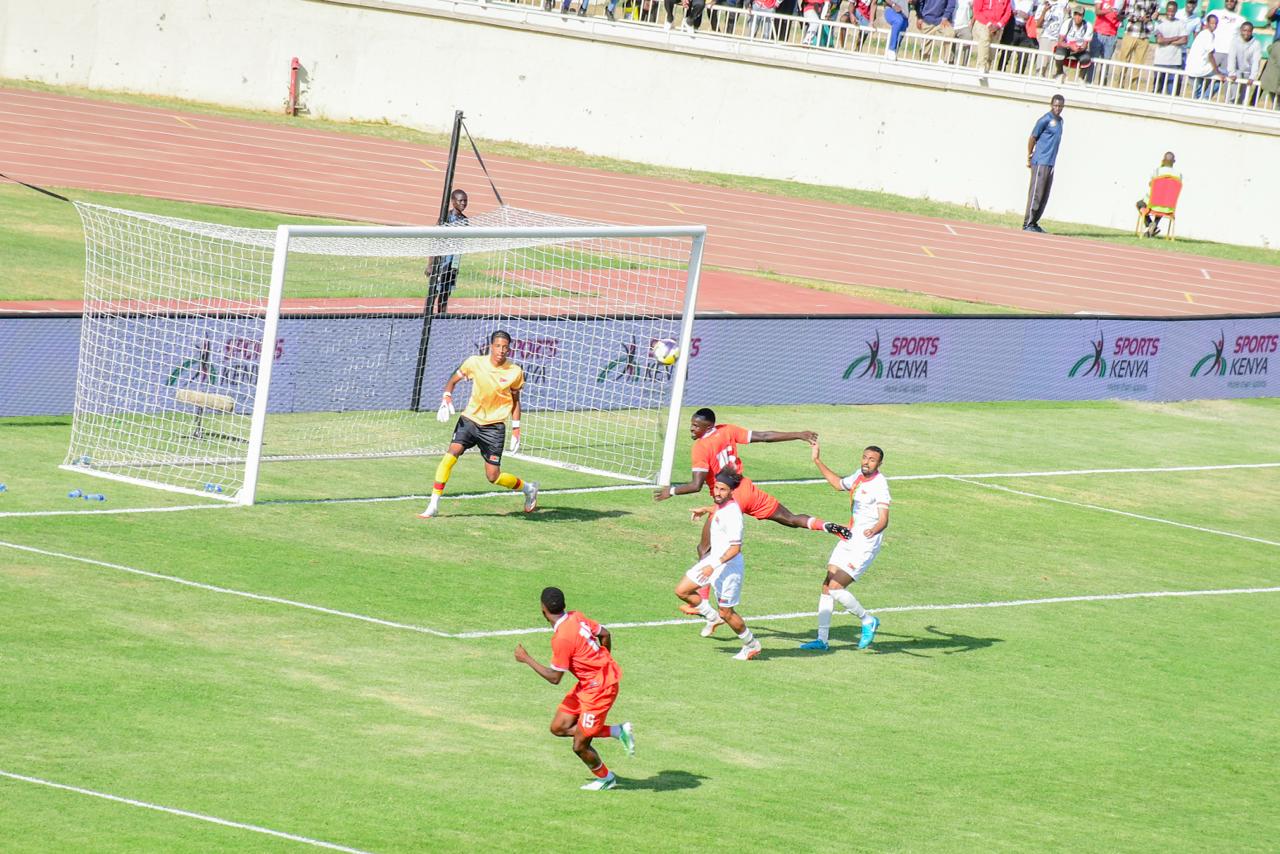
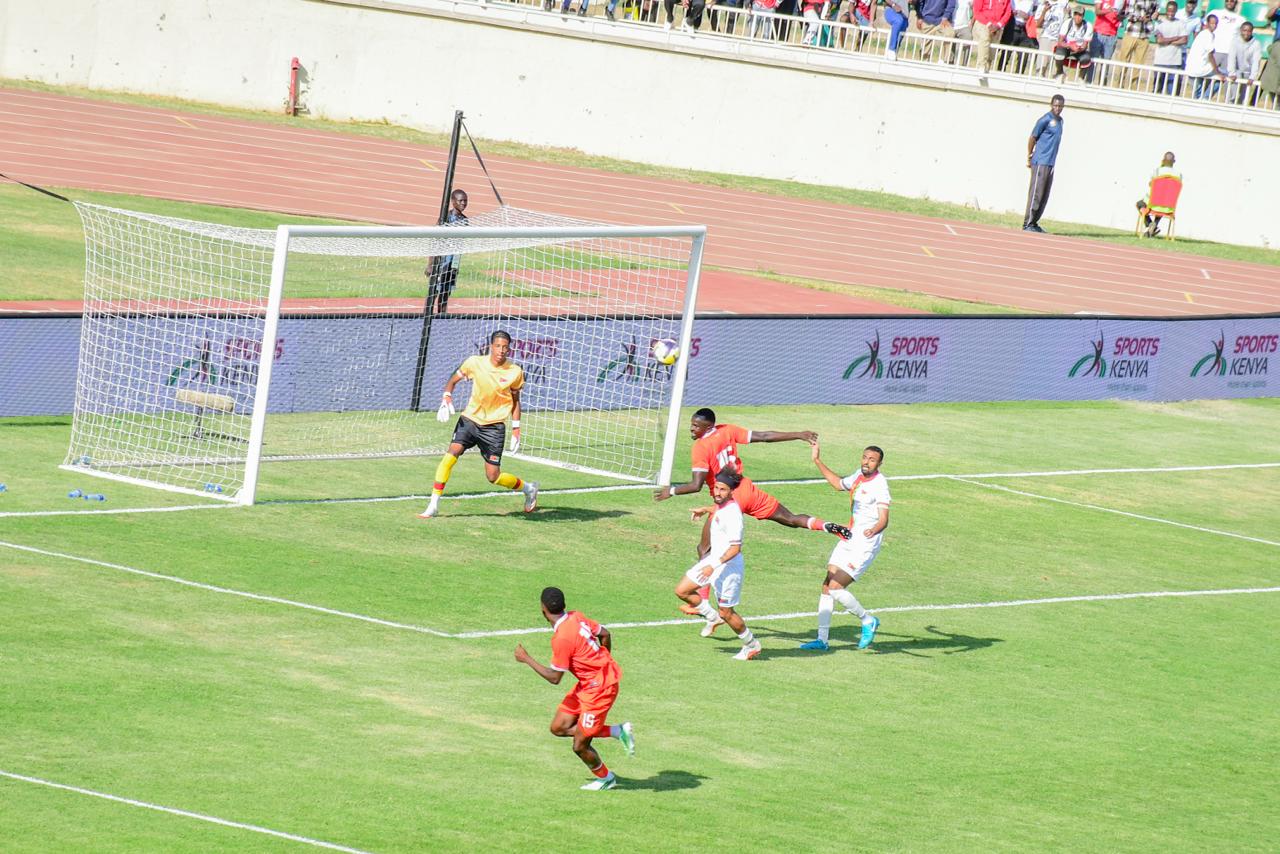
Harambee Stars were held to a 1-1 draw by Eritrea at Nyayo National Stadium on Saturday, an underwhelming start to an Africa Cup of Nations qualifying campaign that should serve as one of Kenya's most important preparation platforms before hosting the continental tournament next year.
Kenya entered the Group D match already assured of a place at the 2027 Africa Cup of Nations by virtue of being one of the three co-hosts alongside Uganda and Tanzania.
That means Saturday's result does not threaten Kenya's participation in AFCON 2027.
But with the tournament now less than a year away, every competitive international match provides coach Benni McCarthy with an opportunity to determine whether Harambee Stars are developing into a team capable of doing more than simply participating on home soil.

Against Eritrea, the evidence was mixed.
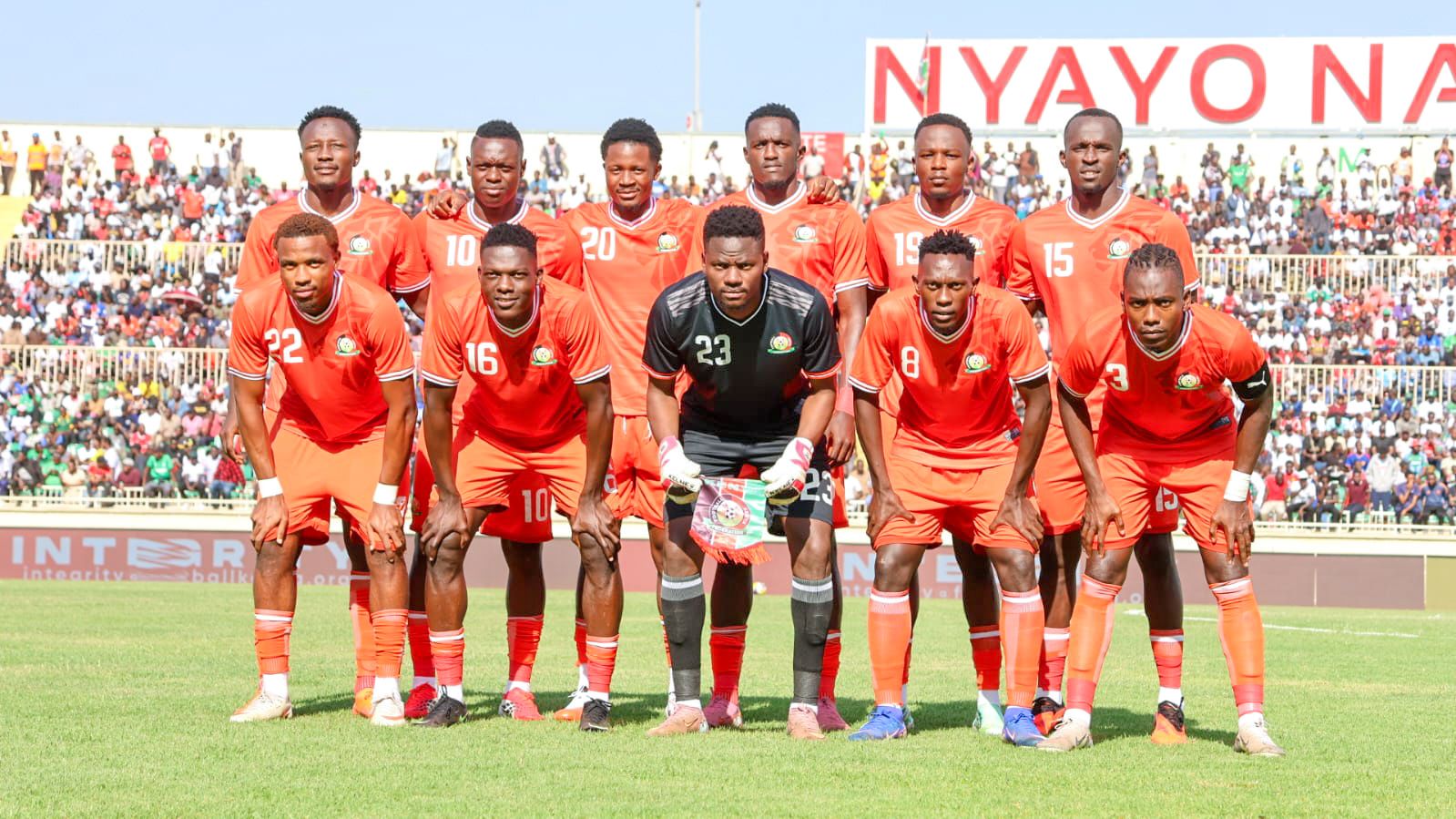
A 1-1 draw at home against a side Kenya would ordinarily expect to challenge strongly demonstrated how much work remains before Africa's strongest national teams arrive in East Africa next year.
The result also continued Kenya's difficult recent record against Eritrea.
Before Saturday's meeting, Eritrea had won the previous three encounters between the countries, including a 4-1 victory in the 2019 CECAFA Senior Challenge Cup final. Kenya's previous defeats included 1-0 and 2-1 losses during AFCON qualifying in 2007 and 2006 respectively.
Saturday's draw at least ended that losing sequence, but for a country preparing to host Africa's premier football tournament, avoiding defeat to Eritrea cannot be the ultimate benchmark.
The bigger question is what Kenya learns from it.
Poor preparation came back to haunt Harambee Stars
Kenya's preparations for the match were badly disrupted before a ball was kicked.
Players declined to train earlier in the week over unpaid allowances and welfare concerns, leaving McCarthy with only one collective training session before facing Eritrea.
Forward Ryan Ogam confirmed on Friday that the players had returned to training after the dispute, although he indicated that concerns over allowances had not been resolved exactly as the squad expected.
That is not an acceptable preparation model for a national team that will host AFCON in approximately nine months.
International football offers coaches very limited time with players even under normal circumstances.
Losing several days of an already short camp makes tactical preparation, set-piece work, defensive organisation and attacking combinations considerably harder.
The responsibility does not fall solely on the players or technical bench.
Football Kenya Federation, the Ministry of Sports and other authorities involved with the national team need to ensure allowances, travel, accommodation, training facilities and other logistical matters are resolved before players report to camp.
Kenya cannot aspire to compete with Africa's elite while beginning international windows with disputes about whether players have been paid.
Owalo joins fans at Nyayo
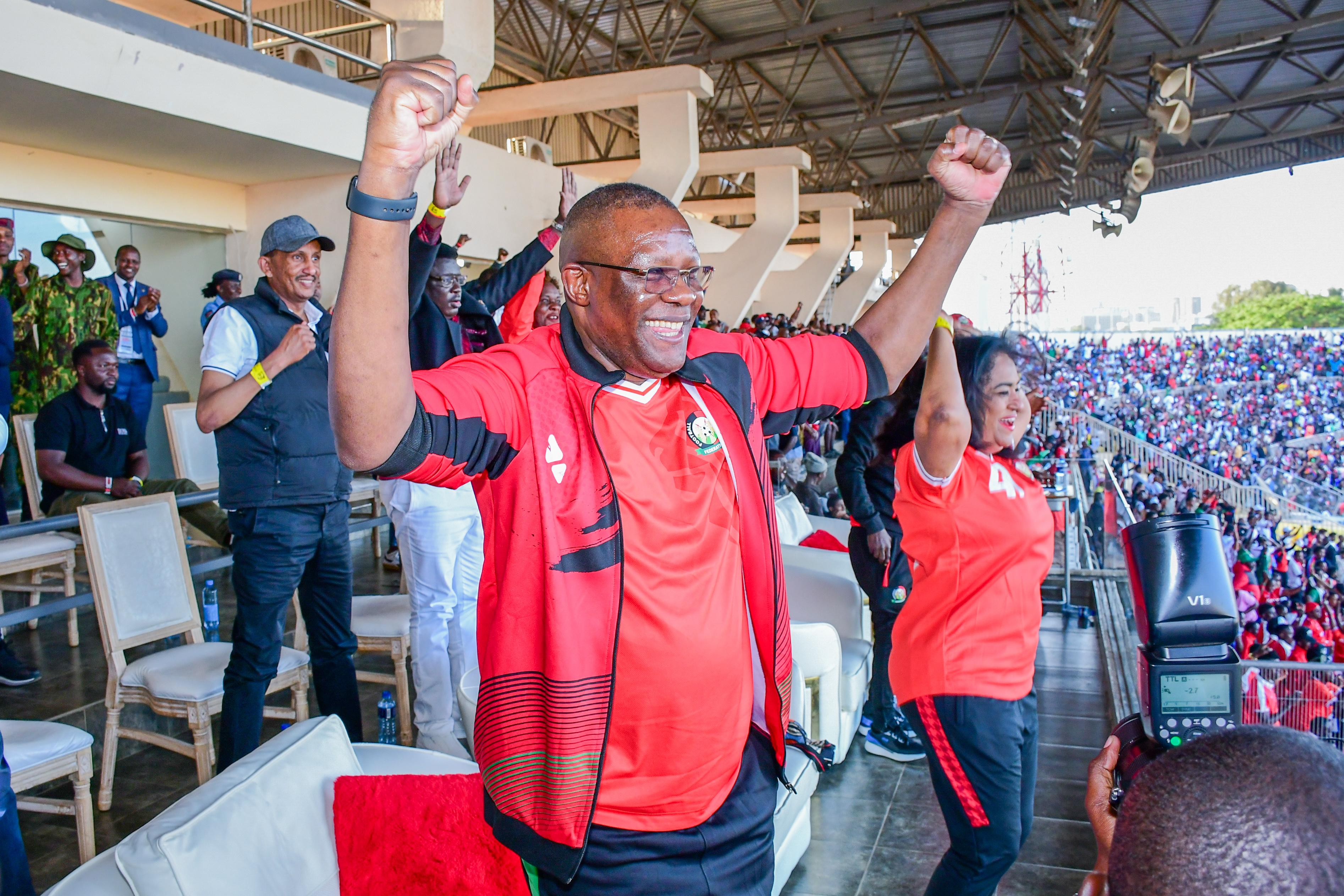
Presidential aspirant Eliud Owalo joined other leaders and football fans at Nyayo National Stadium to watch Harambee Stars take on Eritrea.
Reacting after the 1-1 draw, Owalo described the encounter as an exciting match despite Kenya missing several scoring opportunities.
“Multiple missed chances for Harambee Stars, but an exciting game and good work in progress,” Owalo said.
His attendance came as supporters turned out to back Harambee Stars as the national team builds towards the 2027 Africa Cup of Nations, which Kenya will co-host with Uganda and Tanzania.
Kenya needs an identity that survives without Olunga
Saturday also offered an important test because Michael Olunga was unavailable.
McCarthy deliberately left the Harambee Stars captain out after his recent return from a serious injury, saying he did not want to risk the striker after Olunga had only recently returned to regular action.
That decision was understandable.
It also exposed one of the questions Kenya must answer before AFCON: where do the goals come from when Olunga is unavailable or tightly marked?
For years, the captain has been Kenya's most established attacking reference point.
But successful tournament teams cannot depend entirely on one striker.
Ryan Ogam and other forwards need competitive minutes and defined roles. Kenya must develop goals from wide players, midfield runners and set pieces.
AFCON opponents will study Olunga closely.
If stopping one player dramatically reduces Kenya's attacking threat, stronger teams will exploit that dependence.
McCarthy therefore needs to use the qualifying campaign to build alternative attacking structures rather than waiting until the tournament itself.
Treat the qualifiers as if Kenya's place depended on them
CAF's qualification arrangement creates an unusual situation.
Kenya participates in Group D despite already being guaranteed a place at AFCON as a co-host. Only the highest-placed team among South Africa, Guinea and Eritrea will qualify alongside Kenya from the group.
That could tempt Kenya to regard results as secondary.
It would be a mistake.
Harambee Stars should approach every qualifier as though qualification depended on it.
South Africa will provide a particularly valuable benchmark.
Bafana Bafana finished third at the 2023 AFCON and reached the knockout phase of the 2026 World Cup before entering this qualifying cycle under returning coach Pitso Mosimane. Guinea, meanwhile, have players competing at high levels in European football, including striker Serhou Guirassy.
Those are exactly the kinds of opponents Kenya needs.
If Harambee Stars cannot consistently compete against South Africa and Guinea in qualifying, there will be little reason to assume that merely playing at home will make them competitive against Africa's strongest teams next year.
McCarthy needs a settled core
The remaining qualifiers should also help McCarthy identify the core of his AFCON squad.
Continually changing large sections of the team would reduce the value of these matches as tournament preparation.
The coach needs competition for positions, but he also needs a group of players who understand one another.
By early 2027, Kenya should have a recognisable first-choice goalkeeper, established central-defensive partnership, functioning midfield combination and clear attacking structure.
The final months before AFCON should then be used to refine the team rather than discover it.
That does not mean closing the door to emerging players.
It means building enough continuity that a new player enters an established system rather than another experimental lineup.
The domestic league matters too
Kenya's AFCON ambitions cannot be separated from domestic football.
The 2026/27 SportPesa Premier League season has itself faced disruption following the dispute between Kariobangi Sharks and Mombasa United over the final top-flight position.
Domestic players need consistent competitive football if they are expected to challenge foreign-based players for national-team places.
McCarthy also needs a strong scouting structure extending beyond the most obvious established internationals.
Kenya's successful CHAN campaign in 2025 demonstrated that locally based players can compete effectively when they receive proper preparation, tactical organisation and strong home support.
The challenge is integrating that domestic talent with Kenya's overseas-based professionals.
Kenya needs stronger opponents before AFCON
The qualifiers alone will not be enough.
FKF should already be working on a programme of high-quality international friendlies for 2027.
Kenya needs exposure to different African football styles.
Matches against North African opposition would test Harambee Stars against technically disciplined teams comfortable controlling possession.
West African opponents would provide tests of pace, physicality and individual quality.
Southern African teams can provide tactically organised opposition similar to what Kenya will encounter against South Africa.
Playing only opponents Kenya expects to beat would create false confidence.
The objective should be to expose weaknesses while there is still time to fix them.
Home advantage must become a weapon
Nyayo and Kasarani should also become genuine home advantages.
Hosting AFCON provides Kenya with something most tournament teams will not have: familiar conditions, reduced travel and large home crowds.
But home advantage has to be cultivated.
Supporters need a team they recognise and believe in.
The federation needs reliable ticketing, proper security, good match-day organisation and sustained promotion of Harambee Stars.
Players, meanwhile, must make opponents uncomfortable playing in Nairobi.
A 1-1 draw against Eritrea is therefore about more than two dropped points in a qualifying group that cannot eliminate Kenya.
It is a warning about the difference between hosting AFCON and being ready for AFCON.
Nine months to turn potential into a tournament team
Kenya has talent.
Olunga remains one of Africa's established strikers. McCarthy has access to an expanding pool of players based abroad as well as talent emerging from the domestic game.
The country will also have home support when AFCON begins.
What Kenya does not have is unlimited time.
AFCON 2027 is scheduled for June and July next year.
Between now and then, Harambee Stars need uninterrupted camps, settled player welfare arrangements, a recognisable tactical identity, greater attacking depth, a stable defensive unit and competitive matches against strong opposition.
Saturday's draw should therefore not be treated as a disaster.
Neither should it be dismissed because Kenya has already qualified.
The automatic ticket guarantees Harambee Stars a place at the tournament.
It guarantees nothing about what happens once they get there.
If Kenya wants AFCON 2027 to be remembered for more than new stadiums and successful hosting, the football team itself must be capable of competing deep into the tournament.
The road towards that objective has begun.
A 1-1 draw with Eritrea at Nyayo has shown just how much ground remains to be covered.
You may also like
Category: Sports · Related Topic: Kenya Sports
Related Video: Dolly Parton’s Family Announces Her Passing in Emotional Tribute
Related Explainer: Fact Check: Did elephants save people during Nepal’s floods?
 Facebook
 Twitter / X
 WhatsApp
 LinkedIn
 Telegram
 Reddit