
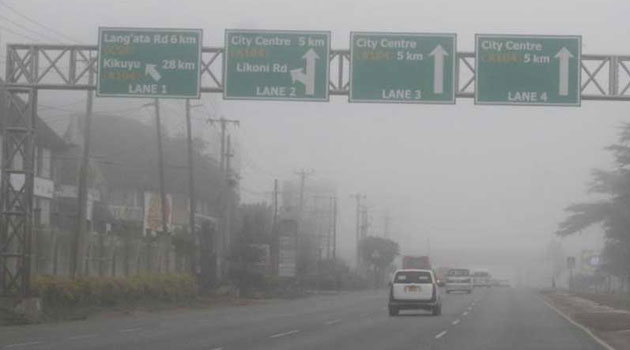
If Nairobi has felt colder than usual this August, it is not just your imagination.
Weather experts say the capital's prolonged cold spell is being driven by a combination of seasonal south-easterly winds and a large-scale atmospheric pattern known as the Madden-Julian Oscillation (MJO), which is increasing cloud cover across Equatorial Africa and the Indian Ocean.
The result is a week of grey skies, lower daytime temperatures and chilly nights that are expected to persist across Nairobi and much of Kenya's central highlands.
Weather analyst Maithya wa Vilivū said the current conditions are being strengthened by the MJO, a weather system that travels around the tropics every 30 to 60 days and influences rainfall, cloud formation and wind patterns.
"This week, increased cloudiness due to the recent Madden-Julian Oscillation wave across Equatorial Africa and the Indian Ocean will reinforce chilly weather over the highlands east and west of the Rift, including the Nairobi Metro Area," he explained.
Unlike cold spells caused by rainfall alone, the current conditions are largely being sustained by thick cloud cover. The clouds block much of the sun's heat during the day, preventing temperatures from rising, while cool south-easterly winds help maintain lower temperatures.
According to the analyst, Monday and Tuesday are expected to be the coldest days of the week because persistent cloud cover will significantly reduce sunshine hours.
Residents may experience a brief improvement on Wednesday as temperatures rise slightly before another cold spell returns on Thursday and Friday. Saturday is expected to be relatively warmer before cooler conditions return on Sunday.
Kenya Met: Cold Weather Not Over Yet
The expert's assessment aligns with forecasts issued by the Kenya Meteorological Department, which says Kenya is slowly transitioning out of the cold season but that several regions will continue experiencing cool and cloudy weather throughout August.
The department expects Nairobi, Kiambu, Murang'a, Nyeri, Embu, Meru, Tharaka Nithi, Kirinyaga and Nyandarua counties to experience intermittent cloudiness, morning drizzle, fog and occasional light rainfall.
Its weekly forecast for August 4 to August 10 also indicates that much of the country will remain dry, although counties including Bungoma, Trans Nzoia, Kakamega, Nakuru, Uasin Gishu, Elgeyo Marakwet, Kericho, Nyandarua, Nyeri and Murang'a could receive some rainfall.
For Nairobi, daytime temperatures are forecast to peak at around 27°C, while night-time temperatures could fall to about 11°C, making mornings and evenings particularly cold.
Several highland areas are expected to record minimum temperatures below 10°C.
More Than Just a Cold Morning
The weather department has also warned that strong south-easterly winds could affect northern, eastern and coastal Kenya, potentially disrupting transport, damaging light structures and making already chilly conditions feel even colder.
Fog is also expected to reduce visibility in some highland areas, posing risks for motorists during early morning hours.
Health experts often caution that prolonged cold weather can contribute to an increase in respiratory illnesses such as asthma attacks, influenza, pneumonia and the common cold, particularly among children, older adults and people with underlying health conditions.
While Kenya is expected to move gradually towards the October-November short rains season, forecasters say residents in Nairobi and neighbouring counties should prepare for several more days of jackets, blankets and overcast skies before warmer conditions become more consistent.
Related Stories
- Doctor asks High Court to halt alleged 2% SHA claim deduction, citing legal and accountability concerns
- Kenya Braces for Dry August as Weatherman Warns of Food and Water Shortages
- Police officer in court over alleged kidnapping and KSh1 million extortion plot targeting online traders
Category: News
Author: Livenow Africa
 Facebook
 Twitter / X
 WhatsApp
 LinkedIn
 Telegram
 Reddit