
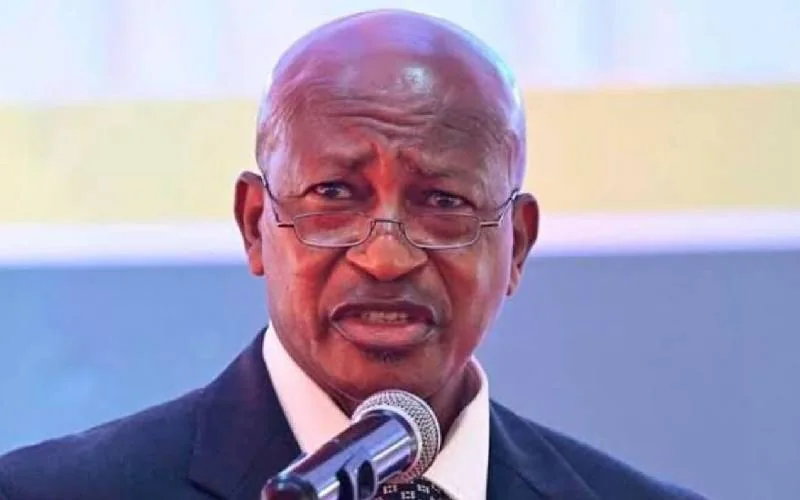
Former Attorney General Paul Kihara Kariuki, whose career took him from private legal practice to the leadership of the Court of Appeal and the State Law Office, has died aged 72.
Chief Justice Martha Koome announced his death on Tuesday, November 3, in a statement issued on behalf of the Judiciary. His family also confirmed his passing.
Koome described the retired judge as an accomplished jurist and public servant whose work helped shape Kenya’s legal and judicial institutions.
“It is with profound sadness that I have learnt of the passing of Hon. Justice (Rtd.) Paul Kihara Kariuki, EGH, former Attorney General of the Republic of Kenya and former President of the Court of Appeal,” she said.
President William Ruto also mourned Kariuki, praising his contribution to the country’s justice system. He singled out his work as the founding director of the Judiciary Training Institute, where he helped establish a framework for the professional development of judges and other judicial officers.
“We shall remember Justice Kihara as an accomplished jurist and dedicated public servant, who made an invaluable contribution to the development and strengthening of Kenya’s legal and judicial institutions,” Ruto said.
Former President Uhuru Kenyatta, who appointed Kariuki Attorney General, also joined the tributes, recognising his service in both the Judiciary and the Executive.
From private practice to the Court of Appeal
Kariuki’s career spanned nearly five decades. He was among the senior legal figures who served across different arms of the State, taking on responsibilities in legal education, judicial leadership and government.
He studied law at the University of Nairobi, graduating in 1977, before obtaining a postgraduate diploma from the Kenya School of Law.
He began his career at Hamilton Harrison and Mathews Advocates before co-founding Ndungu Njoroge and Kwach Advocates. He later moved into legal education, serving as Director of the Kenya School of Law.
President Mwai Kibaki appointed him a High Court judge in 2003. He served in the civil and commercial divisions and later took on senior responsibilities within the Judiciary.
In 2009, he was selected to lead the newly established Judicial Training Institute. The institution became an important part of efforts to give judges, judicial officers and Judiciary staff structured professional training. It later evolved into the Kenya Judiciary Academy.
Kariuki joined the Court of Appeal in 2012. A year later, his fellow judges elected him President of the court, a position he held until 2018.
He was the first President of the Court of Appeal elected by his colleagues under the 2010 Constitution. During his tenure, he championed changes intended to improve the court’s efficiency and make appellate services more accessible beyond Nairobi.
At the centre of Kenya’s constitutional battles
In February 2018, then-President Uhuru Kenyatta nominated Kariuki to succeed Professor Githu Muigai, who had resigned as Attorney General. Parliament approved the nomination, and Kariuki was sworn in on April 2, 2018.
As the Government’s principal legal adviser, he took office at a politically significant moment. The March 2018 handshake between Kenyatta and opposition leader Raila Odinga had opened the way for the Building Bridges Initiative (BBI), which sought changes to Kenya’s constitutional and political arrangements.
The Attorney General’s office became central to the Government’s defence of the initiative as opponents challenged its legality in court.
The dispute eventually reached the Supreme Court. In March 2022, the court delivered a landmark judgment that found key aspects of the process unconstitutional, dealing a major blow to the proposed reforms.
Kariuki’s tenure also coincided with tensions between the Executive and the Judiciary over the appointment of judges recommended by the Judicial Service Commission. Kenyatta’s refusal to appoint 41 nominees drew criticism from then Chief Justice David Maraga and raised questions about the separation of powers.
These episodes placed the Attorney General’s office at the centre of some of the country’s most consequential legal and constitutional debates.
Kariuki served until October 2022, when he handed over to Justin Muturi following the formation of Ruto’s administration.
A career beyond public office
Away from government, Kariuki maintained links with the legal profession and the Anglican Church of Kenya, where he served as an honorary legal adviser.
He was also associated with professional bodies including the Law Society of Kenya, the Commonwealth Lawyers Association and the International Bar Association.
His career was marked by movement between private practice, legal education, the courts and government. While his time as Attorney General placed him in the middle of politically charged legal disputes, his earlier work in judicial training and appellate court leadership formed a significant part of his contribution to the country’s justice institutions.
Koome said his influence would continue through the institutions he helped develop and the legal professionals who benefited from his leadership.
“His legacy will endure through the institutions he helped build, the reforms he championed and the generations of judicial and legal professionals who benefited from his leadership,” she said.
Kariuki’s death marks the end of a long career in which he held some of Kenya’s most senior legal offices. His work in the Judiciary and the Executive leaves a record that will be remembered as the country continues to debate the independence, accessibility and accountability of its justice system.
You may also like
Category: News · Related Topic: William Ruto
Related Video: What Dangote’s proposed Lamu oil refinery could mean for East Africa
Related Explainer: Why the BCG Vaccine Leaves That Small Scar on Your Arm
About the Author
Maureen Onyango is a journalist passionate about storytelling, life coaching and spiritual lessons. She studied at the Kenya Institute of Management and enjoys telling stories that inform, inspire and empower communities.
 Facebook
 Twitter / X
 WhatsApp
 LinkedIn
 Telegram
 Reddit