
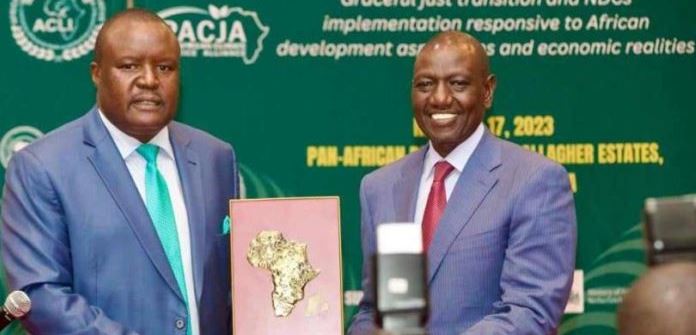
President William Ruto has taken a significant step by endorsing the Malabo Protocol, a continental law that provides immunity to Heads of State and other senior government officials from prosecution for serious international crimes while they are still in office.
On Monday, July 24, President Ruto signed the protocol of the African Union, which relates to the Pan-African Parliament (PAP). This signing paves the way for the ratification of the Malabo Protocol, which includes an immunity clause safeguarding heads of state and senior state officials from investigation for crimes committed under international law.
The decision to sign the Malabo Protocol fulfills a commitment made by President Ruto during his keynote address at the 3rd Pan-African Parliament's Summit on Climate Policy and Equity held in May at the Parliament's Headquarters in Midrand, South Africa. He had promised to ratify the protocol by September 2023, and this initial signing marked the first step in that process.
The ratification journey of the protocol includes three stages: signing, ratifying, and depositing the instruments at the African Union Commission for the protocols to enter into force. By signing the protocol, Kenya became the 23rd state to do so, and it aims to ratify it by September, making it the 16th country to take this step.

President Ruto expressed his belief in the continent's ability to find African solutions to its challenges and reaffirmed Kenya's commitment to consolidating issues around the African Union. He emphasized that achieving the goals of Agenda 2063, the African Continental Free Trade Area (AfCFTA), and creating a prosperous future for the continent relies on concrete actions rather than remaining as mere aspirations.
The Malabo Protocol, which was adopted at the African Union Assembly of Heads of State and Government Summit in June 2014 in Equatorial Guinea, is intended to expand the powers of the Pan-African Parliament into a fully-fledged legislative organ of the Union. Currently, PAP primarily serves consultative and advisory roles.
Under customary international law, serving heads of state and senior state officials are only granted immunity from the jurisdiction of a third state, not immunity before international courts. The adoption of the Malabo Protocol seeks to extend this immunity to international crimes as well.
President Ruto's decision to sign and eventually ratify the protocol marks a significant development in the protection of government officials from international prosecution in the context of their official duties. However, it also raises discussions on the implications of such immunity for accountability and justice in the African Union.

You may also like
Category: News · Related Topic: William Ruto
Related Video: Murkomen Says Kenya Is Safe: “Stop Creating a Crisis” | Political Goons & Security Under Scrutiny
 Facebook
 Twitter / X
 WhatsApp
 LinkedIn
 Telegram
 Reddit