
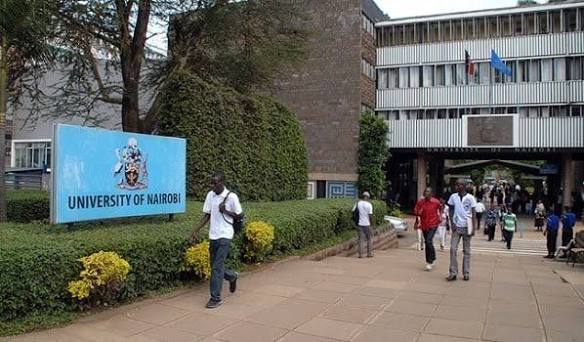
Public university lecturers are expected back in classrooms on Monday, November 2, after their unions signed a KSh20 billion agreement with the government to end a four-week strike that disrupted learning across the country.
The return offers relief to thousands of students who have spent weeks away from lectures, research and other academic activities. But the agreement has not resolved every dispute between university staff and the government.
Questions remain over medical cover, KSh7.9 billion in outstanding salary arrears from the previous collective bargaining agreement and other demands that unions had put forward before the strike.
The Universities Academic Staff Union (UASU), Kenya Universities Staff Union (KUSU) and the Kenya Union of Domestic, Hotels, Educational Institutions, Hospitals and Allied Workers (KUDHEIHA) called off the industrial action on Friday, October 30.
UASU Secretary-General Constantine Wasonga confirmed that the unions and the Inter-Public Universities Councils Consultative Forum had signed a Return to Work Formula following negotiations under an inter-ministerial team.
In a statement, UASU directed its members to resume teaching, research and other academic duties on November 2. The union also appealed to students to return to their studies.
The strike began on October 2 after negotiations over the 2025–2029 Collective Bargaining Agreement (CBA) stalled. Staff had demanded better pay and improved working conditions, while the government and university managements struggled to agree on the funding required.
How the KSh20 billion deal will work
Under the agreement, the government will release KSh20 billion over three financial years to support implementation of the 2025–2029 CBA.
The money will be disbursed in three instalments:
-
KSh6.7 billion in the 2026/2027 financial year.
-
KSh6.7 billion in the 2027/2028 financial year.
-
KSh6.6 billion in the 2028/2029 financial year.
The agreement provides for a 3.5 per cent annual increase in basic salaries over four years, backdated to July 1, 2025. Staff will also receive the automatic annual salary increment of five per cent.
Several allowances, including commuter, leave, passage and baggage allowances, will also be harmonised and improved for most academic staff.
The parties further agreed on how to settle salary and allowance arrears accumulated during the first year of the new CBA.
Arrears covering July 1, 2025 to June 30, 2026 will be paid in three instalments. Amounts accruing between July and December 2026 are expected to be included in January 2027 salaries.
The deal also protects employees who took part in the strike. Disciplinary proceedings initiated against staff over their participation are to be withdrawn. Employees serving on contracts should not have their renewal affected because they joined the industrial action.
What the agreement has not settled
Despite the breakthrough, the KSh20 billion package falls short of the unions' original financial demands.
Before the strike, public university staff unions had sought about KSh98 billion to address their claims under the CBA. The government’s earlier offer of KSh11.96 billion was rejected before the parties settled on the latest figure.
The Star reported that medical cover and KSh7.9 billion in arrears from the expired 2021–2025 CBA remain outstanding issues.
The arrears dispute is particularly important because it relates to an earlier agreement, rather than the new salary package. The unions had sought the intervention of Parliament’s Education Committee to help secure payment.
Wasonga, however, defended the negotiated settlement, saying the unions had agreed to a figure reached through discussions rather than imposed by the government.
“We have agreed on a figure we have negotiated with the government, not a figure imposed on the union,” he said during the announcement of the deal.
The union's position is that the agreement represents progress after prolonged negotiations. But its implementation will now be closely watched by staff who expect the government to honour the financial commitments.
Students face another challenge: recovering lost time
For students, the end of the strike does not immediately restore the academic calendar.
The disruption affected teaching, research and other university programmes. Some students also staged demonstrations to demand an end to the deadlock, including protests by University of Nairobi students that disrupted traffic along Waiyaki Way.
Those facing the greatest uncertainty include final-year students awaiting examinations, learners whose graduation dates may be affected and those whose academic programmes depend on practical sessions or research activities.
University managements will now have to communicate revised teaching schedules and examination dates. They will also need to find ways to recover lost academic time without creating further pressure on students and staff.
The return-to-work agreement provides a basis for normal operations, but individual institutions may not resume every activity at the same pace.
The government must also ensure that the promised funds are released on schedule. A delay in financing the agreement could reopen the same dispute that brought universities to a standstill.
For now, lecturers are expected back at work and students have been asked to return. The bigger test will be whether the KSh20 billion commitment is implemented fully and whether the outstanding issues can be resolved without another disruption to university education.
You may also like
Category: Education
Related Video: Dolly Parton’s Family Announces Her Passing in Emotional Tribute
Related Explainer: Kenya G-to-G Oil Deal Explained: How It Works, Who Supplies the Fuel and Why It Is Controversial
About the Author
Maureen Onyango is a journalist passionate about storytelling, life coaching and spiritual lessons. She studied at the Kenya Institute of Management and enjoys telling stories that inform, inspire and empower communities.
 Facebook
 Twitter / X
 WhatsApp
 LinkedIn
 Telegram
 Reddit