
NAIROBI, Kenya — Bangladesh has vaccinated nearly 20 million children against measles.
Yet the outbreak is still claiming lives.
More than 1,000 suspected and confirmed measles-related deaths have now been recorded since the outbreak accelerated in March, with roughly 1,000 new suspected cases being reported each day, according to the latest government figures cited by international media.
The crisis has exposed a difficult gap in Bangladesh’s vaccination response. Reaching millions of children has not necessarily meant reaching every child who remains vulnerable.

By September 13, health authorities said 19,771,720 children had received measles-rubella vaccines under the emergency campaign. That was about 10 per cent above the original target of 18,015,064 children.
But infections continue.
Bangladesh is preparing another nationwide vaccination push from September 26, with authorities seeking to find children who may have been missed during earlier campaigns.
Death toll exposes the immunity gap
The scale of the outbreak marks a sharp reversal for Bangladesh.
The World Health Organisation said the country had made substantial progress towards measles elimination before the current crisis. But a fall in routine immunisation coverage and disruptions to vaccination programmes created a growing pool of children without adequate protection.
WHO reported in April that 79 per cent of suspected cases at that stage were among children under five.
The organisation also warned that infants and very young children were particularly vulnerable. Some children under nine months are too young for routine measles vaccination, meaning they depend heavily on protection within the wider community.
UNICEF has similarly pointed to accumulated immunity gaps.
Its analysis found that coverage of the second measles-rubella dose had fallen from 89 per cent in 2019 to 80.7 per cent in 2023. UNICEF estimated that millions of children remained susceptible to infection as those gaps accumulated.
That helps explain why a huge vaccination campaign can still struggle to stop an established outbreak.
Why 20 million vaccinations have not stopped the outbreak
The numbers might appear contradictory.
How can almost 20 million children be vaccinated while thousands of new cases continue to emerge?
Public health experts say the answer lies partly in when children were vaccinated, who was reached and where the remaining unprotected children are concentrated.
An analysis published by Al Jazeera found that the original vaccination target may have underestimated the number of susceptible children. It also noted that national coverage figures can hide pockets of low protection among hard-to-reach and mobile populations.
The emergency campaign began in April after the outbreak spread across the country.
WHO had already reported measles transmission in 58 of Bangladesh’s 64 districts by mid-April. At that point, 19,161 suspected cases and 2,973 laboratory-confirmed cases had been reported between March 15 and April 14, along with 166 suspected measles-related deaths.
The emergency campaign was then expanded nationwide.
UNICEF said the first phase focused on high-risk areas before the programme was widened across the country. The agency has supported vaccine procurement, logistics, cold-chain systems and community mobilisation alongside WHO and Gavi, the Vaccine Alliance.
Government prepares another major vaccination drive
The next phase is due to begin on September 26.
Bangladesh's Health and Family Welfare Minister Sardar Sakhawat Hossain said the government would mount another nationwide campaign to reach children who remain unvaccinated.
The minister has stressed that vaccination remains the central tool for preventing further deaths.
Government health officials say the latest campaign is intended to close remaining gaps rather than replace routine immunisation.
The Directorate General of Health Services has also said vaccination must remain an ongoing process rather than a one-off emergency response.
Political disruption adds to the challenge
The outbreak follows years of disruption to Bangladesh's immunisation system.
WHO has linked the current crisis to declining measles-rubella coverage, a vaccine stockout during 2024-25 and the absence of regular nationwide supplementary measles-rubella campaigns since 2020.
The disruption coincided with major political upheaval.
Sheikh Hasina was removed from power following mass protests in 2024, and an interim government took office.
International reporting has since highlighted disagreements over whether vaccine procurement and supply problems during the political transition contributed to the immunity gaps.
Those claims remain contested.
Bangladesh health officials have disputed some accounts of vaccine shortages and have pointed to the government's subsequent large-scale vaccination response.
What is clear is that the gaps accumulated before the current emergency campaign began.
Hospitals under pressure
The consequences are being felt far beyond vaccination centres.
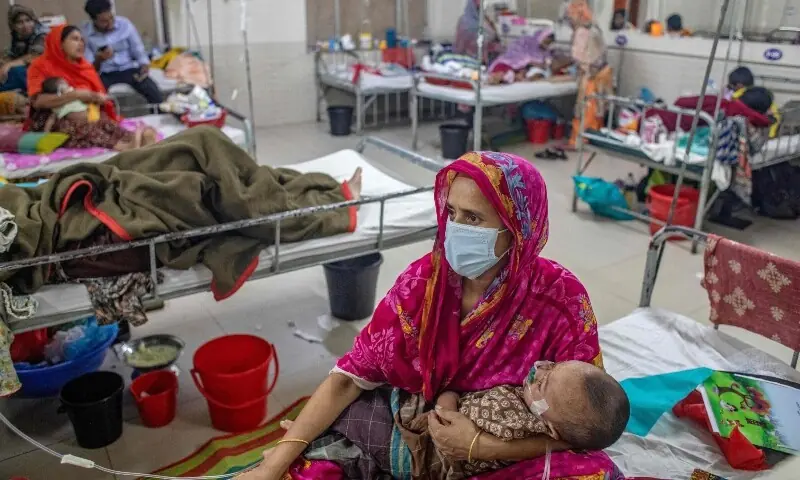
Hospitals have faced heavy pressure as large numbers of children arrive with measles and its complications.
Measles itself is highly contagious. It spreads through the air when an infected person breathes, coughs or sneezes.
For children who are malnourished or already suffering from other illnesses, the infection can become much more dangerous.
UNICEF has warned that health facilities in heavily affected areas have faced overcrowding and limited capacity to isolate patients.
The country is also dealing with a serious dengue outbreak, placing additional pressure on hospitals and health workers. Reuters reported more than 42,000 dengue hospitalisations and 117 deaths by early September.
That means Bangladesh's health system is fighting two major infectious disease threats at the same time.
A warning beyond Bangladesh
The crisis is also a reminder of how quickly measles can return when vaccination coverage falls.
Measles is highly infectious, and WHO recommends very high vaccination coverage to prevent sustained community transmission.
Bangladesh's experience shows that national averages can hide children who remain completely unprotected.
For health officials, the challenge now is not only to vaccinate millions more children. It is to identify those who were missed, reach communities where coverage remains low and restore routine immunisation so that another immunity gap does not build up.
The September 26 campaign will be another major test.
Nearly 20 million children have already received vaccines.
The question now is whether the next campaign can reach the children who remain outside that number — before the outbreak claims more lives.
You may also like
Category: International
Related Video: Dolly Parton’s Family Announces Her Passing in Emotional Tribute
Related Explainer: Explainer: Your car burns at a garage: Who pays for the damage?
About the Author
Maureen Onyango is a journalist passionate about storytelling, life coaching and spiritual lessons. She studied at the Kenya Institute of Management and enjoys telling stories that inform, inspire and empower communities.
 Facebook
 Twitter / X
 WhatsApp
 LinkedIn
 Telegram
 Reddit