
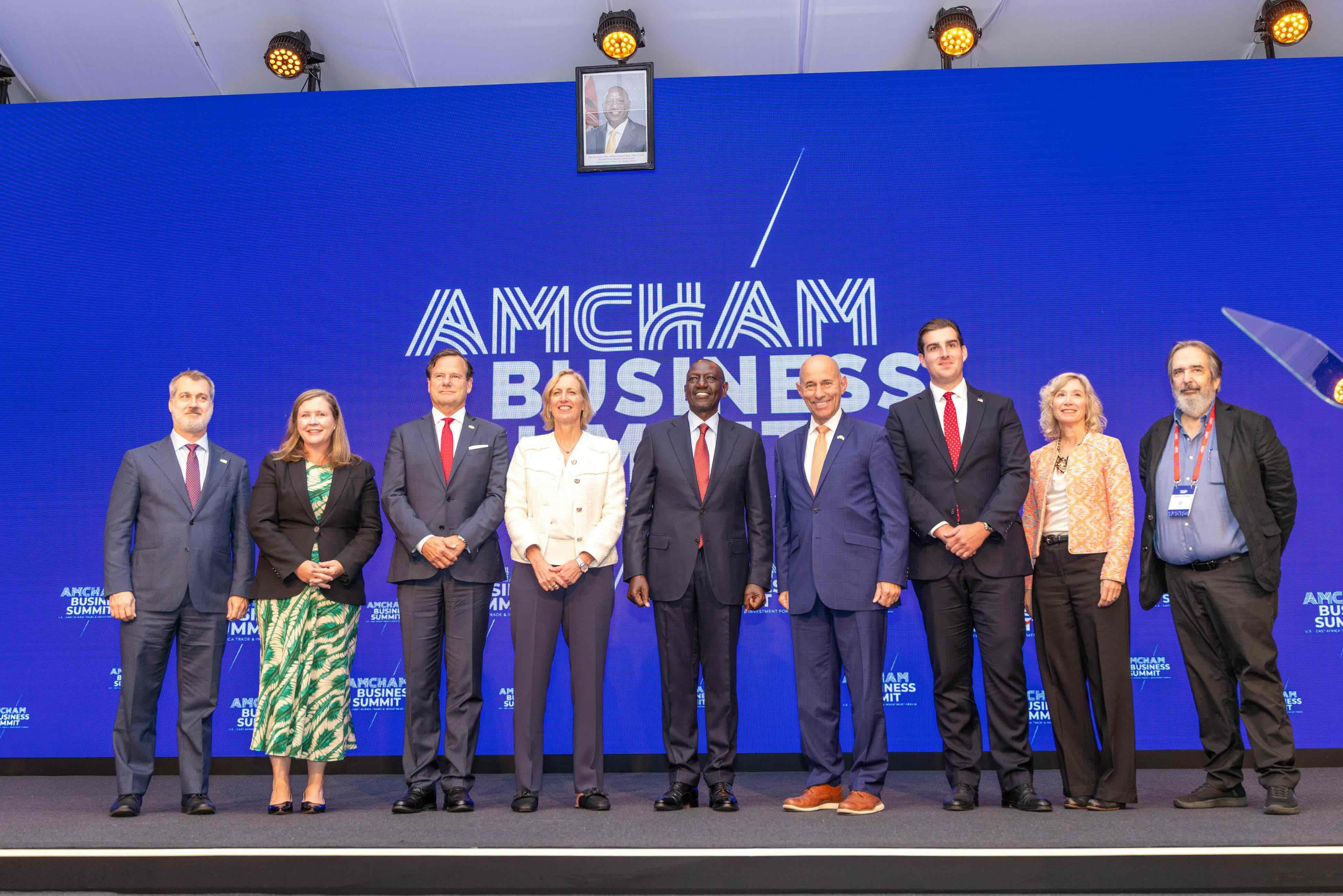
Kenya says foreign direct investment has more than doubled since 2022, but for millions of young people searching for work, the bigger question is whether those billions are translating into jobs.
President William Ruto told the American Chamber of Commerce Business Summit in Nairobi that foreign direct investment reached $3.2 billion, about Sh414.1 billion, last year, compared with $1.5 billion in 2022.
“This is a strong vote of confidence in our renewable energy base, digital economy and manufacturing potential,” Ruto said.
He also said American companies had committed more than $600 million to new Kenyan projects since the previous AmCham summit.

Among investments cited were Coca-Cola, Mars Wrigley, SC Johnson and Oracle.
Those numbers help the government make the case that Kenya remains attractive to international capital despite concerns about taxation, regulation and the cost of doing business.
But investment announcements and jobs are not the same measurement.
A billion-shilling data centre can involve enormous capital expenditure but employ fewer people than a labour-intensive garment factory costing a fraction as much.
That is why the composition of investment matters.
Manufacturing plants can create factory jobs and supplier networks.
Technology investment can create highly skilled positions but may employ relatively small numbers directly.
Infrastructure can generate substantial employment during construction, then significantly fewer permanent jobs once completed.
President Ruto says Kenya wants investments that create jobs, transfer technology, build local value chains and increase exports.
That objective comes as Invest Kenya sets an ambitious target of Sh400 billion in foreign and domestic direct investment for the current financial year.
Kenya’s challenge is therefore shifting from attracting headline investment figures to demonstrating what those figures mean in ordinary households.
How many permanent jobs were created?
How much did workers earn?
How many Kenyan suppliers received contracts?
How much was exported?
How much technology and expertise remained in the country?
Those are harder numbers to advertise at an investment summit, but they provide a better test of whether foreign capital is changing livelihoods.
Kenya may indeed be attracting more investment.
The next question is whether Kenyans can see it in their payslips.
You may also like
Category: Business · Related Topic: William Ruto
Related Video: Dolly Parton’s Family Announces Her Passing in Emotional Tribute
Related Explainer: Explainer: Your car burns at a garage: Who pays for the damage?
 Facebook
 Twitter / X
 WhatsApp
 LinkedIn
 Telegram
 Reddit