
Only days after President William Ruto publicly told Tata Chemicals to leave Magadi, the government and the company are now sitting at the same table.
That change is significant.
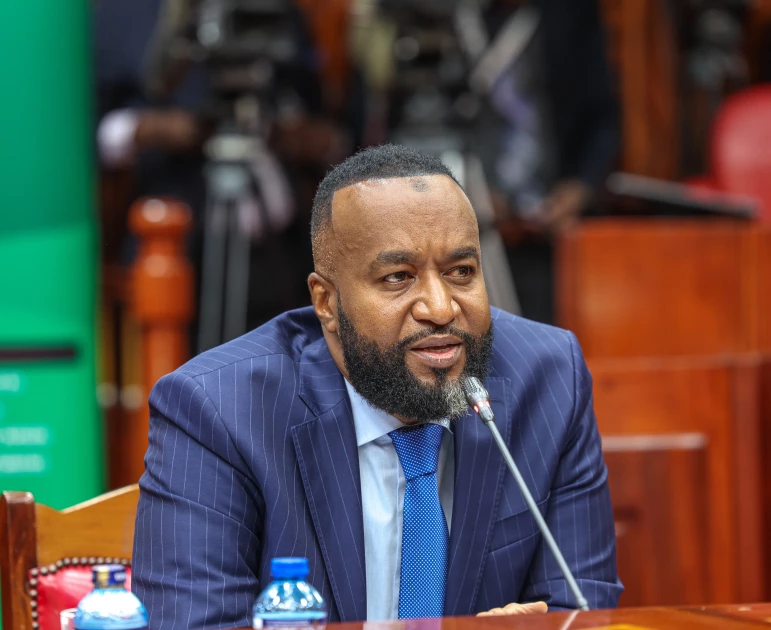
Mining Cabinet Secretary Hassan Joho announced that the government and Tata Chemicals Magadi had agreed to establish a joint technical committee to address compliance issues behind the suspension of the company's mining and export operations.
The Ministry of Mining suspended those activities on 28 July.
According to the ministry, the outstanding issues include mineral beneficiation, royalty reconciliation, community development agreements, local employment and environmental compliance.
The dispute escalated dramatically on 3 September when President Ruto publicly questioned whether communities around Lake Magadi had benefited sufficiently from more than a century of soda ash extraction and directed the company to leave.
That created a much bigger question than whether Tata had complied with individual regulatory requirements.
Could a company with a century-long presence in Kenya simply be pushed out, and what legal process would have to occur first?
The latest talks suggest the answer may be more complicated.
Creating a technical committee moves the dispute back towards an administrative and regulatory process in which specific compliance issues can be identified, answered and potentially corrected.
It also creates room for negotiation.
This matters because Tata Chemicals Magadi is more than a mine. Its presence has been tied to employment, infrastructure and services around Magadi, meaning any abrupt transition could have consequences beyond soda ash exports.
It also matters for Kenya’s investment reputation.
Governments have the authority to regulate natural resources, enforce environmental standards, collect royalties and demand greater local benefits. Investors, however, generally expect those decisions to follow legislation, contracts and due process.
The government is simultaneously promoting Kenya as an investment destination.
President Ruto told the American Chamber of Commerce Business Summit on Wednesday that foreign direct investment had risen from $1.5 billion in 2022 to $3.2 billion last year.
That creates an important balancing act.
Kenya wants foreign capital, but it also wants investors to create jobs, process raw materials locally and leave more economic value in communities where resources are extracted.
The Tata dispute may become the first major test of that policy.
The technical committee therefore has a bigger task than settling paperwork.
Its conclusions could determine whether Tata stays, changes how it operates or ultimately exits Magadi.
You may also like
Category: Business · Related Topic: William Ruto
Related Video: What Dangote’s proposed Lamu oil refinery could mean for East Africa
Related Explainer: Why the BCG Vaccine Leaves That Small Scar on Your Arm
 Facebook
 Twitter / X
 WhatsApp
 LinkedIn
 Telegram
 Reddit