
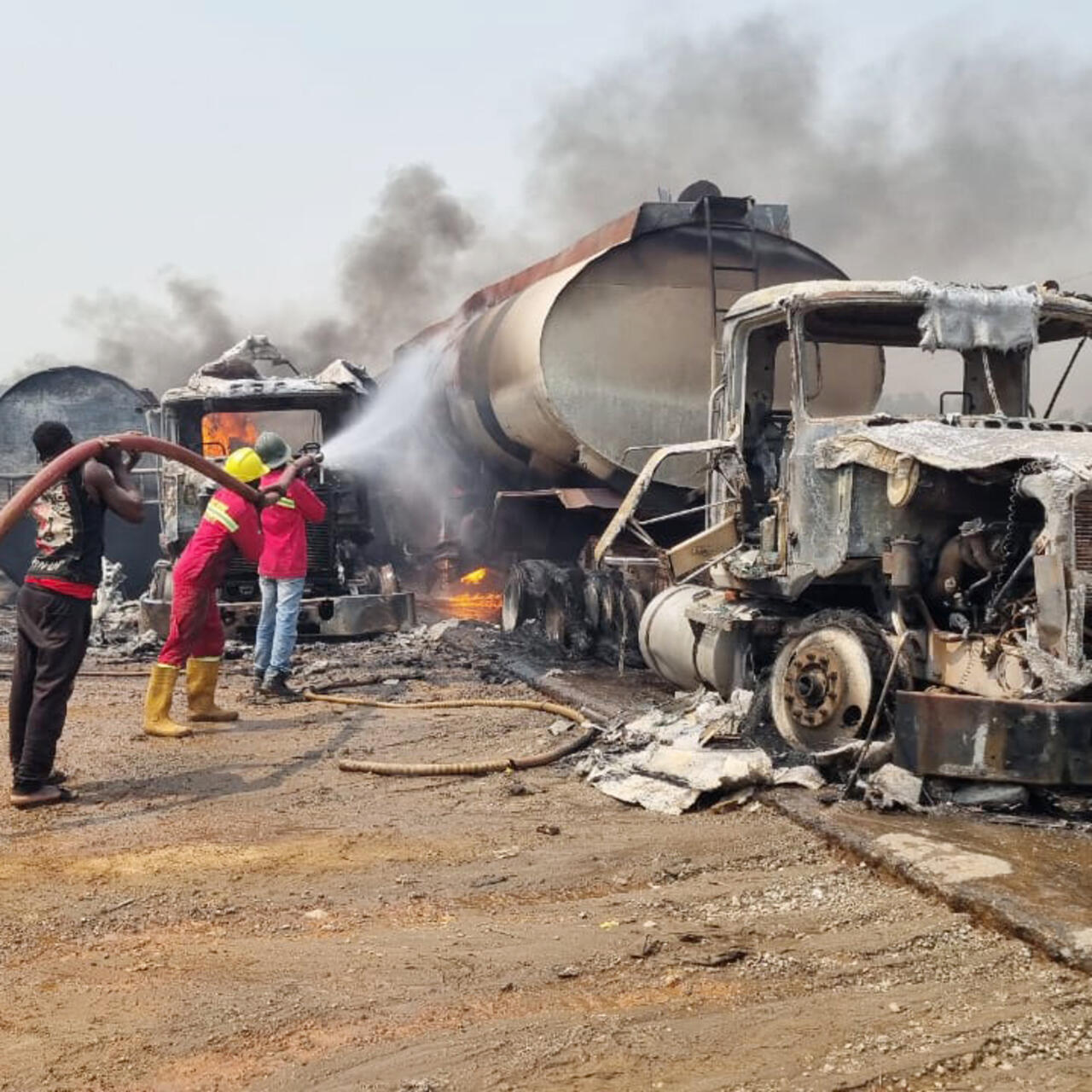
Three people have died and more than 20 were injured after a fuel tanker overturned and exploded along the Eldoret-Webuye highway in Turbo, Uasin Gishu County.
Police said the tanker collided head-on with a saloon car near Paul Boit High School before overturning. Residents then reportedly rushed towards the vehicle to collect leaking fuel.
The tanker, which was transporting petrol and diesel, subsequently exploded.
Seven victims initially suffered critical burns and several were admitted to the intensive care unit at Moi Teaching and Referral Hospital. Police said investigators had not conclusively established what ignited the tanker, although Uasin Gishu Police Commander Wilyberforce Sicharani said contact with the vehicle's battery was among the possibilities being considered.

The tragedy has revived uncomfortable memories of previous tanker disasters in Kenya.
In January 2009, more than 100 people died at Sachangwan near Molo after residents gathered around an overturned petrol tanker before it exploded.
Kenya has experienced similar disasters in Naivasha, Siaya and other parts of the country.
The recurring pattern raises a bigger public-safety question: why do people continue approaching overturned fuel tankers despite repeated warnings about the extraordinary risk of fire and explosion?
Petrol produces highly flammable vapour. An ignition source can be as small as a spark from electrical equipment, a cigarette, static electricity or contact between metallic components.
The latest tragedy therefore provides an opportunity for authorities to reinforce a simple message: an overturned fuel tanker should be treated as an emergency exclusion zone, not an opportunity to collect free fuel.
Category: News
Related Video: Dolly Parton’s Family Announces Her Passing in Emotional Tribute
Related Explainer: Explainer: Your car burns at a garage: Who pays for the damage?
 Facebook
 Twitter / X
 WhatsApp
 LinkedIn
 Telegram
 Reddit