
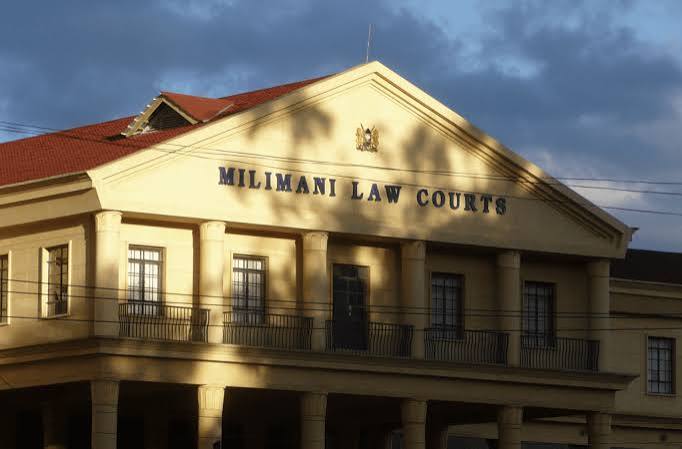
The High Court has struck down a law that barred retired presidents from holding political party office beyond six months after leaving State House, opening a fresh chapter in the dispute over former President Uhuru Kenyatta’s continued role in politics.
Justice Bahati Mwamuye, in a judgment delivered on Monday, September 21, declared Section 6 of the Presidential Retirement Benefits Act unconstitutional and void in its entirety.
The judge held that leaving the presidency does not strip a former head of state of the constitutional rights enjoyed by other Kenyan citizens.
He also invalidated Sections 4(1), 4(2) and 4(3) of the Act, which provided a mechanism for withholding, reducing or withdrawing a former president’s retirement benefits in specified circumstances.

The ruling is particularly significant for Uhuru Kenyatta, whose continued involvement in Jubilee Party affairs had become the centre of a legal and political dispute.
A dramatic shift from last week's ruling
The judgment comes just seven days after another High Court judge reached the opposite conclusion on Section 6.
On September 14, Justice Lawrence Mugambi upheld the restriction preventing retired presidents from holding political party leadership positions beyond six months after leaving office.
Mugambi, however, made clear that the law did not prevent former presidents from remaining members of political parties or taking part in political activities.
Kenyatta subsequently indicated that he would facilitate the process of handing over the Jubilee Party chairmanship in line with that ruling.
Justice Mwamuye's decision now changes the legal position on the contested provision, unless it is overturned on appeal.
The two judgments have therefore created a significant point of legal contention around the same statutory provision.
‘Retirement from office does not end citizenship’
In his judgment, Mwamuye drew a clear distinction between the powers attached to the presidency and the rights of the person who previously held the office.
“A retired President remains a citizen. Retirement from office ends the office; it does not end the person,” the judge said.
He further noted that political influence should not be confused with constitutional authority.
“Influence is not office. Influence is not executive authority. Influence is not a constitutional disability,” Mwamuye said.
His reasoning was that a former president may continue to command political influence even after leaving formal party office. Restricting party leadership, therefore, did not necessarily remove the influence that Parliament may have intended to address.
The court found the restriction inconsistent with Article 38 of the Constitution, which protects citizens' political rights.
Retirement benefits also at the centre of the case
The case was not limited to political participation.
Sheria Mtaani and activist Shadrack Wambui challenged sections of the Presidential Retirement Benefits Act that allowed Parliament to take action affecting the retirement benefits of former presidents.
The petition followed a May 4, 2026 parliamentary motion seeking a review of the retirement benefits of a former president in connection with continued political activity and party leadership. Senator Samson Cherargei was reported to have sponsored the motion.
The petitioners argued that the statutory provisions conflicted with Article 151(3) of the Constitution.
That article provides that retirement benefits payable to a former president or former deputy president, together with the facilities and privileges available to them, cannot be varied to their disadvantage during the former president's lifetime.
Justice Mwamuye agreed that Sections 4(1), 4(2) and 4(3) could not stand alongside that constitutional protection.
He also found the mechanism for interfering with benefits inconsistent with constitutional protections relating to property and fair administrative action, as well as principles of natural justice.
Section 4(4), however, was left untouched because it was not challenged in the petition.
Parliament still has a role
The judgment does not mean Parliament has lost all authority to legislate on presidential retirement benefits.
The court maintained that Parliament can legislate within the limits set by the Constitution.
What it cannot do, according to the ruling, is rely on statutory provisions that have already been declared unconstitutional to disadvantage a former president.
The court also declined to issue an order of certiorari because there was no completed decision by Parliament before the court that could be quashed. Instead, it issued prohibitory orders to prevent reliance on the invalidated provisions.
What the ruling means for Uhuru
The decision has immediate political significance because Kenyatta has remained involved in Jubilee Party affairs after leaving State House in 2022.
It removes the statutory restriction that Justice Mugambi had upheld a week earlier and means the six-month prohibition in Section 6 can no longer be enforced on the basis of the provision struck down by Mwamuye.
However, the judgment does not automatically determine who should occupy Jubilee Party office.
That remains a matter for the party's constitution, its internal processes and any further court orders.
Jubilee deputy leader Jeremiah Kioni had previously expressed interest in taking over the party leadership after the September 14 ruling. Following Monday's judgment, however, the legal basis for compelling a retired president to leave party office under Section 6 has been removed.
The judgment could therefore reopen an internal political question that appeared to be moving towards a leadership handover.
For now, the immediate legal message from the High Court is clear: leaving State House ends presidential power, but it does not, by itself, end a former president's constitutional political rights.
The decision may still be challenged on appeal, meaning the dispute over the political role of retired presidents is unlikely to end with Monday's judgment.
You may also like
Category: News · Related Topic: Kenya Politics
Related Video: Human Ladder Reaches Dangerous Heights as Climbers Keep Going
Related Explainer: Explainer: What happened to milk in Kenya?
About the Author
Maureen Onyango is a journalist passionate about storytelling, life coaching and spiritual lessons. She studied at the Kenya Institute of Management and enjoys telling stories that inform, inspire and empower communities.
 Facebook
 Twitter / X
 WhatsApp
 LinkedIn
 Telegram
 Reddit