A new battle over public trust in science is unfolding across Africa — and it is increasingly being fought not in laboratories, universities or government offices, but in WhatsApp groups, Facebook pages, radio call-ins and AI-generated videos.
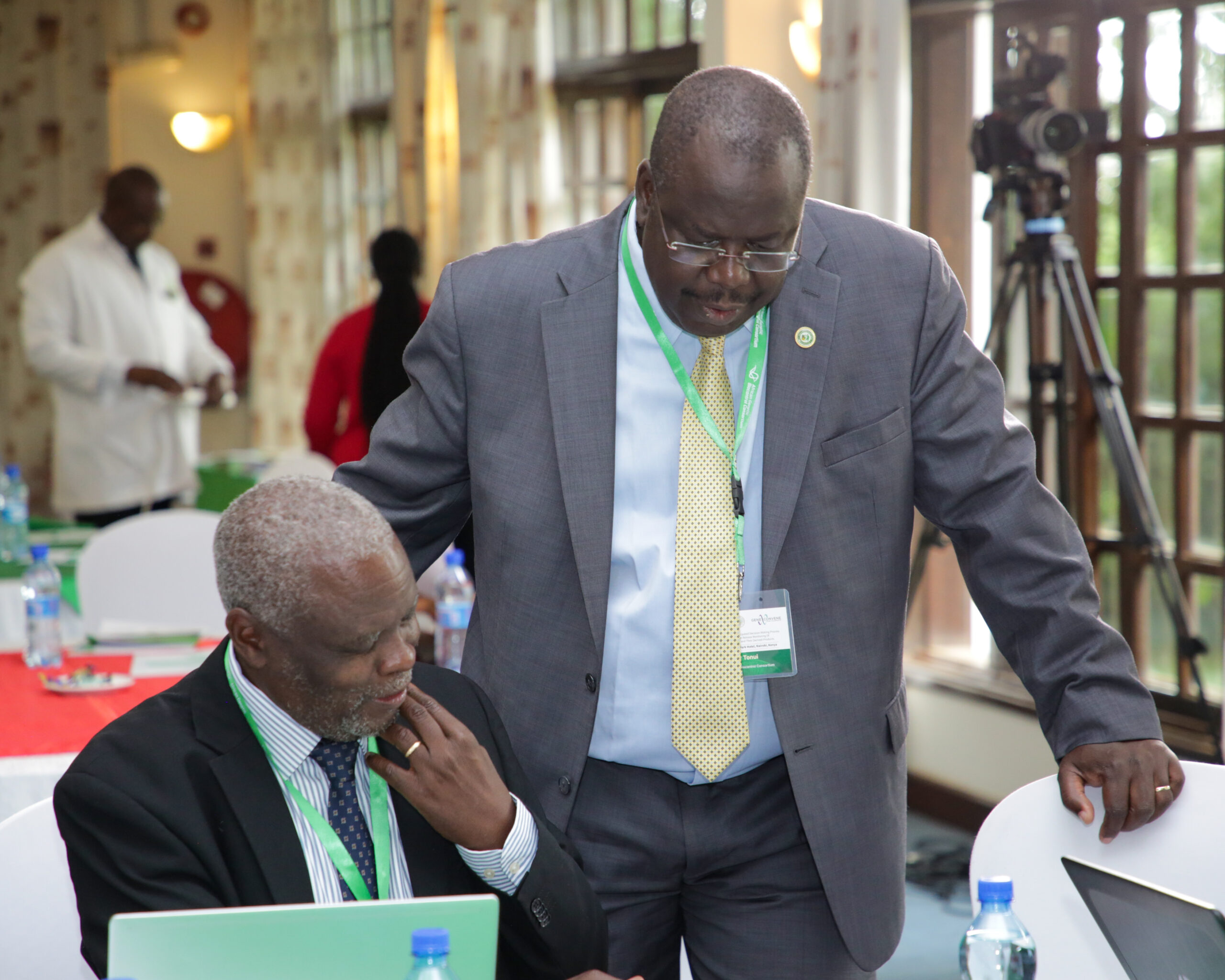
That was one of the key messages to emerge from a webinar hosted last Thursday by the African Genetic Biocontrol Consortium (AGBC) under its Truth Under the Microscope series, which brought together scientists, regulators, science communicators and journalists to examine misinformation and disinformation surrounding emerging technologies and the life sciences.
The discussion exposed a growing dilemma: scientific innovation is advancing faster than the public's ability to understand, scrutinise and verify information about it.
And as artificial intelligence makes fabricated videos, images and articles increasingly convincing, experts warned that the consequences could extend beyond confusion online — potentially affecting public health decisions, scientific research, technology adoption and government policy.
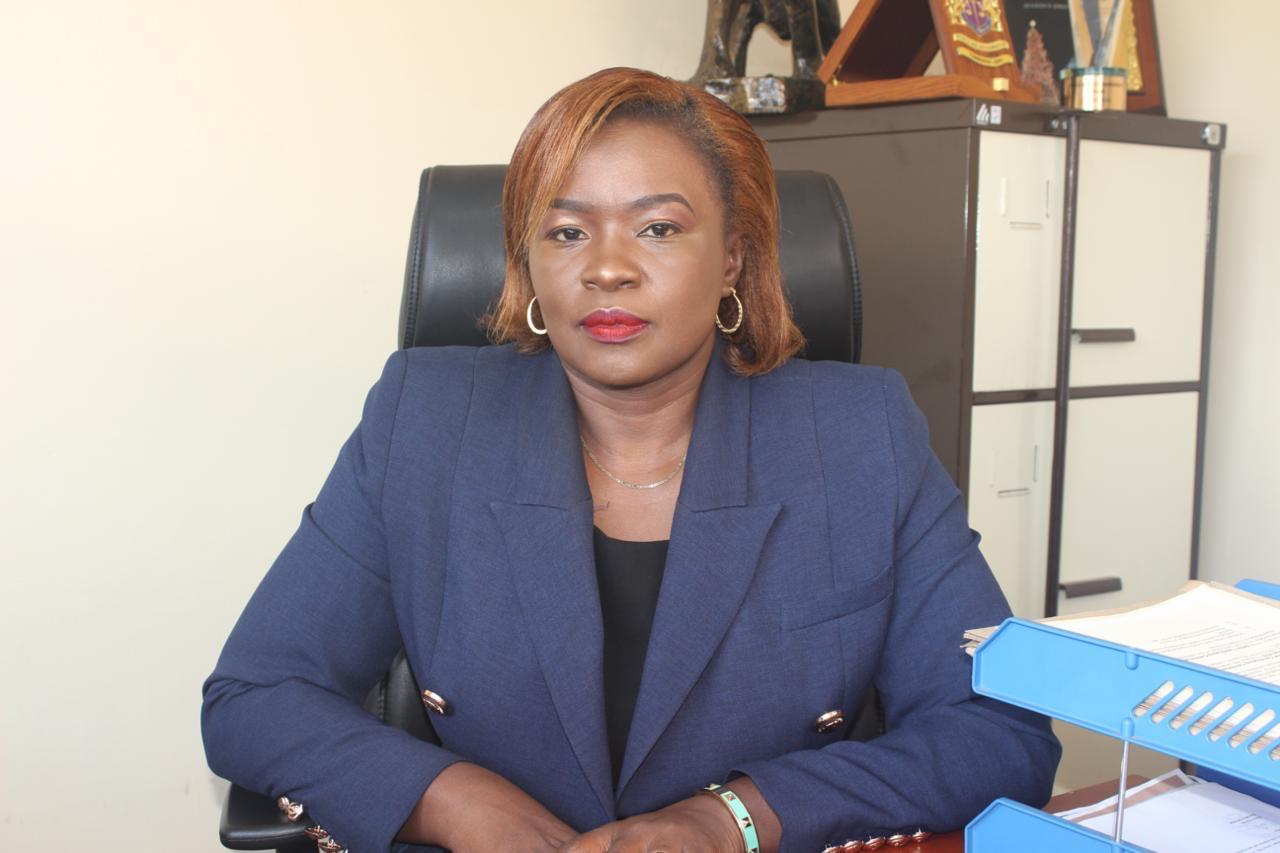
African Genetic Biocontrol Consortium brought together experts including Dr Tara Coxel, Dr Justin Overcash, Dr Peter Babira and Dr Erin Sorrel for the discussion.
The misinformation problem is already here
The scale of the challenge emerged from responses collected from participants during the webinar.
According to the webinar's assessment, 62.7 per cent of participants said they encounter life-science misinformation frequently, while 68.6 per cent identified explaining complex science to the public as one of their biggest challenges.
Another 68.8 per cent said responding to misinformation after it has already spread is a major challenge.
Even more concerning, 35.3 per cent said they were not yet confident distinguishing between misinformation, disinformation and malinformation.
For experts, those numbers point to a communication gap that is becoming increasingly dangerous.
The problem is not simply that people believe false information.
It is that false information can often be easier to understand, more emotionally powerful and faster to circulate than the scientific evidence needed to correct it.

Misinformation is not the same as disinformation
One of the first issues addressed during the webinar was the need to distinguish between different forms of false or harmful information.
Misinformation refers broadly to false information shared without necessarily intending to deceive or cause harm.
Disinformation, on the other hand, involves false or manipulated information deliberately created or distributed to deceive, mislead or cause harm.
That distinction matters because the response cannot be identical.
An ordinary social-media user forwarding a false claim they genuinely believe may need correction and education.
A coordinated campaign deliberately creating fake websites, impersonating trusted institutions or manufacturing evidence requires a different response — including monitoring, verification and, where appropriate, escalation.
But the experts stressed that both can damage public trust.
Why biotechnology is particularly vulnerable
Emerging technologies are especially susceptible to misinformation because they are often difficult to explain in simple language.
Gene drives, genomics, genetic modification, vaccines, synthetic biology and other biotechnology concepts involve scientific processes that are unfamiliar to much of the public.
Dr Tara Coxel, a public-health preparedness and risk-communication expert, argued that this "technical distance" creates an information vacuum.
When scientific explanations are complicated or unavailable, simpler and more frightening narratives can fill the gap.
Among the recurring claims identified during the webinar were assertions that GMOs cause cancer or alter human DNA, as well as rumours portraying genetically modified mosquitoes and gene-drive technologies as secret experiments being conducted on African communities.
The experts stressed that the persistence of such narratives cannot simply be blamed on a lack of scientific evidence.
The challenge is also how that evidence is communicated, who communicates it and whether communities trust the messenger.
The WhatsApp problem
For many Africans, the first source of information about a health or scientific issue is no longer a newspaper, television station or government website.
It is a WhatsApp message.
That reality presents a major challenge because information can move through closed groups at extraordinary speed, often without the scrutiny normally applied to published journalism.
The webinar discussed an example involving a fabricated link made to look like it originated from the World Health Organization.
The false material was reportedly circulated in a WhatsApp group alongside claims about genetically modified mosquitoes. As members debated the claim, fear and speculation began spreading faster than anyone could verify the source.
The lesson was straightforward:
Fact-checking the claim is not always enough. You must also fact-check the source.
If the link itself is fraudulent, proving that fact may be more effective than getting trapped in an endless argument over the scientific claim.
AI is changing the game
Artificial intelligence has now added another layer to the problem.
Dr Justin Overcash, a specialist in genetic biocontrol regulation and policy, warned that AI is making it easier to produce convincing fake videos, fabricated articles and manipulated content.
He described AI as a powerful technology with enormous potential for areas such as capacity building and risk assessment, but said the same technology could magnify existing misinformation problems.
The problem, he argued, is not entirely new.
People have always spread false information.
AI, however, lowers the cost and increases the sophistication and scale of producing it.
One emerging threat is AI-generated video.
A fabricated video showing a scientist, politician or health official appearing to make a controversial statement could potentially circulate widely before anyone establishes whether it is authentic.
For ordinary users, distinguishing a sophisticated deepfake from genuine footage is becoming increasingly difficult.
Then there are AI hallucinations
The experts also highlighted another problem: AI-generated text that looks authoritative but contains fabricated or inaccurate information.
Overcash said researchers tracking news around genetic biocontrol technologies are increasingly seeing articles apparently derived from existing material and then modified using AI.
The result can be a text that looks credible while introducing inaccuracies that are difficult for non-specialists to detect.
This creates a dangerous cycle:
a false claim is published → AI repackages it → another website republishes the AI-generated version → social media amplifies it → the claim begins to look credible because it appears in multiple places.
In reality, all the versions may trace back to the same original error.
Can we trust AI to fact-check AI?
Interestingly, Overcash suggested that AI can also form part of the solution.
He said users can employ AI tools to interrogate suspicious articles, asking them to identify claims, distinguish what is supported by evidence and provide links to credible sources.
But he cautioned that the quality of the underlying data matters.
An AI trained on unreliable information can reproduce unreliable answers.
For high-stakes decisions, he suggested using systems built around stronger datasets, including peer-reviewed scientific literature where appropriate, and asking AI to present competing perspectives rather than simply accepting its first answer.
The message was clear:
AI should be treated as an assistant in verification, not the final authority on truth.
The biggest weakness may be communicating uncertainty
Perhaps the most revealing finding from the webinar was not about AI at all.
It was about uncertainty.
Participants rated themselves at 49 per cent confidence in explaining complex science, 47 per cent in identifying misinformation and 37 per cent in responding to misinformation.
But confidence in communicating scientific uncertainty was also just 37 per cent.
That matters because science does not always provide immediate, absolute answers.
Research evolves.
Evidence changes.
Studies can produce different results.
Scientists sometimes genuinely do not know.
The problem is that uncertainty creates space for people who are willing to provide certainty — even when that certainty is false.
As the webinar discussion noted, when scientists say, "We are still studying this," a misinformation campaign may respond with, "We know exactly what is happening."
The latter can sound more convincing to an anxious audience.
The answer is not simply more regulation
The discussion also challenged the idea that governments can solve the problem through regulation alone.
Participants asked whether regulation could keep pace with increasingly realistic AI-generated content or whether digital literacy would offer a more sustainable solution.
The response from the experts favoured both regulation and public education, but with digital literacy playing an important long-term role.
People need to learn how to question the origin of information, identify manipulated content, check links, examine evidence and recognise when an apparently authoritative source is not actually authoritative.
That responsibility extends beyond journalists.
It involves schools, universities, scientists, government agencies, technology companies, civil society and ordinary citizens.
What should journalists do?
The webinar placed considerable responsibility on the media.
Dr Coxel argued that scientists and universities can publish detailed safety information, but relatively few members of the public will read technical documents or institutional reports.
They are more likely to encounter the information through a news story, social-media post, radio programme or video.
That makes journalists and science communicators crucial "secondary messengers".
But the responsibility comes with a warning.
Journalists should not become cheerleaders for emerging technology.
Neither should they automatically portray new technologies as dangerous.
Their job is to interrogate both claims and counterclaims.
That means asking:
- What is the evidence?
- Who produced it?
- Who funded the research?
- What are the known risks?
- What remains uncertain?
- What does the regulator say?
- What do independent scientists say?
- What does the technology mean for ordinary communities?
- And importantly, what don't we know yet?
The 'truth sandwich' approach
One practical recommendation from the webinar was the use of a "truth sandwich" when correcting misinformation.
The approach is simple:
Start with the verified fact.
Then briefly identify the false claim.
Explain why it is inaccurate.
Then return to the verified fact.
The logic is to avoid repeatedly amplifying the false claim while ensuring audiences leave with the correct information.
The experts also recommended "pre-bunking" — providing accurate information before misinformation appears.
This is particularly important for major public-health campaigns, clinical trials and emerging technologies.
If authorities wait until rumours have already spread, correcting them becomes considerably harder.
Prepare. Detect. Respond.
The webinar proposed a three-stage framework for organisations dealing with misinformation:
1. Prepare
Identify likely misinformation threats before they emerge.
Train staff and communicators.
Develop frequently asked questions, videos and explanatory material in advance.
2. Detect
Monitor social media, news platforms and community conversations for emerging rumours.
Build relationships with communities so that organisations hear about concerns early.
3. Respond
Act quickly with credible evidence and trusted messengers.
The experts stressed that responses should not simply involve dumping technical information on the public.
The messenger matters.
A health message delivered by a trusted community leader, journalist, doctor or local professional may have greater impact than a generic institutional statement.
Trust cannot be ordered
The deeper message from the webinar was that public trust cannot be manufactured through press releases or imposed through regulation.
It has to be earned.
Dr Erin Sorrel's opening discussion framed information integrity as a foundation for accuracy, safety, fairness, accountability, public confidence and effective policy.
If the information underpinning emerging technologies is inaccurate, manipulated or incomplete, the consequences can extend far beyond social media.
Bad information can produce bad policy.
It can delay adoption of useful technologies.
It can undermine legitimate health interventions.
It can create unnecessary fear.
And, conversely, excessive technological optimism can also undermine trust when promised benefits fail to materialise.
That means Africa needs something more sophisticated than simply fighting "fake news".
It needs an information ecosystem where citizens can question technology without being dismissed as ignorant, while scientists and institutions can explain evidence without exaggeration.
Africa's biotechnology conversation is only beginning
The debate comes at a critical time for Africa.
The continent is increasingly involved in conversations around vaccines, genomic medicine, agricultural biotechnology, genetic biocontrol, artificial intelligence and other emerging technologies.
These technologies could have significant implications for public health, food security, disease control and environmental management.
But technology will not automatically translate into public benefit.
Communities have to understand it.
Regulators have to scrutinise it.
Scientists have to communicate it.
Governments have to be transparent about it.
And journalists have to report on it rigorously.
Perhaps most importantly, communities must have an opportunity to ask difficult questions without being labelled anti-science.
That may be the real meaning of "Truth Under the Microscope."
The future of biotechnology in Africa will not be determined solely by what happens inside laboratories.
It will also be determined by what people believe about what happens inside those laboratories.
And in an era of WhatsApp virality, deepfakes and AI-generated information, the race between truth and falsehood is increasingly a race against time.
What's next?
The AGBC says the webinar series will continue with further sessions focused on strengthening Africa's science communication capacity. The consortium is also preparing for the third global Africa Genetic Biocontrol Congress, scheduled for March 2027 in Nairobi, with a call for abstracts already underway.
Meta description
You may also like
Category: Technology
Related Video: What Dangote’s proposed Lamu oil refinery could mean for East Africa
 Facebook
 Twitter / X
 WhatsApp
 LinkedIn
 Telegram
 Reddit