AI can now clone a voice, manufacture a video and put words in the mouth of someone who never said them. Experts say Africa needs more than warning labels to survive the new information war.
A video of a politician saying something explosive. A voice note that sounds exactly like a public figure. A photograph showing an event that never happened.
Would you believe it?
And more importantly, would you share it before checking whether it is real?
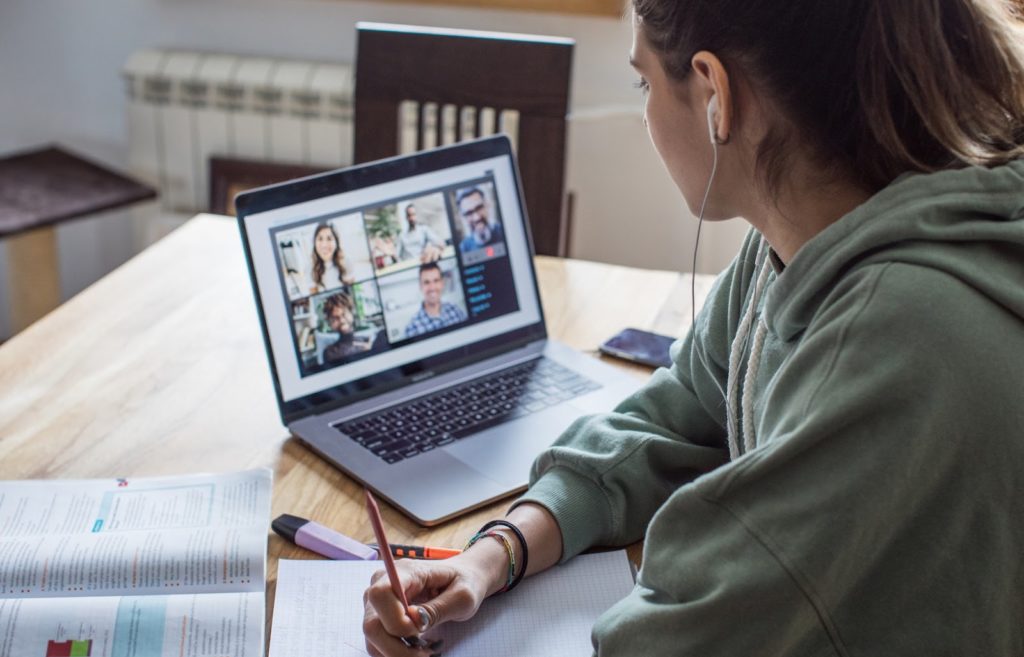
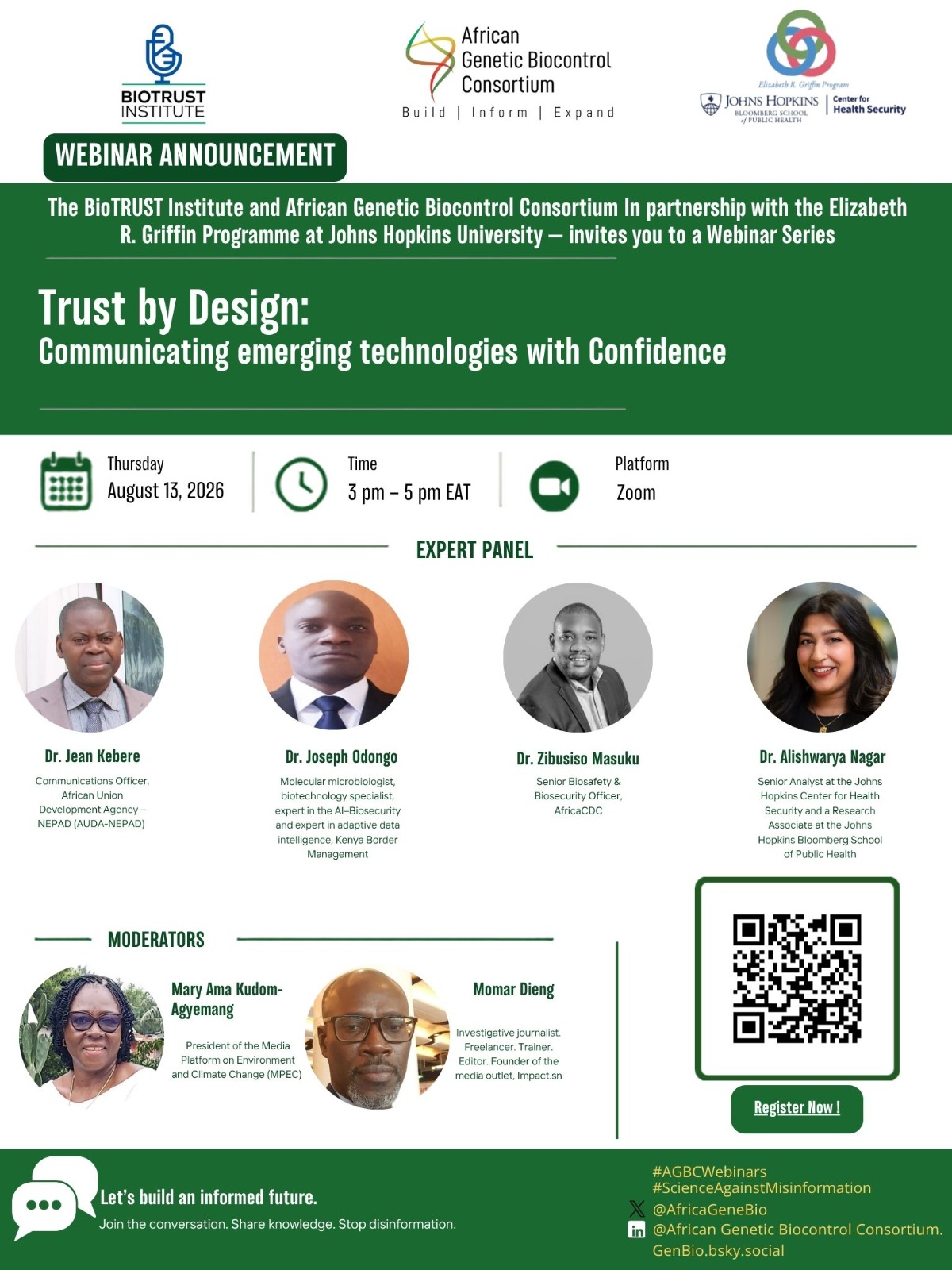
That question dominated the second day of the Truth Under the Microscope webinar on Thursday, where scientists, journalists, technology experts and public-health specialists confronted one of the defining challenges of the digital age: how do we build trust when artificial intelligence can manufacture convincing lies at unprecedented speed?

Held under the theme “Trust by Design: Communicating Emerging Technologies with Confidence,” the discussion brought together experts from the African Genetic Biocontrol Consortium, BioTRUST Institute, Africa CDC and Johns Hopkins University.
The conversation could hardly have been more timely.
Across Kenya and the rest of Africa, WhatsApp groups, Facebook, TikTok, X and other platforms have become major sources of news and public debate. At the same time, generative AI has made it dramatically easier to create convincing synthetic photographs, videos, voices and text.
The result is a new information problem:
Seeing is no longer necessarily believing. Hearing is no longer necessarily proof. And going viral is certainly not the same as being true.
The AI warning problem
One of the most important questions raised during the webinar was deceptively simple:
Do AI labels actually work?
Technology companies increasingly tell users that AI-generated content may be synthetic or that AI systems “can make mistakes”.
But experts and emerging research suggest that simply putting a warning on the screen may not be enough.
Research published in 2026 found that warnings about AI errors can help people better understand the limitations of AI recommendations and reduce some forms of over-reliance. But warnings did not completely eliminate people's tendency to follow incorrect AI suggestions.
That raises a bigger question for Africa:
Are we educating people about AI—or are we simply giving them another disclaimer to click past?
The distinction matters.
A person may know that AI can make mistakes and still believe an AI-generated claim because it confirms what they already think.
A person may see an “AI-generated” label and still share the content because it is shocking, funny, politically useful or emotionally compelling.
And that is where misinformation wins.
The algorithm doesn't care whether it is true
During the discussion, experts examined why false information can travel faster than accurate information.
The formula is brutally simple.
Emotion + speed + algorithms + confirmation bias = viral misinformation.
Content that triggers anger, fear, outrage or excitement can generate more comments, clicks and shares.
Algorithms designed to maximise engagement can then amplify it.
False information can be created and published quickly, giving it a head start over journalists and fact-checkers.
People are also more likely to believe information that confirms what they already believe.
And by the time a correction arrives, the damage may already have been done.
That creates what could become Africa's most dangerous information gap:
Falsehood travels at internet speed. Truth often travels at verification speed.
The deepfake problem is no longer tomorrow's problem
For ordinary Kenyans, this is not an abstract technology debate.
A fabricated video of a politician can trigger outrage.
A fake voice recording can create panic.
A manipulated photograph can become “evidence” in a political argument.
A false health claim can influence someone's decision about treatment or vaccination.
And a fake scientific claim can be presented with enough technical language to appear legitimate.
The challenge is particularly serious on closed messaging platforms such as WhatsApp, where content can move through hundreds of private groups before journalists or fact-checkers even know it exists.
By then, asking people to “ignore the fake news” may be too late.
AI is also part of the solution
But the webinar did not portray artificial intelligence as the enemy.
Far from it.
Dr Joseph Odongo highlighted the growing potential of large language models and AI-powered genomic technologies to help researchers process enormous amounts of biological information and bridge gaps in scientific understanding.
Advanced genomic models can analyse DNA sequences, predict biological functions and help researchers identify promising areas for laboratory investigation.
For African scientists working with limited resources, such tools could potentially accelerate research and reduce some of the cost and time involved in scientific discovery.
The challenge is ensuring that the same technologies are deployed responsibly.
That means distinguishing between what AI can predict, what scientists have actually established and what still requires laboratory verification.
Africa's biosafety challenge
The discussion also moved into a territory that is becoming increasingly important as AI intersects with biotechnology: biosafety and biosecurity.
Zibusiso Masuku of the Africa Centres for Disease Control and Prevention outlined efforts to strengthen the continent's capacity to manage emerging technological and biological risks.
Africa CDC's 2026–2030 biosafety and biosecurity strategy identifies innovation and emerging technologies—including AI, synthetic biology, digital biosurveillance and automation—as areas requiring coordinated governance.
The proposed approach includes stronger ethical frameworks, continental coordination, capacity building and partnerships involving governments, researchers, regulators and technology companies.
The message is clear:
Africa cannot afford to adopt powerful technologies first and ask questions about safety later.
What Ebola taught Africa
The webinar also drew lessons from Africa's experience responding to Ebola.
The SIMBA_BIO initiative has supported training for frontline responders and laboratory personnel, equipment and containment infrastructure, mobile laboratory capacity and deployment of biosecurity officers.
The lesson extends beyond disease outbreaks.
Preparedness must come before the crisis.
The same applies to misinformation.
Countries, newsrooms, technology companies and citizens cannot wait for the next viral deepfake before deciding how to respond.
The media has a new job
For journalists, AI is fundamentally changing verification.
A reporter can no longer assume that a photograph is authentic because it looks real.
A voice recording cannot automatically be accepted as evidence because it sounds like the person speaking.
A video cannot be treated as proof simply because thousands of people have shared it.
Newsrooms increasingly need to ask:
Who created this? Where did it first appear? When was it created? Has it been manipulated? Can the claim be independently verified?
That means media literacy is becoming as important as traditional literacy.
The bigger battle is trust
Perhaps the most important message from Thursday's discussion was that Africa's AI challenge is ultimately not about technology alone.
It is about trust.
People need to trust scientists—but scientists must communicate uncertainty honestly.
People need to trust journalists—but newsrooms must verify before publishing.
People need to trust technology—but technology companies must provide transparency and safeguards.
And citizens need to develop the habit of asking one crucial question before hitting “share”:
“How do we know this is true?”
That may become one of the most important questions of the AI era.
Because the next information crisis may not begin with a sophisticated cyberattack or a hacked government database.
It could begin with one convincing 30-second video dropped into a WhatsApp group.
And by the time someone proves it is fake, millions of people may already believe it.
The big takeaway
AI is making it easier to create information. The real challenge is making it easier for people to identify what deserves their trust.
That is why “Trust by Design” may be one of the most important conversations Africa needs to have now—not after the next deepfake, health scare or misinformation crisis.
Related Stories
Category: Technology
 Facebook
 Twitter / X
 WhatsApp
 LinkedIn
 Telegram
 Reddit