
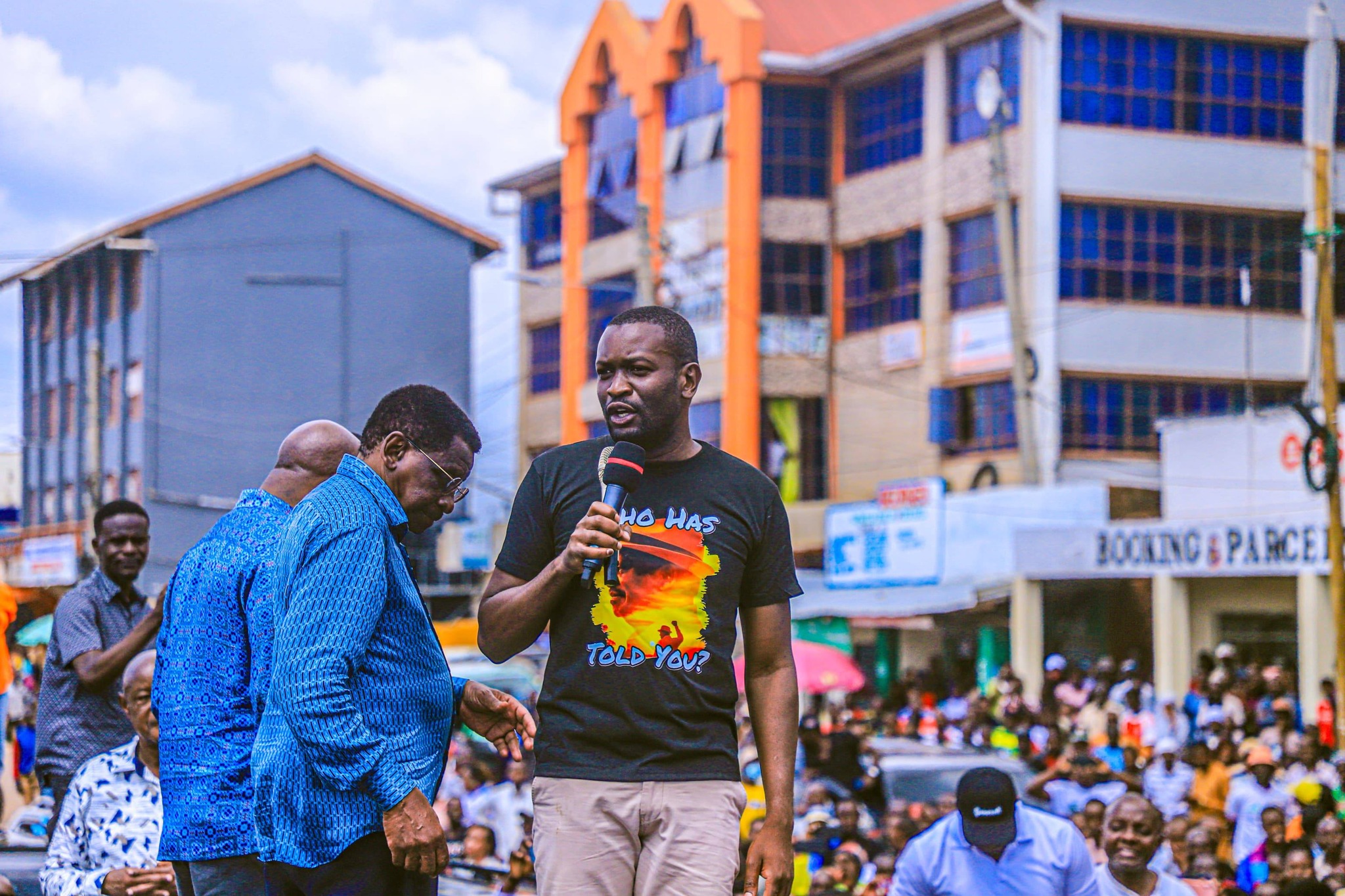
What happened in Kakamega was more than a political tour. It was an early test of whether Edwin Sifuna can turn personal popularity and opposition energy into a credible national coalition.
There is something revealing about a politician asking for votes in a market rather than a conference hall.
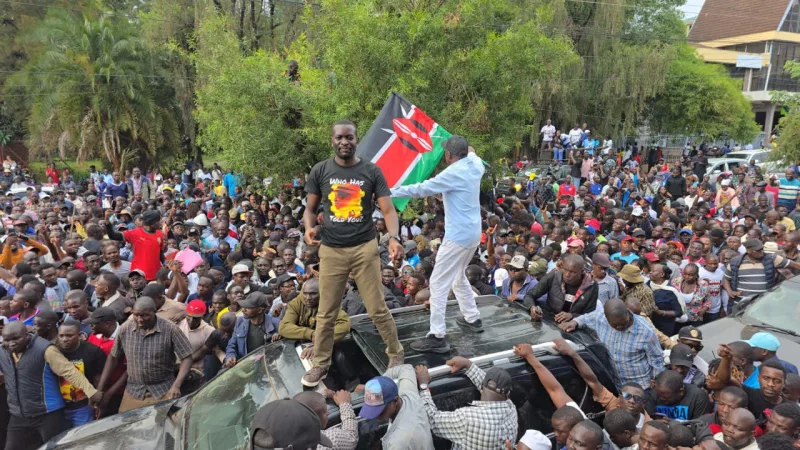
At Shianda in Mumias, at Navakhola and other stops across Kakamega this weekend, Edwin Sifuna and the Linda Mwananchi brigade were not simply addressing a crowd. They were testing whether the political language coming out of Nairobi can travel to the places where voters are dealing with medicine shortages, healthcare bills, education costs and the daily struggle to make ends meet.
That distinction matters.

The two-day Kakamega tour was billed as a grassroots engagement, with the movement planning visits across several constituencies. It followed earlier mobilisation in Trans Nzoia and Bungoma and is part of a wider attempt to establish Linda Mwananchi as a serious opposition vehicle ahead of the 2027 election.
But the bigger story is what Sifuna is trying to become.
Sifuna is no longer merely testing the waters
For months, Sifuna's presidential ambitions could have been dismissed as the political curiosity of a youthful senator with a powerful microphone.
Kakamega made that harder.
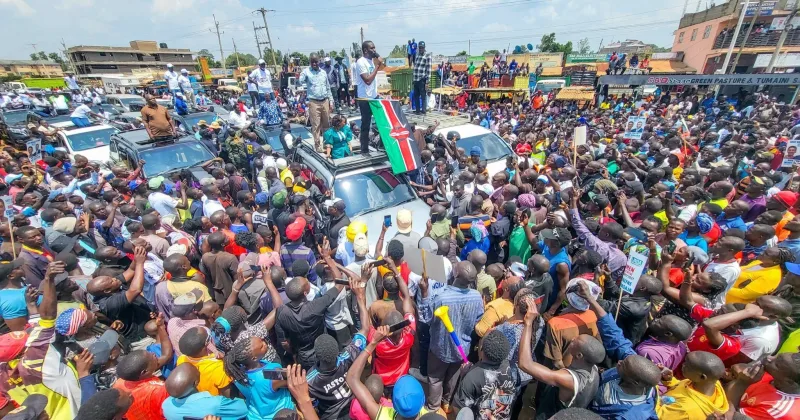
On Saturday, Sifuna sought the blessing of former Kakamega governor Wycliffe Oparanya for his political journey. On Sunday, his message became even more explicit, as he pushed back against criticism that he lacks the experience required to seek the presidency. His argument was essentially that Kenya's experience with experienced politicians has not necessarily produced the results Kenyans want.
That is an important shift.
Sifuna is no longer asking whether he can speak nationally.
He is asking whether Kenyans are prepared to vote for him nationally.
Those are very different questions.
Why Kakamega matters
Kakamega is not just another stop on a political itinerary.
The county had 844,709 registered voters in the 2022 election, with turnout of about 60 per cent. Raila Odinga won the presidential vote there overwhelmingly, while William Ruto still secured more than 200,000 votes.
That tells Sifuna two things.
First, Western Kenya remains a crucial reservoir of opposition votes.
Second, it is not enough to inherit the region's historical political loyalties.
Someone has to organise them.
This is why the choreography of the Linda Mwananchi tour matters. The movement is not simply holding large rallies and leaving. It is deliberately using meet-and-greet engagements, moving through markets and communities and allowing Sifuna to build a personal connection with voters.
That is potentially more important than the size of any single crowd.
A politician seeking the presidency eventually needs people who know his name, understand his message and feel that he has actually spoken to them.
Then came Malala — and the coalition question
The most politically intriguing moment of the weekend may not have come from Sifuna himself.
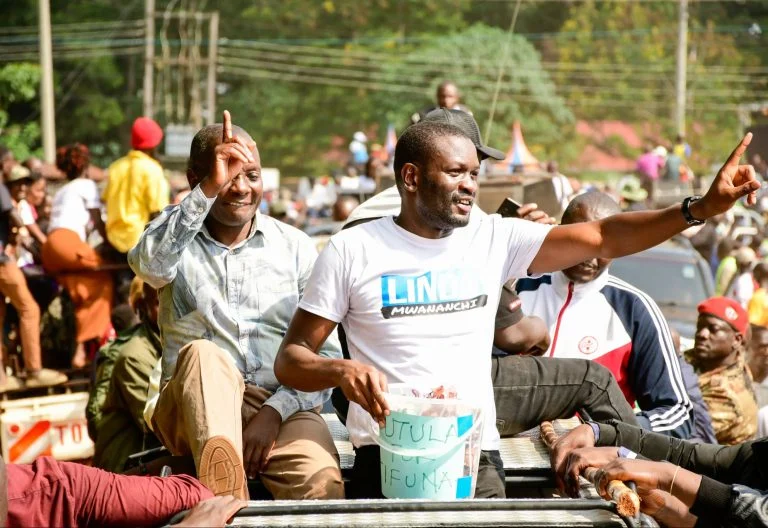
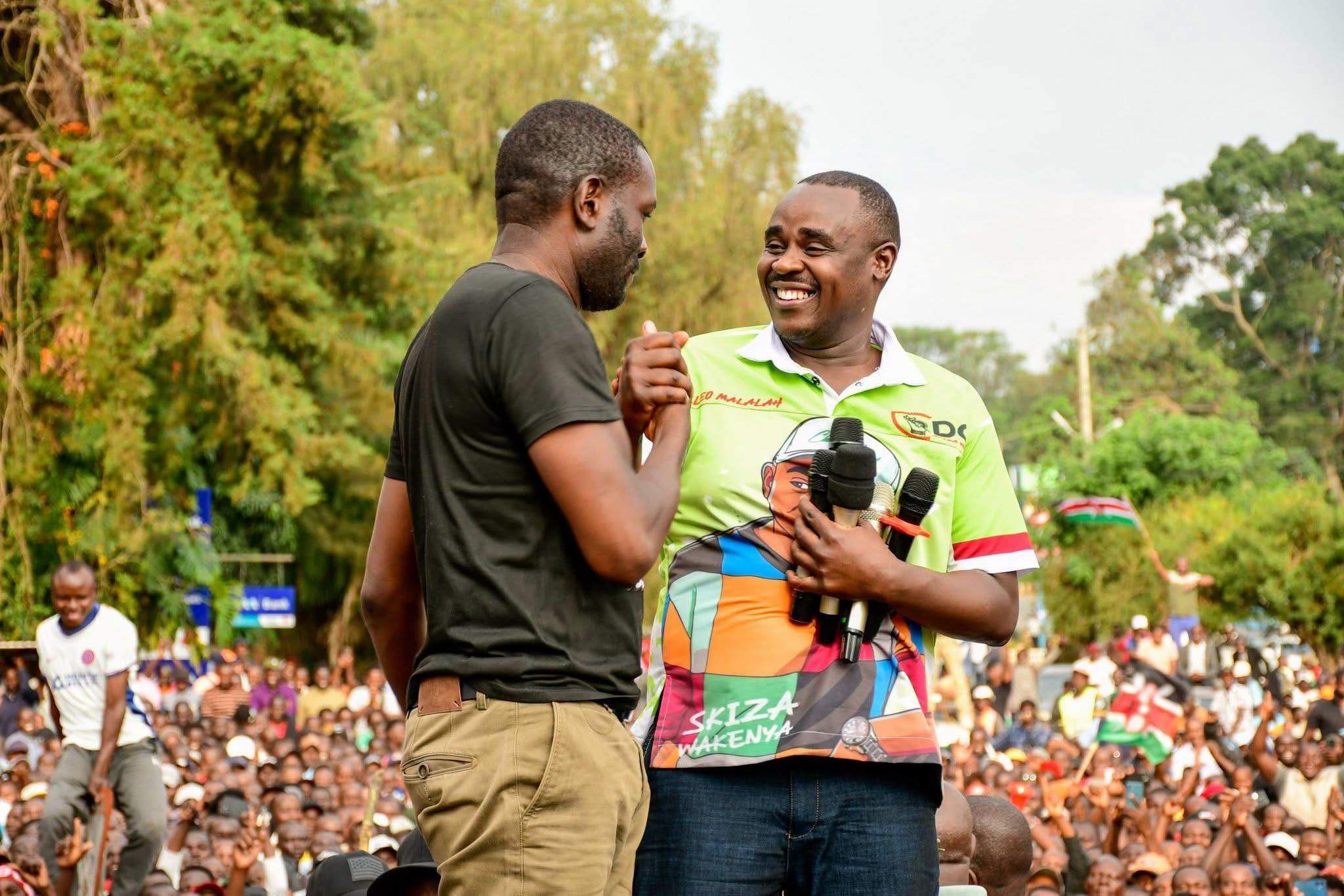
Cleophas Malala, a DCP deputy party leader and former Kakamega political heavyweight, openly backed Sifuna's presidential ambitions. He has also said former Deputy President Rigathi Gachagua is prepared to support Sifuna.
That is a significant political proposition.
Malala is effectively asking Western Kenya to think beyond its traditional political alliances and consider a wider coalition involving players from outside the region.
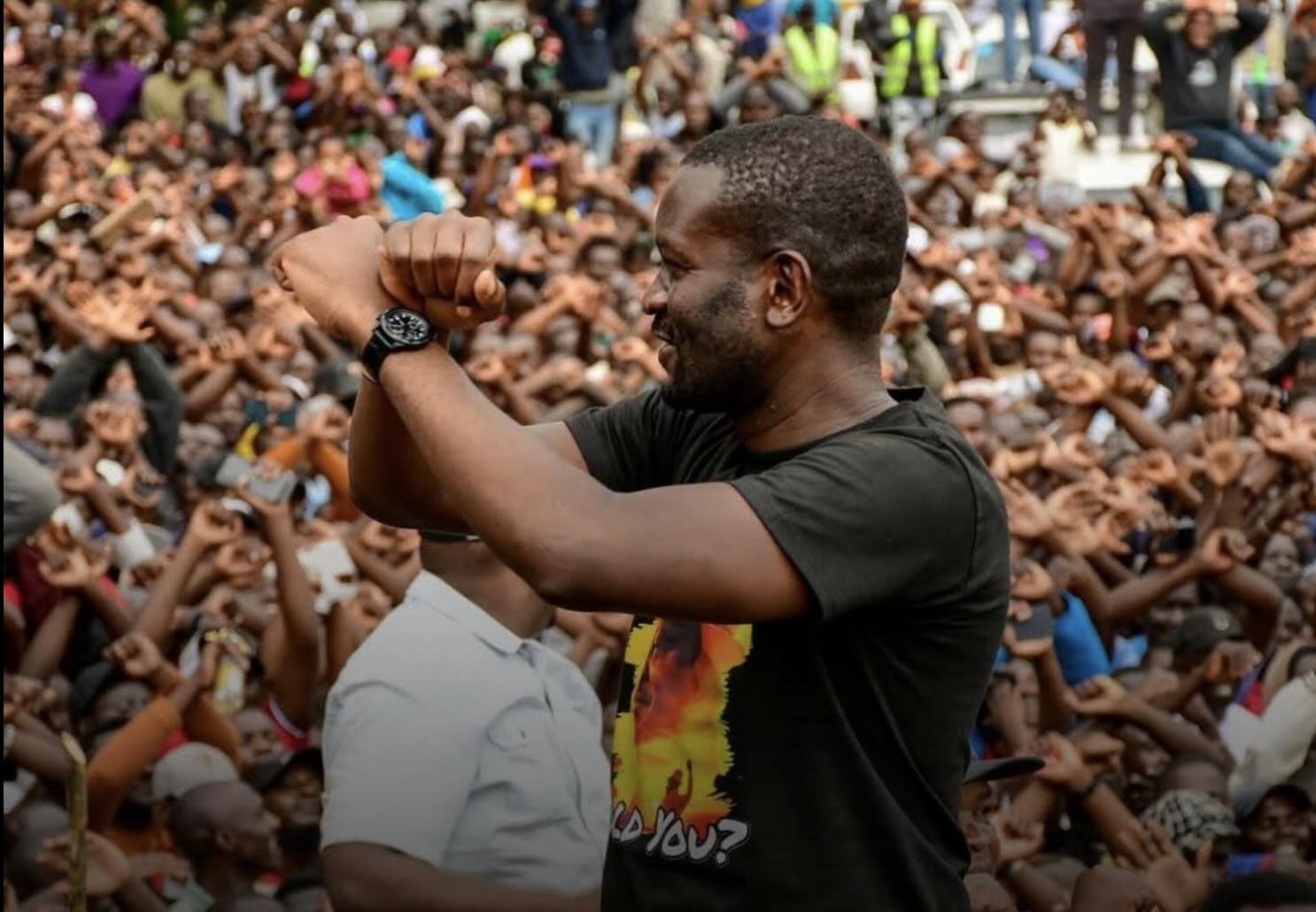
It is also consistent with the broader opposition conversation. Azimio leaders have recently discussed reorganising the coalition and reaching out to figures including Gachagua, Sifuna, Martha Karua and David Maraga.
The pieces are therefore beginning to appear on the same political chessboard.
But pieces are not yet a coalition.
And a coalition is not yet a vote.
The 7-million-vote argument sounds attractive. The mathematics is harder.
Malala's call for an alliance capable of delivering roughly seven million votes is politically powerful because it speaks directly to the central lesson of the 2022 election: no serious presidential candidate can afford to build a national campaign around one community or region.
Ruto won the 2022 presidency with just over seven million votes, while Raila Odinga received slightly under seven million.
So the number is not imaginary.
The difficult part is assembling it.
Western Kenya can provide a substantial foundation, but Sifuna would need support from regions where his name currently carries much less political weight.
That is the real test awaiting him.
Can the man who can draw attention in Kakamega also persuade voters in Central Kenya, the Rift Valley, Coast, Eastern Kenya, North Eastern and Nairobi?
Can he build relationships with leaders who may themselves harbour presidential ambitions?
And perhaps most importantly, can he persuade voters who do not share his ethnic or political background that his presidency would be about them too?
Sifuna's biggest opportunity may also be his biggest vulnerability
His youth is both an asset and a vulnerability.
Young voters are increasingly impatient with political promises that sound recycled. Sifuna can present himself as part of a different political generation—less burdened by the old presidential succession battles and more comfortable speaking the language of social media, accountability and confrontation.
But voters will eventually demand more than energy.
They will ask:
What exactly would a Sifuna presidency do differently?
His attacks on the Ruto administration over healthcare, SHA and higher education give him issues around which to organise opposition sentiment. During the Kakamega tour, he challenged the government over medicine shortages and criticised the current university funding model.
Those are politically useful issues because they touch ordinary households.
But opposition is the easy part.
The harder question is what comes next.
If SHA is failing, what would replace or reform it?
If the university funding model is broken, what would Sifuna put in its place?
If hospitals lack medicine, where would the money come from and how would procurement be fixed?
A presidential candidate eventually has to move from “Ruto has failed” to “here is how I will govern.”
That transition will determine whether Sifuna remains a compelling opposition voice or becomes a credible presidential contender.
The human question hiding underneath the politics
Perhaps the most important thing Sifuna heard in Kakamega was not applause.
It was the everyday conversation.
A parent worrying about a child's university fees.
A patient looking for medicine.
A young person wondering whether political change will ever translate into a job.
A small trader watching prices rise while politicians argue about alliances.
These are the voters who ultimately decide elections.
They do not wake up on election morning thinking about coalition architecture.
They think about who they trust to make their lives better.
That is why the market stops may matter more than the political speeches.
Sifuna is attempting to convert political celebrity into political intimacy.
That is a difficult transformation.
The road ahead
Linda Mwananchi is already looking beyond Kakamega. The movement has announced an August 16 engagement in Homa Bay, while its Western Kenya campaign continues to build momentum.
That creates a useful test for the movement.
If every tour produces another large crowd but no deeper organisation, the campaign risks becoming political theatre.
If, however, the tours create local networks, recruit volunteers, build a policy agenda and establish Sifuna as a candidate who can speak convincingly outside his traditional political home, then Kakamega could eventually be remembered as one of the places where his presidential campaign became real.
There is also a danger in moving too quickly.
Western Kenya has produced several politicians who appeared to possess the numbers to negotiate nationally, only to discover that regional support does not automatically translate into a national mandate.
Sifuna will have to avoid becoming another politician whose greatest strength is the assumption that someone else will provide the missing votes.
The real question after Kakamega
The most interesting question coming out of this weekend is therefore not:
“Can Sifuna win Kakamega?”
He can probably compete strongly for the region's opposition vote.
The real question is:
Can Sifuna leave Kakamega and still be Sifuna?
Can he enter Central Kenya without becoming an ethnic candidate?
Can he speak to Mount Kenya without depending on Gachagua?
Can he enter the Rift Valley without making the election about Ruto versus his opponents?
Can he attract Coast, Eastern and Nairobi voters without diluting the message that brought his supporters to him in the first place?
And can he build a coalition in which partners see him not merely as a useful youthful voice, but as the person capable of sitting at the centre of the coalition?
Those are questions Kakamega cannot answer.
But the weekend tour has made them impossible to ignore.
Sifuna has now stepped onto the national stage with both feet. The next challenge is no longer getting noticed. It is convincing Kenya that he is ready to govern.
And that is a much harder election to win.
Related Stories
- Moses Kuria Claims Sifuna Is Being ‘Fattened for Slaughter’ as Kalonzo Emerges in 2027 Opposition Plan
- Sunday Reflection: The Sifuna Problem Is Bigger Than Sifuna
- Kenya’s 2027 Campaign Money Enters a New Era as IEBC Sets Billions in Spending Limits
Category: Politics · Related Topic: William Ruto
About the Author
Maureen Onyango is a journalist passionate about storytelling, life coaching and spiritual lessons. She studied at the Kenya Institute of Management and enjoys telling stories that inform, inspire and empower communities.
 Facebook
 Twitter / X
 WhatsApp
 LinkedIn
 Telegram
 Reddit