
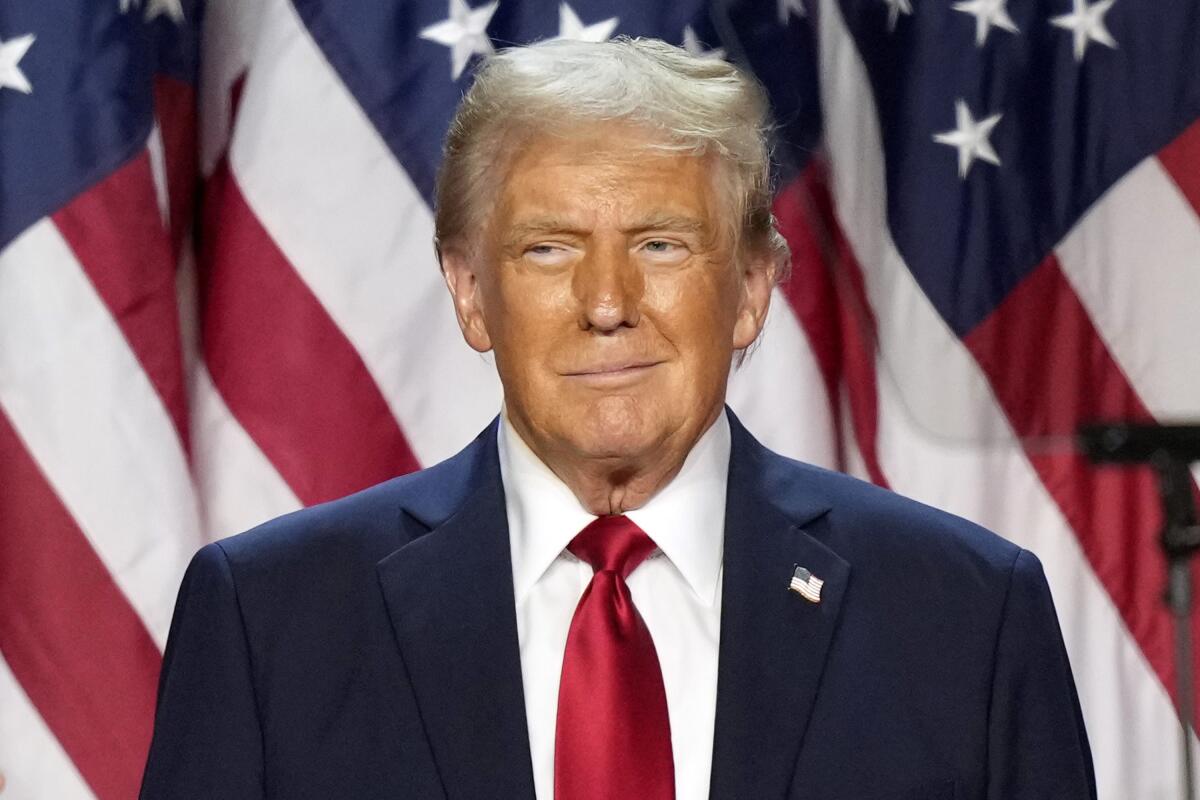
President Donald Trump’s latest attempt to restrict birthright citizenship has been blocked by a US federal judge, setting up another legal confrontation over who is entitled to become an American simply by being born on US soil.
US District Judge Deborah Boardman of Maryland issued a preliminary injunction on Wednesday, September 2, stopping the administration from enforcing key parts of Trump’s August 6 executive order against children covered by a nationwide class action.
The ruling comes just two months after the US Supreme Court rejected Trump’s earlier and broader attempt to end birthright citizenship for children born to parents who are unlawfully or temporarily in the country.
That timing is significant.
The Supreme Court’s June 30 ruling in Trump v. Barbara held that children born in the United States to parents who are unlawfully or temporarily present are citizens at birth under the 14th Amendment’s Citizenship Clause. The vote was 6-3.
Boardman said that precedent left little room for the administration's latest order.
“The Supreme Court has spoken: Children in the certified class are ‘citizens at birth’,” she wrote in her 35-page ruling, describing Trump’s new order as “almost certainly unconstitutional” as applied to the children covered by the case.
Trump tried a narrower route
Trump’s latest order was signed on August 6, weeks after the Supreme Court rejected his original approach.
Rather than attempting to remove birthright citizenship from all children whose parents are non-citizens, the new order targeted several specific categories.
Among them are children whose parents are considered “alien enemies”, certain children of foreign government employees, and children whose parents are accused of engaging in fraud or commercial transactions intended to obtain citizenship.
The order also specifically targets what the administration calls “birth tourism” — cases in which people travel to the United States on non-immigrant visas with the intention of giving birth there so their child can obtain US citizenship.
The White House has argued that the measure is aimed at protecting the meaning and value of American citizenship and stopping abuse of the system.
But immigrant-rights organisations argued that the new policy still conflicted with constitutional protections and could create uncertainty over the citizenship of children born in the United States.
Judge rejects administration’s timing argument
The Justice Department had argued that the legal challenge was premature because federal agencies had not yet issued detailed guidance explaining how the August order would be enforced.
Boardman rejected that argument.
She found that the executive order itself instructed federal agencies to deny citizenship documents to broad categories of children, making court intervention necessary even before the detailed guidance was released.
The injunction means federal agencies cannot enforce the new restrictions against children covered by the certified class while the wider lawsuit proceeds.
The ruling does not, however, end the legal battle over Trump's August order.
It is a preliminary injunction, meaning the court has temporarily blocked enforcement while the underlying case continues.
Rights groups hail another defeat
Immigrant-rights groups welcomed the decision, portraying it as the latest in a series of setbacks for the administration's attempt to narrow birthright citizenship.
Shana Khader, legal director at We Are CASA, said the administration had now lost challenges before Boardman’s court, the Supreme Court and again before Boardman.
The groups involved in the case include We Are CASA, the Asylum Seeker Advocacy Project and the Institute for Constitutional Advocacy and Protection.
For families involved in the litigation, the dispute is about more than immigration policy.
It concerns whether children born in the United States can receive the documents and legal recognition that come with US citizenship without their parents' immigration status becoming a barrier.
What the Supreme Court actually decided
The legal backdrop is the 14th Amendment, ratified in 1868.
Its Citizenship Clause says that people born or naturalised in the United States and subject to US jurisdiction are citizens.
In Trump v. Barbara, the Supreme Court was asked to decide whether that guarantee applied to children whose parents were unlawfully or temporarily in the country.
The court answered yes.
The decision specifically held that such children are “subject to the jurisdiction” of the United States and therefore qualify for citizenship at birth.
That ruling did not mean there are no exceptions to birthright citizenship. The constitutional framework has long recognised narrow exceptions, including children of foreign diplomats.
Trump's latest order relies in part on those historical exceptions while adding other categories that the administration says fall outside the constitutional guarantee.
The latest Maryland ruling suggests the administration cannot simply redraw those boundaries through an executive order where the Supreme Court has already settled the status of the children concerned.
The passport fight could be the next flashpoint
The dispute is also moving beyond courtrooms.
The State Department is considering new passport procedures that would require parents to provide evidence of their own citizenship or immigration status when applying for passports for US-born children.
The proposal is linked to Trump's August 6 order and could affect children whose parents fall into categories targeted by the administration.
Reuters reported that the proposed requirements could include documents such as passports, birth certificates or immigration records.
That could put passport officials at the centre of the continuing legal dispute.
For families, the practical question is simple: can a child born in America obtain proof of citizenship without their parents first satisfying new conditions?
Another test of Trump's immigration agenda
The birthright citizenship fight is part of Trump's broader immigration programme, which has included tougher enforcement against undocumented migrants and attempts to narrow avenues to legal status.
His administration has argued that immigration laws and citizenship rules need to be tightened to protect national sovereignty and prevent abuse.
Civil-rights and immigrant advocacy groups counter that presidential immigration policy cannot override constitutional guarantees.
The Supreme Court's June ruling gave those groups a major victory.
Wednesday's injunction shows that the administration's decision to pursue a narrower strategy has not settled the issue.
Instead, it has opened another round in the courts.
For now, the constitutional position remains clear for the children covered by the Supreme Court's June ruling and Boardman's latest injunction: being born in the United States remains enough to establish citizenship where the 14th Amendment applies.
The question now is whether Trump's administration will continue fighting to create new exceptions — and how far the courts will allow it to go.
You may also like
Category: International
Related Video: What Dangote’s proposed Lamu oil refinery could mean for East Africa
Related Explainer: Inside Kenya’s crude supply puzzle as Dangote prepares to break ground in Lamu
About the Author
Maureen Onyango is a journalist passionate about storytelling, life coaching and spiritual lessons. She studied at the Kenya Institute of Management and enjoys telling stories that inform, inspire and empower communities.
 Facebook
 Twitter / X
 WhatsApp
 LinkedIn
 Telegram
 Reddit