
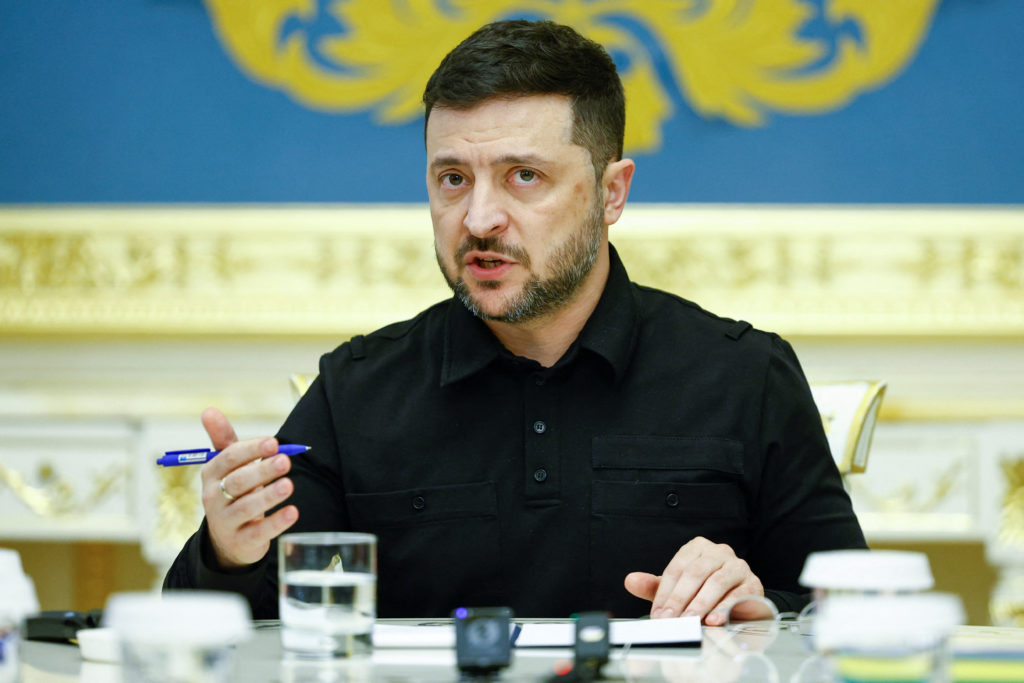
Ukrainian President Volodymyr Zelenskyy has placed Kenya at the centre of a growing international concern over foreign nationals being drawn into Russia’s war against Ukraine.
Addressing the 81st United Nations General Assembly in New York on Wednesday, September 23, Zelenskyy said citizens of 47 countries were being used in Russia’s war effort.
Kenya was among the countries he named, alongside India, Ghana, Nepal, Tajikistan, Yemen, Zimbabwe, Cuba, Belarus, Sudan and South Africa.
His appeal comes as Kenya is separately investigating the recruitment of its citizens into Russia’s military, with the Senate preparing to question senior government officials over the issue.

Zelenskyy urged the affected countries to protect their nationals from being drawn deeper into the conflict.
“Take care of them. Do not let them end up on another front,” he told representatives of the countries concerned.
He also called for greater international pressure on Russia’s ability to finance and sustain the war.
Kenya already facing its own recruitment crisis
Zelenskyy’s remarks have landed at a particularly sensitive moment in Kenya.
In February, Parliament was presented with findings from the National Intelligence Service indicating that more than 1,000 Kenyans had been recruited into Russia’s military operations in Ukraine.
The information presented to MPs indicated that 89 Kenyans were on the frontline at the time, while others were reported to be hospitalised, missing or in military camps.
The intelligence findings said some Kenyans had been approached with promises of well-paid civilian jobs before being drawn into military service.
Parliamentary records also indicate that recruiters targeted people seeking employment abroad, including former security personnel and civilians.
However, the circumstances were not identical for every Kenyan involved.
A government statement presented to Parliament in April said some Kenyans had travelled to Russia knowingly and voluntarily signed contracts for military or related work. The government also said Kenya and Russia had agreed to work towards facilitating voluntary disengagement for Kenyans involved in the military operations.
Russia has rejected allegations that its government illegally recruited Kenyans. The Russian Embassy in Nairobi said in February that Russian authorities had not engaged in illegal recruitment, while acknowledging that foreign nationals could voluntarily enlist in the Russian armed forces.
Senate inquiry enters a critical phase
The issue is now before two Senate committees: the Committee on Labour and Social Welfare and the Committee on National Security, Defence and Foreign Relations.
The committees had been scheduled to hear from families affected by the recruitment on September 15, but the session was adjourned after Prime Cabinet Secretary and Foreign Affairs Cabinet Secretary Musalia Mudavadi, Labour Cabinet Secretary Alfred Mutua and Attorney-General Dorcas Oduor failed to appear.
The officials were subsequently summoned to appear on September 29.
According to Parliament, relatives representing more than 800 affected families had travelled from different parts of Kenya to give evidence.
Their accounts include cases of Kenyans who died, disappeared, were wounded or were captured during the conflict.
One family told senators that their relative died after travelling to Russia, while another reported that a Kenyan had been missing since late October.
The committees want the government to explain how the recruitment networks operate, which agencies may be involved and what is being done to secure the release and return of affected Kenyans.
Zelenskyy says foreign nationals are dying in the war
At the UN, Zelenskyy said Ukraine had received requests from several countries seeking the return of their nationals who had been captured and held as prisoners of war.
He also said Ukrainian authorities had identified foreign nationals among those killed in the fighting.
The Ukrainian president alleged that some of the foreigners had been brought to Russia through deceptive recruitment schemes before being sent to the battlefield.
Those claims reflect concerns already raised in Kenya, where families have described relatives leaving the country after being promised employment and later ending up in military settings.
But the wider picture remains contested.
Kenyan authorities have reported cases of deceptive recruitment, while Russia has denied illegal recruitment and Kenya has acknowledged that some citizens voluntarily joined the Russian military.
That distinction is likely to remain important as the Senate hearings continue.
What Kenya says it is doing
The Kenyan government has said it is pursuing diplomatic measures to assist citizens caught up in the conflict.
Among the measures previously outlined are efforts to secure consular access to Kenyans in Russia, facilitate voluntary disengagement and assist those seeking to return home.
The government has also said Kenya and Russia agreed to strengthen information-sharing to combat trafficking and misleading recruitment schemes.
Kenya has further sought safer and more regular channels for citizens travelling to Russia for legitimate employment.
The recruitment issue therefore extends beyond the battlefield.
It has raised questions about job-seeking Kenyans being targeted by recruitment networks, the role of intermediaries, the screening of overseas employment opportunities and the government's ability to trace citizens once they leave the country.
A warning that now reaches beyond Kenya
Zelenskyy’s decision to name Kenya at the UN gives the issue a wider diplomatic dimension.
The president was not announcing a new Kenyan-specific measure. Rather, he was addressing 47 countries whose citizens Ukraine says are being used in Russia’s war.
For Kenya, however, the message arrives as families continue seeking answers and Parliament prepares to question the officials responsible for foreign affairs, labour and legal matters.
The September 29 Senate hearing could therefore provide a clearer picture of how many Kenyans remain in Russia, how many have been killed or captured, what recruitment routes are being used and what practical steps the government can take to bring affected citizens home.
For the families waiting for news, those answers are more immediate than the wider diplomatic debate.
You may also like
Category: International
Related Video: Dolly Parton’s Family Announces Her Passing in Emotional Tribute
Related Explainer: Kiharu Technical College September Intake 2026: Courses, Skills and New Opportunities
About the Author
Maureen Onyango is a journalist passionate about storytelling, life coaching and spiritual lessons. She studied at the Kenya Institute of Management and enjoys telling stories that inform, inspire and empower communities.
 Facebook
 Twitter / X
 WhatsApp
 LinkedIn
 Telegram
 Reddit