
Germany probes suspected sabotage attacks on power grid as security fears grow
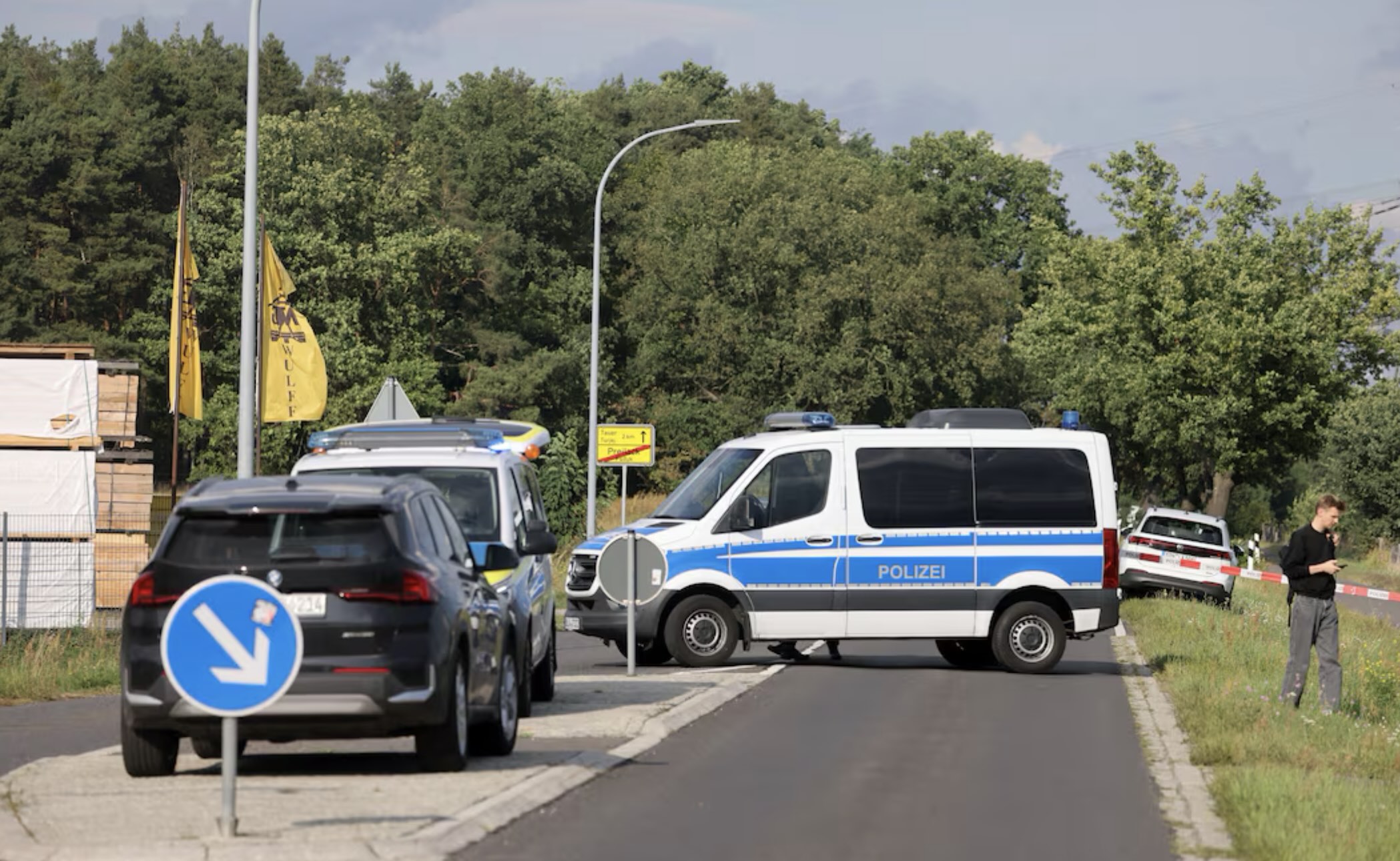
German authorities have launched investigations into suspected sabotage targeting electricity infrastructure in two parts of the country within 24 hours, raising fresh concerns over the vulnerability of Europe's critical infrastructure.
The incidents occurred in Brandenburg in eastern Germany and Bergheim near Cologne in the west, with investigators examining whether the attacks could be connected.
Authorities have not identified any suspects.
German officials say investigations are considering several possibilities, including foreign-directed sabotage and left-wing extremism.

The incidents come as Germany remains on heightened alert over what European governments increasingly describe as “hybrid” security threats targeting critical infrastructure.
Explosive devices found near power facility
The first incident occurred near the Jänschwalde coal-fired power plant in Brandenburg, where authorities discovered more than a dozen rocket-like devices equipped with propellant charges near a major electricity substation.
The devices were apparently designed to carry conductive material towards high-voltage electricity lines and trigger short circuits.
Only one of the devices successfully reached a power line, according to authorities.
The incident caused a brief disruption but did not result in a major power outage.
Brandenburg police subsequently opened an investigation that includes suspicion of forming a terrorist organisation, causing an explosion and damaging critical infrastructure.
Brandenburg Interior Minister Jan Redmann said authorities could not rule out the possibility of foreign involvement.
Second suspected attack near Cologne
Hours later, another incident occurred at a power substation in Bergheim near Cologne.
Bright flashes were reported around electricity lines before a short circuit disrupted several lines.
Investigators later concluded that the incident was deliberate.
Police discovered six launching devices in a nearby cornfield which investigators believe may have been used to propel conductive cables over electricity lines and deliberately cause a short circuit.
“It wasn't a broken switch, it was intentional. It was a criminal act,” North Rhine-Westphalia Interior Minister Herbert Reul said.
The disruption forced five coal-fired power plant units operated by German energy company RWE temporarily off the grid.
The affected units had a combined generation capacity of 4,200 megawatts.
Germany's wider electricity supply remained stable throughout the incident, authorities said, while some of the affected generating units were subsequently brought back online.
Are the two attacks connected?
Investigators are now examining similarities between the two incidents.
Both involved attempts to place conductive material onto high-voltage electricity infrastructure, although authorities have cautioned that investigations remain at an early stage.
Security officials from Brandenburg and North Rhine-Westphalia are exchanging information as they attempt to establish whether the incidents were coordinated.
No group has claimed responsibility.
German authorities say they are investigating several possible motives rather than focusing on a single suspect.
Germany on heightened security alert
The suspected sabotage comes amid heightened concern in Germany over attacks against critical infrastructure.
Only a day earlier, the German government publicly accused Russia of being behind an attempted drone attack at Leipzig/Halle Airport in August involving a drone carrying explosives.
Russia has denied allegations that it is responsible for sabotage operations in Europe.
There is currently no evidence publicly linking Russia to the latest electricity infrastructure incidents.
However, the timing has intensified concerns among German authorities about the country's vulnerability to unconventional attacks.
European governments have increasingly warned about so-called hybrid warfare — operations that can include cyberattacks, sabotage, espionage, disinformation and attacks against infrastructure without developing into conventional military conflict.
Europe's infrastructure under scrutiny
Germany's latest incidents also raise a wider question facing European governments: how effectively can countries protect the infrastructure that keeps modern economies functioning?
Electricity grids, telecommunications networks, airports, pipelines and undersea cables are increasingly regarded as potential targets during geopolitical confrontations.
Power substations are particularly sensitive because disruption at a relatively small number of strategically important points can affect much larger electricity networks.
“Critical infrastructure is the Achilles' heel of our society,” Reul said following the Bergheim incident.
Germany has experienced previous suspected attacks on electricity infrastructure.
In January, suspected left-wing extremists targeted high-voltage infrastructure near Berlin, while a separate substation fire in Reutlingen in June temporarily left around 40,000 people without electricity. Authorities believe the latter incident involved arson.
The latest investigations will now focus on identifying those responsible for the Brandenburg and Bergheim attacks and determining whether they were coordinated.
For German authorities, however, the incidents have already reinforced a broader concern: Europe's geopolitical tensions are increasingly being felt not only on traditional battlefields but around the infrastructure upon which everyday life depends.
Category: International
Related Video: Dolly Parton’s Family Announces Her Passing in Emotional Tribute
 Facebook
 Twitter / X
 WhatsApp
 LinkedIn
 Telegram
 Reddit