
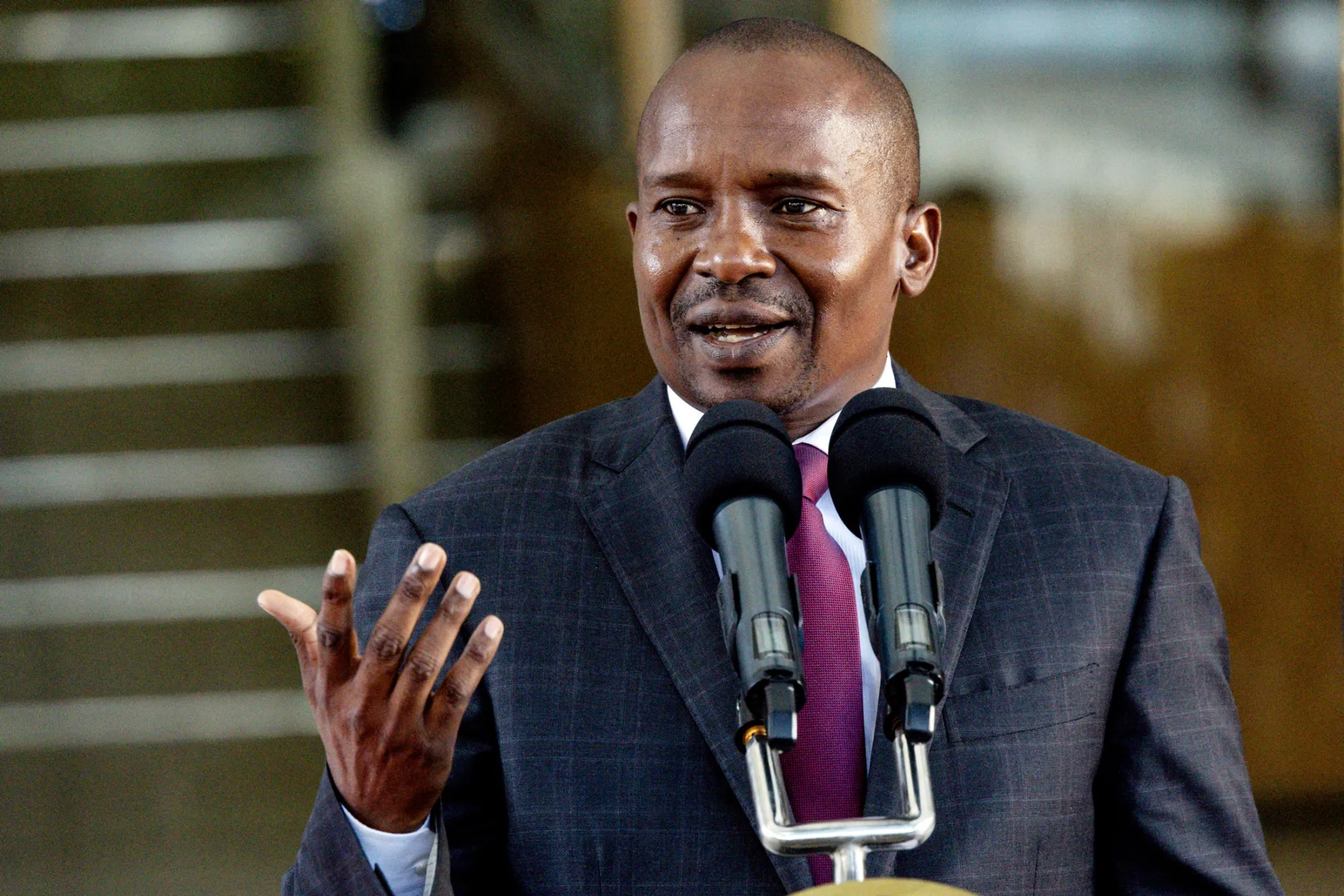
Deputy President Kithure Kindiki has announced plans to expand Kenya Medical Training College (KMTC), including opening more campuses and increasing capacity at existing ones, as the government seeks to grow the country’s health workforce.
Kindiki said the expansion is necessary to ensure Kenya has enough trained medical professionals to support the government’s Universal Health Coverage (UHC) agenda.
He spoke on Tuesday, October 6, while inspecting development works at the KMTC Kiambaa Campus in Karuri, Kiambu County.
“We are heavily investing in the construction and expansion of this KMTC. The national Government will continue supporting the expansion of learning institutions across the country,” Kindiki said.
The announcement comes as KMTC itself expands rapidly.
The college currently lists 92 campuses across 46 of Kenya’s 47 counties and more than 80,000 students. Its graduates account for more than 85 per cent of Kenya’s local middle-level health workforce, according to the institution.
That means the push to expand training capacity could have a direct bearing on the number of nurses, clinical officers, laboratory professionals and other health workers available to the health system.
Sh290m hostel planned for Kiambaa
At Kiambaa, the government is also increasing the campus’s physical capacity.
Kindiki announced a Sh290 million hostel project for students, while the government plans a second phase of the tuition block to provide additional learning space.
The hostel is expected to ease accommodation pressure as the campus grows.
The investment follows a wider push to improve infrastructure at KMTC campuses.
In July, KMTC Nairobi completed seven new classrooms with a combined capacity of 350 students. Other campuses have also received new tuition blocks, hostels and related facilities this year.
The expansion reflects the growing demand for places in medical training institutions.
But adding buildings alone will not automatically produce more qualified health professionals.
KMTC has also acknowledged the need for more lecturers as student numbers increase. In April, President William Ruto said the government would allocate resources for additional lecturers, noting that more teaching staff would be needed if Kenya is to train the health professionals required for UHC.
The college has said 600 personnel were recruited in 2025 following a presidential directive.
From training colleges to the wider health system
Kindiki linked the KMTC expansion to the government's broader healthcare plans.
The government has been pushing to increase access to healthcare through the Social Health Authority and its wider UHC programme.
Kindiki said the country needs more trained professionals to make those plans work.
The focus on training comes at a time when Kenya is also dealing with questions around the availability and employment of health workers.
The transition of UHC staff to county governments has been one of the issues discussed between the national government and counties, with leaders seeking to resolve payroll and employment arrangements for health workers.
In August, Kindiki said the government wanted to reach 40 million SHA registrations by the end of 2026 and have every Kenyan registered by August 2027.
But registration alone does not guarantee access to care.
The health system also needs enough doctors, nurses, clinical officers, laboratory staff and other professionals to provide services once patients reach health facilities.
That makes the capacity of training institutions an important part of the UHC conversation.
Quality will matter as campuses grow
KMTC has expanded considerably over the past decade, moving its training closer to communities across the country.
The college says its campus network now covers 46 counties, helping students access training opportunities without having to move far from home.
The next challenge will be ensuring that rapid expansion does not come at the expense of training standards.
New campuses require qualified lecturers, teaching equipment, laboratories, clinical placement opportunities and adequate student accommodation.
The government has therefore tied infrastructure expansion to the wider need to strengthen the health workforce rather than treating new buildings as an end in themselves.
Kindiki said the government would continue identifying institutions that require additional investment and work with local leaders to support their development.
Kindiki warns youth against drug abuse
During his visit, the Deputy President also urged young people to avoid drugs and substance abuse.
He told students that they would increasingly be called upon to take responsibility in leadership and other areas of national life.
He urged them to protect their health and make choices that would not undermine their future.
Kiambaa MP John Njuguna Kawanjiku welcomed the government’s investment in the campus, saying the projects would create more opportunities for young people in the area.
Thika Town MP Alice Ng’ang’a was also present during the visit.
For the government, the KMTC expansion is part of a larger effort to increase the supply of health professionals.
The test, however, will extend beyond the number of campuses opened.
It will ultimately depend on whether the expanded institutions can train enough qualified professionals — and whether the health system can employ and retain them where they are most needed.
You may also like
Category: News
Related Video: What Dangote’s proposed Lamu oil refinery could mean for East Africa
Related Explainer: Ebola contact tracing: Why the 21-day window matters in Kenya’s response
About the Author
Maureen Onyango is a journalist passionate about storytelling, life coaching and spiritual lessons. She studied at the Kenya Institute of Management and enjoys telling stories that inform, inspire and empower communities.
 Facebook
 Twitter / X
 WhatsApp
 LinkedIn
 Telegram
 Reddit