
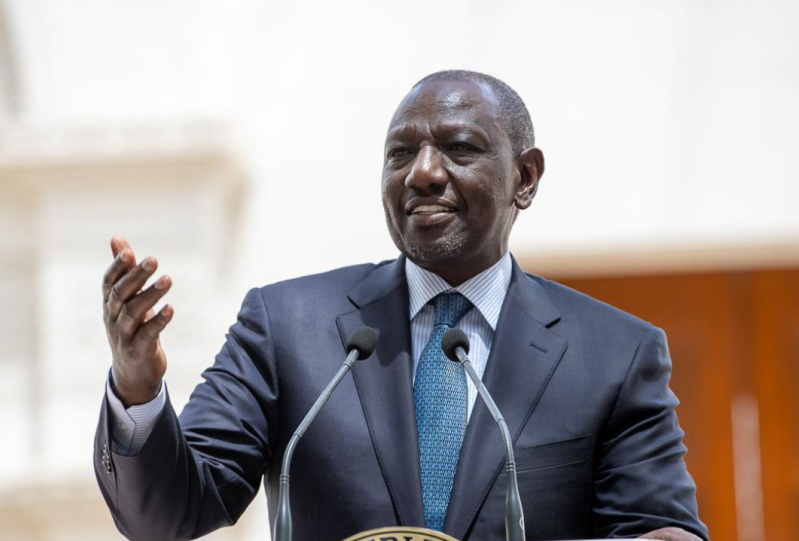
President William Ruto has unveiled a major proposal to ease the tax burden on salaried Kenyans, saying workers earning up to Sh30,000 a month would no longer pay Pay As You Earn (PAYE) tax if Parliament approves the plan.
Speaking during the National Prayer Breakfast in Nairobi on Thursday, May 28, the President said the government was rethinking how much pressure it places on low-income earners as households continue to struggle with rising living costs.
He said he had already instructed the National Treasury to prepare formal proposals for Parliament.
“I told the Treasury that it is time we slow down, especially for low-income earners, and ease some of the tax burden on them,” Ruto said.
Under the plan, the PAYE exemption threshold would rise from Sh24,000 to Sh30,000. Workers within that bracket would stop paying income tax altogether.
Ruto said the move would significantly reduce government revenue in the short term. He estimated the gap at about Sh40 billion, but insisted the decision was part of a broader effort to support households and stimulate economic activity.
The proposal comes at a time when deductions on payslips have become a political and economic flashpoint in Kenya, with workers facing multiple statutory charges that have reduced take-home pay.
If implemented, the change would mark one of the most significant shifts in personal income tax policy in recent years.
The President said the government was still studying ways to offset the revenue loss without increasing pressure on those already earning the least.
The announcement also followed fresh calls from financial sector players for reforms to Kenya’s income tax system. During submissions on the Finance Bill, 2026, the Kenya Bankers Association argued that lowering PAYE rates could stimulate spending and economic growth.
Its chief executive, Raimond Molenje, said reforms could ultimately expand the tax base despite initial revenue losses.
The government now faces a delicate balancing act: easing pressure on households while maintaining funding for public services at a time of tight fiscal space.
For workers earning at the lower end of the income scale, however, the proposal offers a potential shift in monthly pay packets — if Parliament agrees.