Kenya’s health authorities have issued a public warning after discovering a falsified batch of a specialised breast cancer drug circulating in the local market, raising fresh concerns about counterfeit medicines entering the country’s pharmaceutical supply chain.
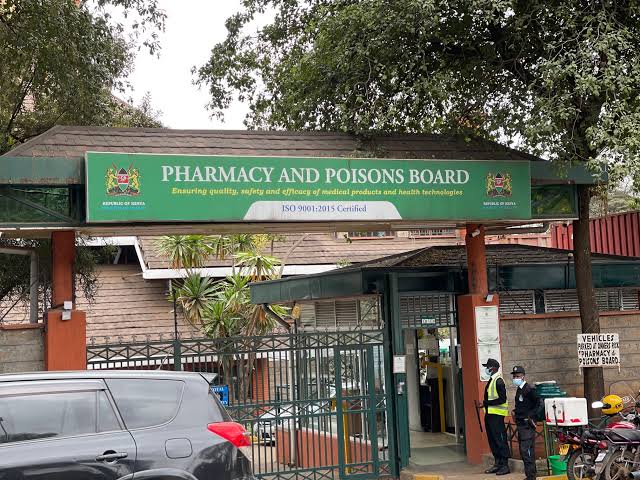
In a statement released on Monday, the Pharmacy and Poisons Board (PPB) said it had identified a fake batch of Phesgo, a medicine used in the treatment of certain forms of breast cancer. The affected product bears Batch Number C5290S20.
“The Board has identified a falsified batch of Phesgo (Pertuzumab/Trastuzumab), Batch Number C5290S20, currently circulating in the Kenyan market,” the regulator said.
Phesgo is a prescription medicine commonly used in targeted breast cancer treatment and is manufactured by the pharmaceutical company Roche. It is normally supplied as a ready-to-use liquid solution administered through subcutaneous injection.
However, according to the PPB, the counterfeit version found in Kenya differs significantly from the genuine product.
“The vial contains a white powder, whereas genuine Phesgo is a ready-to-use, clear to opalescent, colourless to slightly brownish liquid solution intended for subcutaneous administration,” the board said. “Phesgo is never supplied as a powder and does not require reconstitution.”
Health officials warned that the fake batch could pose serious risks to patients because its contents and safety standards remain unknown.
The regulator said counterfeit medicines may contain harmful substances, incorrect ingredients or inadequate active components, potentially placing vulnerable patients at risk.
The board further disclosed that the batch number in question does not correspond with any authentic Roche manufacturing records, deepening fears that counterfeit pharmaceutical products are infiltrating licensed and unlicensed distribution channels.
Hospitals, pharmacies, distributors, wholesalers and healthcare workers have now been directed to stop distributing or using the affected batch immediately.
The PPB also warned members of the public against purchasing medicines from unlicensed sellers.
“Procuring from unlicensed sources endangers patients and constitutes a violation of the Pharmacy and Poisons Act, Cap 244 of the Laws of Kenya,” the board said.
The agency added that it would work with investigative authorities to trace the source of the falsified drug and prosecute individuals or businesses involved in its distribution.
The alert comes amid wider concern across Africa over the growing trade in counterfeit medicines, particularly expensive specialised drugs used in cancer treatment and chronic disease management.
According to the World Health Organization, fake and substandard medicines remain a major public health challenge in low and middle-income countries, where weak supply chains and limited oversight can create opportunities for illegal pharmaceutical trade.
In Kenya, patient advocates and health professionals have repeatedly called for tighter monitoring of medical imports and stronger enforcement against counterfeit drug networks.
For cancer patients and their families, the latest warning is likely to deepen anxiety around access to safe and reliable treatment in a country where specialised care already remains costly and difficult for many households.