
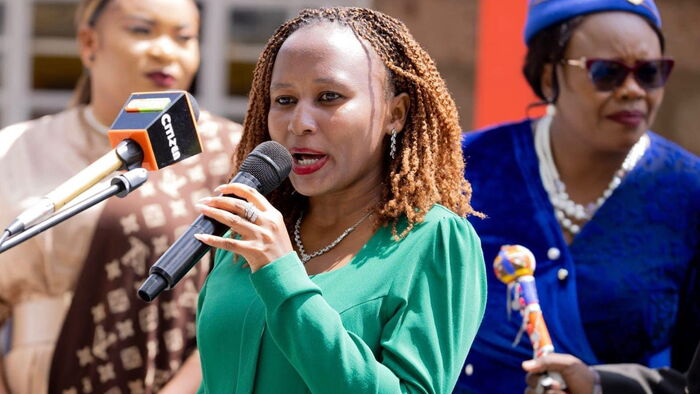
Kirinyaga Woman Representative Njeri Maina has called for sweeping reforms to address rising cases of femicide and child disappearances in Kenya, warning that the country is facing what she described as a “national crisis”.
In a statement issued on Tuesday, the legislator said the growing number of women killed and children reported missing pointed to deep failures within institutions meant to protect vulnerable citizens.
“This alarming rise in cases of femicide and child disappearances in Kenya is a national crisis that demands urgent, unified, and sustained action from all arms of government and, collectively, society,” Maina said.
Her proposals come amid mounting public anger over a series of highly publicised killings and disappearances reported in different parts of the country in recent months. Civil society groups and women’s rights organisations have repeatedly accused authorities of moving too slowly on investigations and failing to prevent violence before it escalates.
Maina proposed the creation of a multi-agency rapid response unit to coordinate investigations involving missing children and gender-based violence cases. She also called for stronger forensic systems, specialised training for investigators, and the decentralisation of Gender-Based Violence courts to make justice more accessible outside major cities.
Among her recommendations was the establishment of an instant missing children database linked to police stations through real-time alerts. She argued that delays in sharing information often reduce the chances of locating missing children quickly.
The MP also urged county governments to establish rescue centres for survivors of gender-based violence and vulnerable children. She said many families struggle to access immediate support after cases are reported.
“Protecting women and children is not charity. It is justice, constitutional duty, and a human rights requirement,” she said.
Maina criticised what she described as a reactive approach by the government, saying Kenya’s response has remained fragmented despite growing concern from the public.
She pointed to delayed investigations, weak forensic capacity, negligence, and victim-blaming attitudes as some of the major obstacles facing victims and their families.
“While statements like this raise awareness and acknowledge the crisis, significant gaps remain between acknowledgement and implementation,” she added.
The legislator also faulted the state for poor implementation of international agreements and local laws meant to protect women and children, including the United Nations Convention on the Rights of the Child and the Palermo Protocol against human trafficking.
Her remarks reflect a wider debate now taking shape in Kenya over how authorities handle cases involving violence against women and missing children. Human rights organisations have increasingly pushed for better funding for investigations, mental health services and community-based prevention programmes.
Maina further called for gender-responsive budgeting and regular publication of official statistics on femicide investigations and prosecutions to improve transparency and public accountability.
While the government has previously pledged to strengthen protections for women and children, critics say implementation has often lagged behind public promises.
For many families affected by the crisis, the demand now is not only for tougher statements, but visible action.
 Facebook
 Twitter / X
 WhatsApp
 LinkedIn
 Telegram
 Reddit