
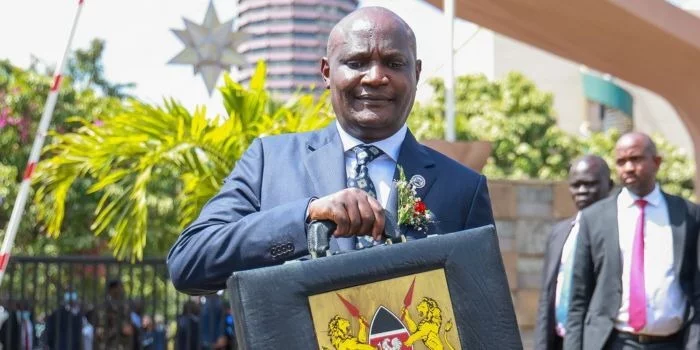
Treasury Cabinet Secretary John Mbadi has moved to calm growing public anxiety over the Finance Bill 2026, insisting that the government is not introducing new taxes on M-Pesa transactions or ordinary money transfers.
The clarification follows days of speculation online and concerns from mobile money users who feared the proposed tax measures would make digital transactions more expensive at a time when many households are already struggling with the rising cost of living.
“We are not introducing any other extra charges that are going to affect money transfer through M-Pesa,” Mbadi said during a public engagement forum at Jevanjee Gardens in Nairobi.
Instead, Mbadi said the government’s focus is on international digital payment companies and card service providers that generate income from Kenyan transactions but, according to Treasury officials, pay little or no tax locally.
“We sat with Safaricom last Friday, we discussed this, and they have understood very clearly that the platforms we are targeting are these card providers, these people who provide the platform for doing business,” he said.
The Treasury’s explanation comes as the Finance Bill 2026 faces intense scrutiny from businesses, consumers and civil society groups keen to understand how the proposals could affect daily life and the broader economy.
Mbadi pointed specifically to global card payment firms such as Visa and similar providers that operate within Kenya’s financial ecosystem through partnerships with local banks.
“For example, I have a Visa card in my pocket,” he said. “The bank that gives me the Visa card pays the owner of that platform, and most of them are not even Kenyans.”
“That person pays no tax to the Kenyan government, and that is what we are saying is not fair,” he added.
According to Treasury officials, the proposed framework is designed to close tax loopholes that allow multinational digital service providers to benefit from Kenya’s fast-growing digital economy without falling fully under the country’s tax system.
The government argues that local businesses and salaried workers should not continue carrying a disproportionate share of the tax burden while foreign firms profit from Kenyan consumers tax-free.
“If a Kenyan here would be paying taxes, then those who are benefiting from business in Kenya and supplying these cards should also pay tax,” Mbadi said.
Kenya has one of Africa’s most developed mobile money ecosystems, with millions relying daily on services such as M-Pesa for business transactions, school fees, transport payments and household purchases.
As a result, even small changes involving digital finance tend to trigger strong public reaction.
Treasury officials acknowledged that some banks have raised concerns about existing agreements with international payment firms. According to Mbadi, some contracts reportedly contain clauses shielding the providers from additional taxation.
“There is concern with the banks because they already signed some contracts and locked agreements that there should be no tax,” he said.
Still, the CS sought to reassure both financial institutions and consumers that the government would handle the issue administratively without passing extra costs onto ordinary Kenyans.
“We will deal with that between us and the banks to ensure no one gets hurt and that the same is not passed to consumers,” Mbadi said.
The debate reflects the delicate balancing act facing the government as it attempts to raise revenue without fuelling further public anger over taxation and the cost of living.
For now, Treasury officials insist that mobile money users will not see new charges on person-to-person transfers under the current proposals.
 Facebook
 Twitter / X
 WhatsApp
 LinkedIn
 Telegram
 Reddit