
In Kenya’s bustling capital, Nairobi, the smartphone has become more than a communication tool. For many young activists, journalists and government critics, it is now viewed as a potential tracking device — one capable of revealing where they are, who they speak to and what they think.
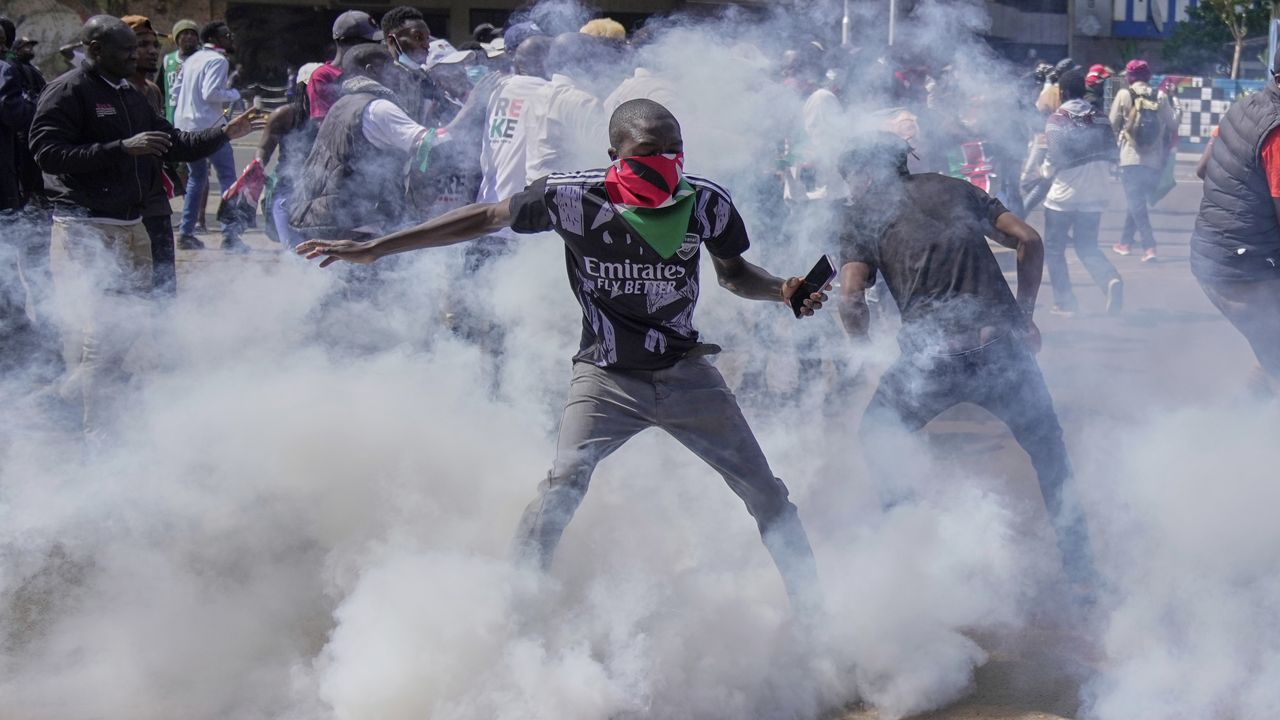
That fear has intensified following the youth-led anti-government protests that swept across Kenya in 2024, demonstrations that transformed the country’s political landscape and triggered renewed scrutiny of the state’s growing surveillance capabilities.
“The Kenyan state has evolved rapidly when it comes to digitization of state security,” one digital rights advocate said in a recent Al Jazeera documentary examining surveillance in Kenya. “We have moved from what was previously targeted surveillance to indiscriminate mass surveillance.”
The documentary, widely shared online, paints a picture of a country where surveillance technologies once justified as tools against terrorism are increasingly being linked to political dissent and protest management.
Kenya’s government has not publicly responded in detail to the specific allegations raised in the programme.
A protest movement unlike any before
The 2024 demonstrations marked a significant turning point in Kenya’s modern political history.
Initially sparked by opposition to controversial tax proposals in the Finance Bill, the protests evolved into a broader expression of anger over unemployment, corruption, rising living costs and governance failures under President William Ruto.
Unlike previous political mobilisations in Kenya, the protests were largely decentralised and driven by young people coordinating online rather than through established political parties or ethnic power structures.
“It was the first time we were having a youth-led protest,” one analyst said in the documentary. “Predominantly protests have been organised either by political leadership or what you’d call tribal leadership.”
That decentralised structure made the movement harder to predict and control. Activists say the state’s response increasingly relied on digital monitoring.
“The response to that therefore is to fall back on the mechanisms that they do have to be able to control, to police, to intimidate — which is surveillance,” another commentator said.
Human rights organisations reported widespread arrests, intimidation and allegations of enforced disappearances during and after the protests. According to Amnesty International, Kenya’s human rights situation deteriorated significantly during the unrest, with activists, journalists and protesters facing surveillance and arbitrary detention.
The Kenya National Commission on Human Rights reported dozens of deaths linked to the demonstrations, while rights groups documented allegations of abductions and disappearances.
In the Al Jazeera documentary, activists alleged that some protesters appeared to have been geolocated through their mobile phones.
“Those abductions were done at night. They were done in broad daylight,” one speaker said. “For someone to come for a little-known X user because of your activism online, they have to know exactly where you are.”
The Kenyan government has repeatedly denied involvement in enforced disappearances and unlawful detentions.
Surveillance infrastructure expands
Kenya has invested heavily in digital infrastructure over the past decade as part of broader ambitions to modernise public services and improve security.
That expansion has included CCTV systems, biometric registration programmes and digital identification initiatives.
Rights advocates, however, warn that the legal and institutional safeguards meant to protect privacy have not kept pace with technological growth.
A March report cited in the documentary identified Kenya among several African countries that have collectively spent billions of dollars on surveillance technologies, much of it sourced from Chinese firms.
Supporters of such systems argue they are necessary in a country that has experienced repeated extremist attacks, including the 2013 Westgate Mall attack, the 2015 Garissa University attack and the 2019 DusitD2 hotel complex attack.
“Kenya is a country that is reeling from the effects of terrorism,” one activist acknowledged in the documentary.
But critics argue that counterterrorism tools are increasingly being applied beyond national security operations.
“In last year’s protests, people who were out protesting were arrested and the charges that were levelled against them were terrorism,” one commentator said.
Under Kenyan law, terrorism-related offences can carry severe restrictions on bail and movement, raising concerns among rights groups about the criminalisation of dissent.
The Safaricom questions
At the centre of many privacy debates in Kenya is Safaricom, the country’s dominant telecommunications provider.
With roughly 50 million subscribers and near-total dominance in the mobile money sector through M-Pesa, the company holds extensive personal and financial data on millions of Kenyans.
For years, activists and privacy advocates have accused Safaricom of granting security agencies improper access to customer data. The company has consistently denied wrongdoing.
The allegations resurfaced prominently during the trial of a Kenyan man charged under the Computer Misuse and Cybercrimes Act for allegedly sharing an AI-generated image depicting President Ruto in a coffin.
According to the documentary, a police liaison officer attached to Safaricom acknowledged during cross-examination that user data had been provided without a court order.
“What he’d given was triangulation data of David’s location, David’s identity and everyone that David had been speaking to,” one observer said.
The revelation sparked outrage among privacy campaigners, who argued it suggested unlawful sharing of telecommunications data.
Safaricom did not respond to Al Jazeera’s requests for comment in the documentary. The company has previously maintained that it complies with Kenyan law and only cooperates with lawful requests from security agencies.
Kenya’s privacy laws
Kenya’s Constitution formally guarantees the right to privacy under Article 31, including protection against unnecessary searches and unlawful disclosure of personal communications.
In 2019, the country enacted the Data Protection Act, one of Africa’s most comprehensive privacy laws. The legislation established the Office of the Data Protection Commissioner (ODPC), tasked with regulating how personal information is collected, processed and stored.
The law requires organisations to obtain consent before processing personal data and limits how information may be shared. It also grants citizens rights to access, correct and delete personal information held about them.
The Office of the Data Protection Commissioner says its mandate includes protecting privacy rights, enforcing compliance and investigating violations.
Legal experts, however, say enforcement remains inconsistent.
Although surveillance activities generally require judicial authorisation, national security agencies retain broad powers under counterterrorism and cybercrime legislation. Critics argue these provisions create loopholes vulnerable to abuse.
A legal analysis published by CMS, an international law firm network, notes that Kenya’s data protection regime remains relatively young and is still developing institutional capacity.
Civil society organisations have repeatedly raised concerns about proposed amendments to cybercrime laws that they say could expand surveillance powers while limiting online speech.
Amnesty International warned that recent legislation and proposed reforms risk undermining constitutional rights to privacy and free expression.
Fear and self-censorship
For many Kenyan activists, the central concern is not simply whether surveillance exists, but how it changes behaviour.
“Privacy is a foundational and an important right in the context of a democracy,” one digital rights advocate said in the documentary. “If your financial transactions are tracked, if your movements are traced, if your communication is intercepted, there’s nothing else that people can do in such an environment other than to self-censor.”
Rights campaigners say that fear is increasingly shaping public discourse online.
Encrypted messaging platforms, anonymous accounts and digital security workshops have become more common among activist circles since the protests.
Yet many young Kenyans remain deeply dependent on digital platforms for political participation, economic activity and communication.
That creates a tension at the heart of Kenya’s digital future: the same technologies that have empowered a generation of politically active youth are also expanding the state’s ability to monitor them.
“There’s so many things that we take for granted in a functional democracy that are almost completely absent in Kenya,” one commentator said. “The ability to have space whereby you can be critical and organise around that — that is all predicated on there being a private domain to communicate with other people.”
As Kenya continues its rapid digital transformation, that struggle between security, technology and civil liberties is likely to intensify.
For many Kenyans, the question is no longer whether surveillance exists, but how far it will go — and whether democratic safeguards can keep pace before trust in both government and technology erodes further.