
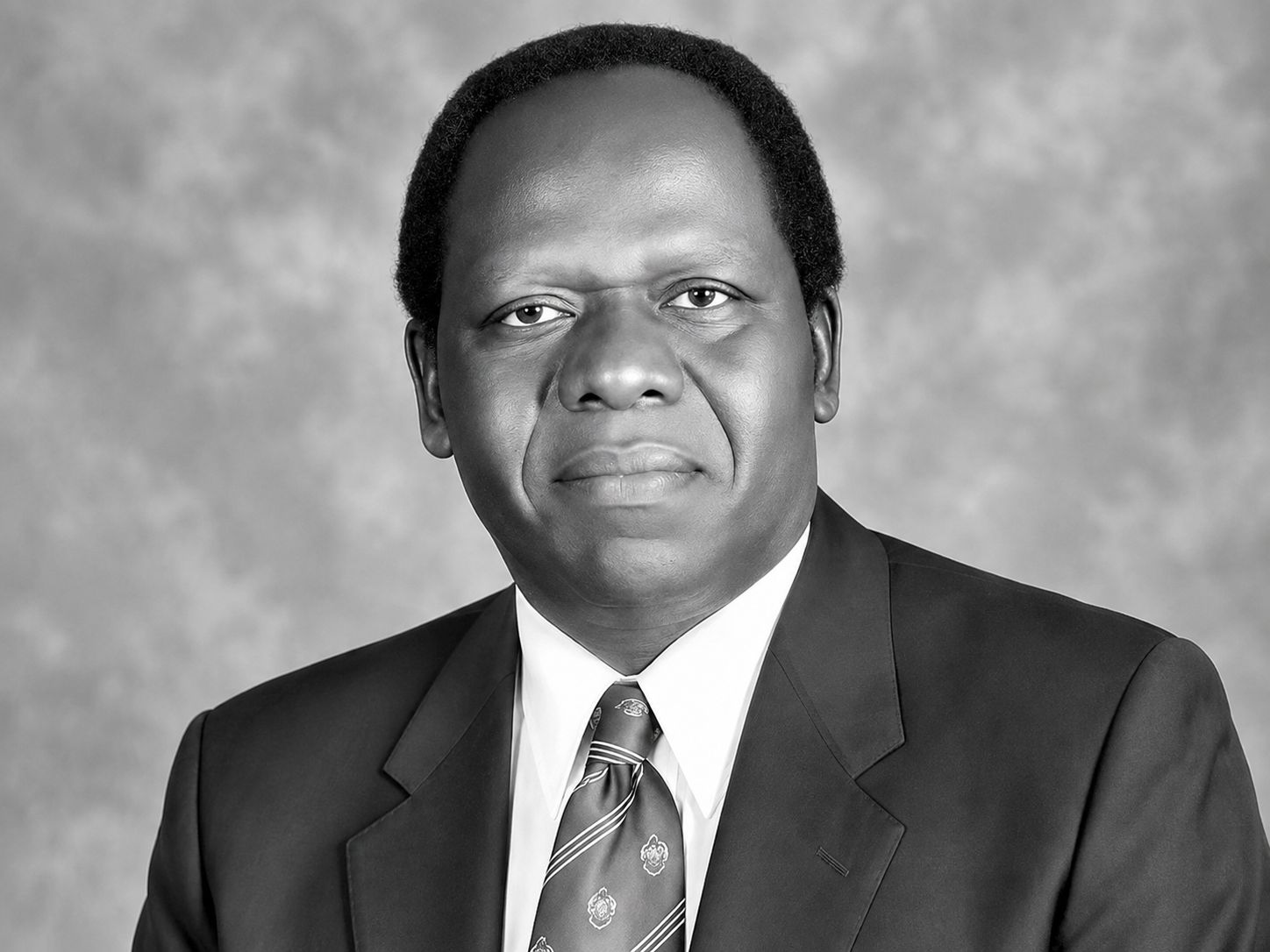
Twenty-three years after his death, Kenya is remembering a politician who helped change the country's political rules — and whose brief time in government left a much longer legacy.
For many younger Kenyans, Michael Kijana Wamalwa may be little more than a name in the history books: Kenya's eighth vice-president, a politician from western Kenya who died in London in 2003. But the story of Wamalwa is also the story of a generation that challenged one-party rule, experimented with political coalitions and ultimately helped deliver one of Kenya's most significant electoral transitions.

That history was brought back into focus on Sunday, when Wamalwa's family, political leaders and residents gathered in Kitale to mark the 23rd anniversary of his death. Former President Uhuru Kenyatta attended the commemoration and laid a wreath at Wamalwa's grave. The event also brought together figures from across the political divide, including Kalonzo Musyoka, Martha Karua, Justin Muturi and Fred Matiang'i.

But the gathering was about more than remembrance. It became an occasion to revisit a question that remains remarkably current: what does political opposition mean in a democracy, and how much should political competitors be willing to sacrifice for the system itself?
The young politician who was told he was too young
Wamalwa was born in 1944 in Sosio, near Kimilili in what is now Bungoma County. He was educated in Kenya and Britain, studying law at King's College London and later at the London School of Economics before being called to the bar at Lincoln's Inn. He returned to Kenya and taught law at the University of Nairobi before entering politics.
His nickname, "Kijana" — Swahili for "young man" — was originally a reference to his age. When he first sought elective office in 1974, at about 30, opponents portrayed him as too young and too privileged to represent ordinary voters. He eventually won a parliamentary seat in 1979.
For a younger generation accustomed to social media campaigns and highly personalised politics, it is worth remembering just how different Kenyan politics was during Wamalwa's rise.
Kenya was dominated by the Kenya African National Union (KANU), and the political system offered little space for a credible opposition. The struggle for multi-party democracy eventually produced the Forum for the Restoration of Democracy, or FORD, in the early 1990s. Wamalwa became one of the prominent figures in the movement.
He succeeded Jaramogi Oginga Odinga as chairman of FORD-Kenya in 1994. His leadership was not without controversy — his political rivalry with Raila Odinga eventually contributed to another opposition split — but Wamalwa remained one of the country's most recognisable advocates of competitive politics.
The election that changed Kenya
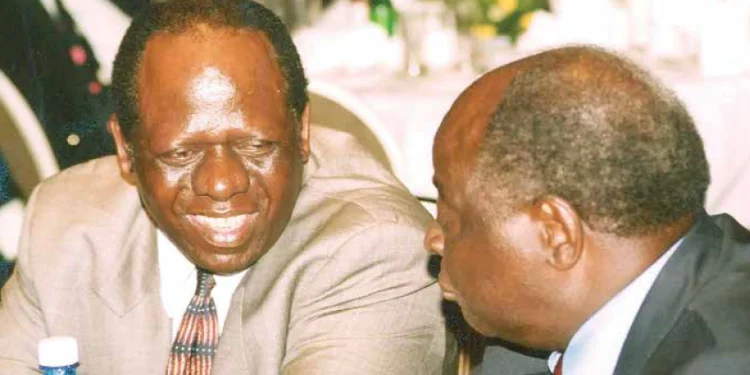
The most important chapter of Wamalwa's political career came in 2002.
After years of fragmented opposition, Wamalwa joined forces with Mwai Kibaki and Charity Ngilu in the National Alliance of Kenya. The alliance later expanded into the National Rainbow Coalition, bringing together politicians who had previously competed against one another.
The strategy worked.
NARC won the December 2002 election, ending KANU's uninterrupted hold on national government since independence. Kibaki became president and Wamalwa became vice-president. It was a remarkable political turnaround for a man who had spent much of his career in opposition.
For today's younger voters, the significance of that moment can be easy to underestimate. Kenya's politics now routinely features coalitions, party hopping and competing presidential alliances. In 2002, however, the peaceful transfer of power from a party that had governed for decades to a broad opposition coalition represented a profound political change.
Wamalwa was at the centre of it.
Then, suddenly, he was gone

His time as vice-president lasted only about eight months.
Wamalwa became seriously ill during the first months of the new government and spent periods receiving treatment in London. He returned briefly to Kenya and married Yvonne Nambia in early 2003, but his health deteriorated again. He died in London on 23 August 2003, aged 58.
His death deprived the new government of one of its most prominent coalition builders at a particularly delicate moment. The Kenya Presidential Library notes that his death dealt a major blow to the coalition government; Mwai Kibaki subsequently appointed Moody Awori as vice-president.
There was also a sense of unfinished political business.
Wamalwa had been widely regarded as a potential contender for the presidency after Kibaki. His death therefore removed not simply a sitting vice-president but a politician who might have played a significant role in Kenya's next political chapter.
Why are politicians still talking about him?
Perhaps the most interesting part of Sunday's commemoration was not the nostalgia but the political language surrounding it.
Uhuru Kenyatta used the occasion to call for the protection of democratic freedoms and political competition. He described Wamalwa as a politician who regarded opponents as competitors rather than enemies and recalled him as a figure associated with integrity, maturity and decency in public life.
That is particularly striking in today's Kenya, where political competition can be intensely personal and where alliances frequently shift ahead of elections.
Wamalwa's political career was hardly free of the rivalries and contradictions that have characterised Kenyan politics. He fought fierce battles within the opposition and his leadership of FORD-Kenya was contested. His political story should therefore not be turned into a simple tale of an idealised statesman.
But that complexity is precisely what makes his career worth remembering.
He belonged to a generation that understood politics as a struggle over the rules of the game, not simply over who occupied State House.
A legacy bigger than the vice-presidency

Wamalwa's admirers often remember his eloquence, his wit and his distinctive personal style. He was known for quoting Shakespeare, Churchill and John F Kennedy, and for an unusually polished public image. The Guardian's 2003 obituary described him as a charismatic and flamboyant politician and noted his reputation as an eloquent parliamentarian.
But perhaps his most enduring legacy is political rather than personal.
Wamalwa helped demonstrate that Kenya's opposition could eventually overcome its divisions and defeat an entrenched ruling party through the ballot box. The coalition that produced the 2002 victory would later fracture, as Kenyan political alliances repeatedly have. Yet the transition itself mattered.
It showed that power could change hands.
That is a lesson a generation that grew up after 2002 may take for granted. Wamalwa's generation did not.
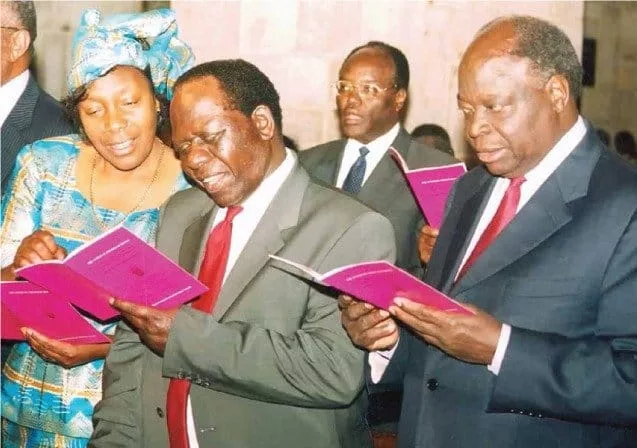
This year's commemoration also coincided with the launch of My Country First, a new book documenting Wamalwa's life and political journey. His younger brother, Eugene Wamalwa, described it as a record of his brother's journey from humble beginnings to national leadership and the sacrifices he made in public service. Uhuru Kenyatta, who wrote the foreword, launched the book in Kitale.
Twenty-three years after his death, Michael Kijana Wamalwa is therefore being remembered at a moment when Kenya is again debating political alliances, democratic freedoms and the character of national leadership.
For those who never saw him on a campaign stage, never heard his speeches and never watched the political drama that culminated in the 2002 election, the simplest way to understand Wamalwa may be this:
He was part of the generation that fought to make political choice possible — and then helped prove that political change could actually happen.
That achievement, more than the office he held for only a few months, is why his name still matters.
Related Stories
- Ndindi Nyoro Takes His 2027 Campaign Nationwide
- Osoro Dismisses Matiang’i’s 2027 Bid
- Kenya at a Crossroads: Old Rivalries, New Alliances and the Pressure of 2027
Category: Features · Related Topic: Kenya Politics
About the Author
Maureen Onyango is a journalist passionate about storytelling, life coaching and spiritual lessons. She studied at the Kenya Institute of Management and enjoys telling stories that inform, inspire and empower communities.
 Facebook
 Twitter / X
 WhatsApp
 LinkedIn
 Telegram
 Reddit