
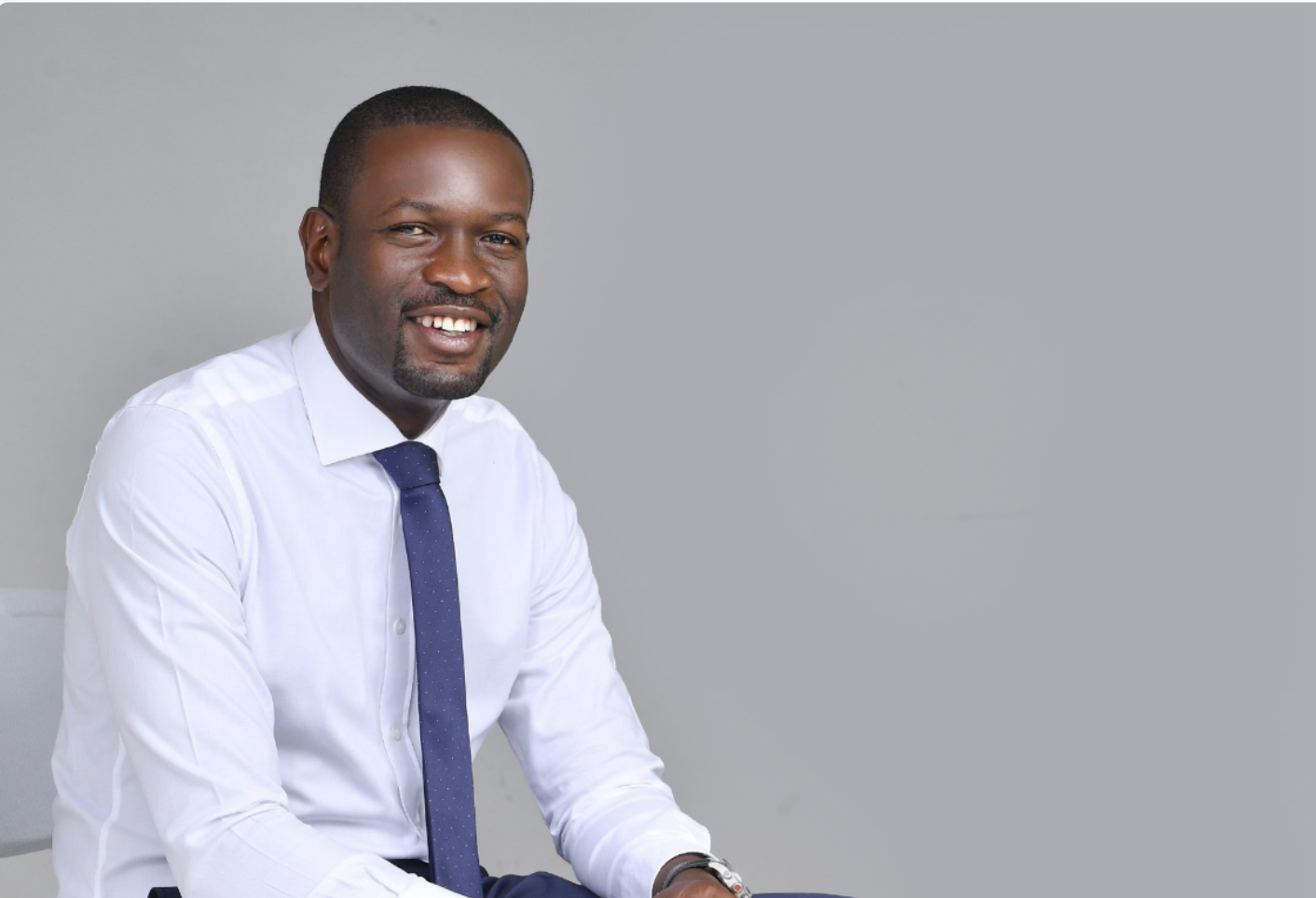
At 44, Edwin Watenya Sifuna is attempting one of the most significant political transitions of his career: moving from the ranks of Kenya's opposition party machinery to the centre of the country's 2027 presidential contest.
The Nairobi senator is no longer simply the combative politician who became widely known as the public face of the Orange Democratic Movement (ODM). In 2026, after years alongside Raila Odinga, Sifuna has emerged as the face of the Linda Mwananchi movement and is openly entertaining the possibility of challenging President William Ruto in the 2027 General Election.
He has not, however, consistently described himself as a formally declared presidential candidate. In July, Sifuna said the decision would depend on consultations across the country and the collective position of the Linda Mwananchi movement.
That distinction matters as he begins to build a national profile.

A Kakamega childhood
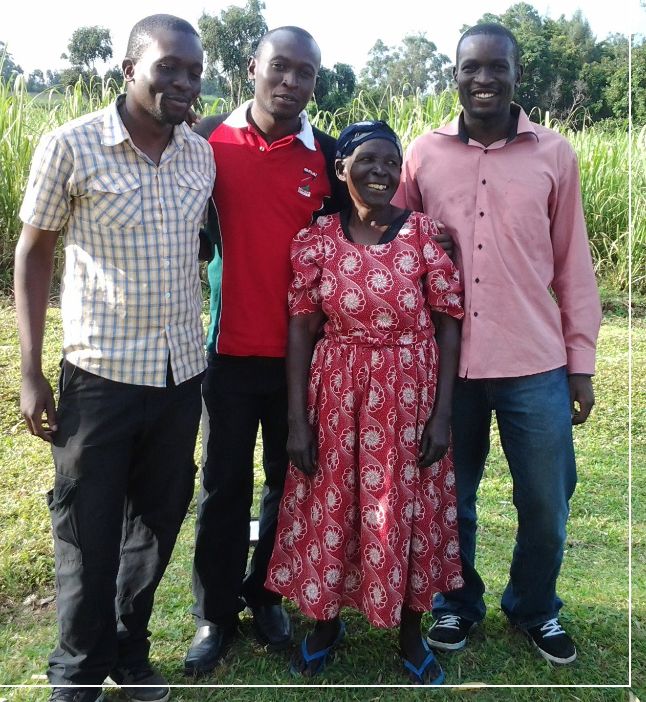
Sifuna was born on May 22, 1982, in Kakamega County to working-class parents. His father was a civil servant with the former Municipal Council, while his mother was a teacher at Moi Primary School in Bungoma before retiring, according to Sifuna's official biography.
He grew up with two brothers and two sisters and has credited his upbringing with shaping his understanding of inequality, limited economic opportunity and the difficulties confronting ordinary Kenyans.
His formal education began at Kakamega Township Primary School before he joined Musingu High School.
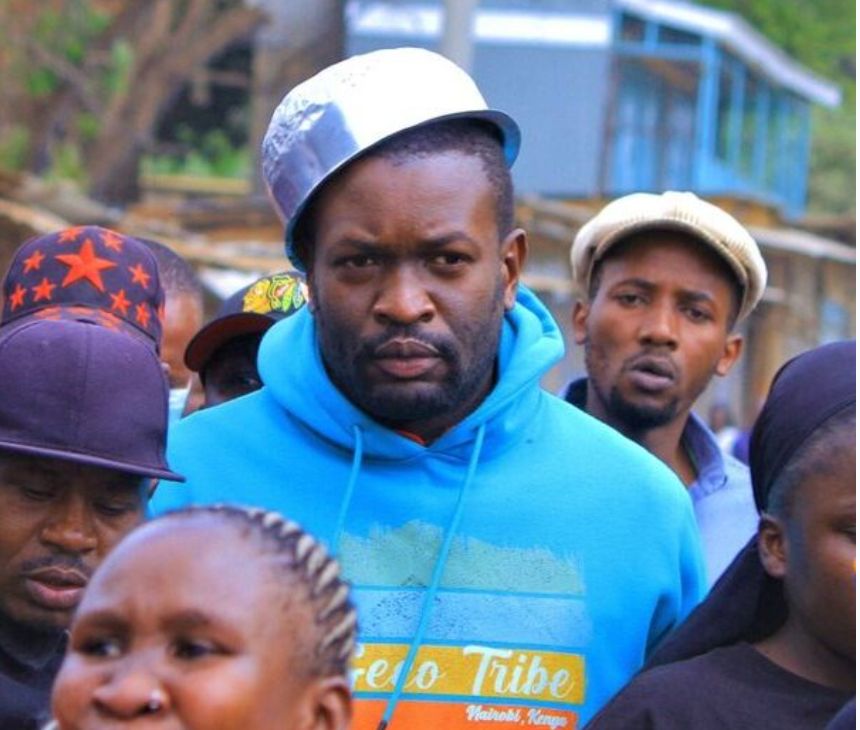
He later studied law at the University of Nairobi. Parliament records his Bachelor of Laws studies as running from 2001 to 2005, followed by a postgraduate diploma at the Kenya School of Law in 2007. His personal biography says he graduated in 2006.
He was subsequently admitted to the Roll of Advocates in 2008.
The lawyer before the politician

Sifuna's political identity has sometimes overshadowed his professional career as an advocate.
After admission to the Bar, he worked as Legal Affairs Manager at Magnate Ventures and later as Legal and Administration Officer at Mini Group of Companies. He eventually established E. Sifuna & Associates Advocates in Nairobi.
His official biography also highlights his involvement in the Law Society of Kenya, including the OkoaLSK initiative, and his participation in the legal team that represented doctors during the 2017 dispute with the government.
The legal profession provided him with an early platform for engaging with constitutionalism, governance and public-interest questions — themes that would later become central to his political career.
The Constitution and the turn to politics
Sifuna's own account traces his political awakening to the 2010 constitutional referendum.
He says he voted for the Constitution believing it would usher in a better future for Kenya, but later became frustrated by what he saw as resistance to its implementation, particularly the principles of devolution.
Parliament's official biography places the start of his political career in 2013.
From 2013 to 2016, according to his biography, he served on the technical and advisory committee of the Coalition for Reforms and Democracy (CORD). From 2016 to 2021, he served in a similar capacity under the National Super Alliance (NASA).
Both formations were associated with Raila Odinga, laying the foundation for Sifuna's subsequent rise within ODM.
The Raila years
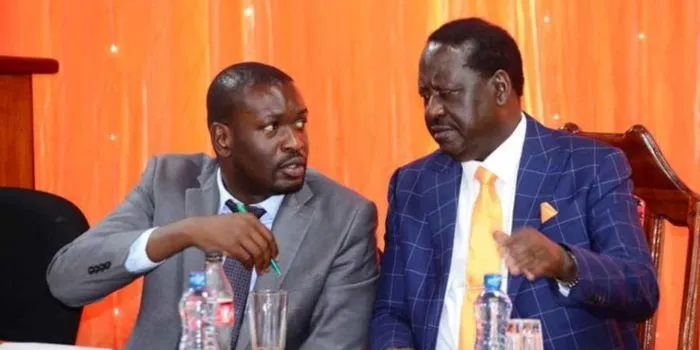
Sifuna became one of the younger and more visible politicians in Odinga's political camp.
His first attempt at elective politics came in the 2017 General Election, when he contested the Nairobi Senate seat on an ODM ticket.
He finished second behind Johnson Sakaja.
The defeat nevertheless raised his profile inside ODM and preceded his appointment as the party's Secretary-General in 2018. Parliament records his tenure in that position from 2018.
For years, Sifuna became one of ODM's most recognisable public communicators, defending the party's positions and frequently taking on government officials in political debates.
His relationship with Odinga became one of the defining features of his political career.
It is therefore reasonable to describe Sifuna as a longtime political ally and lieutenant of Raila Odinga. The description of him as Odinga's "political son", however, is a political characterisation rather than a formal position.
From losing Nairobi to winning it
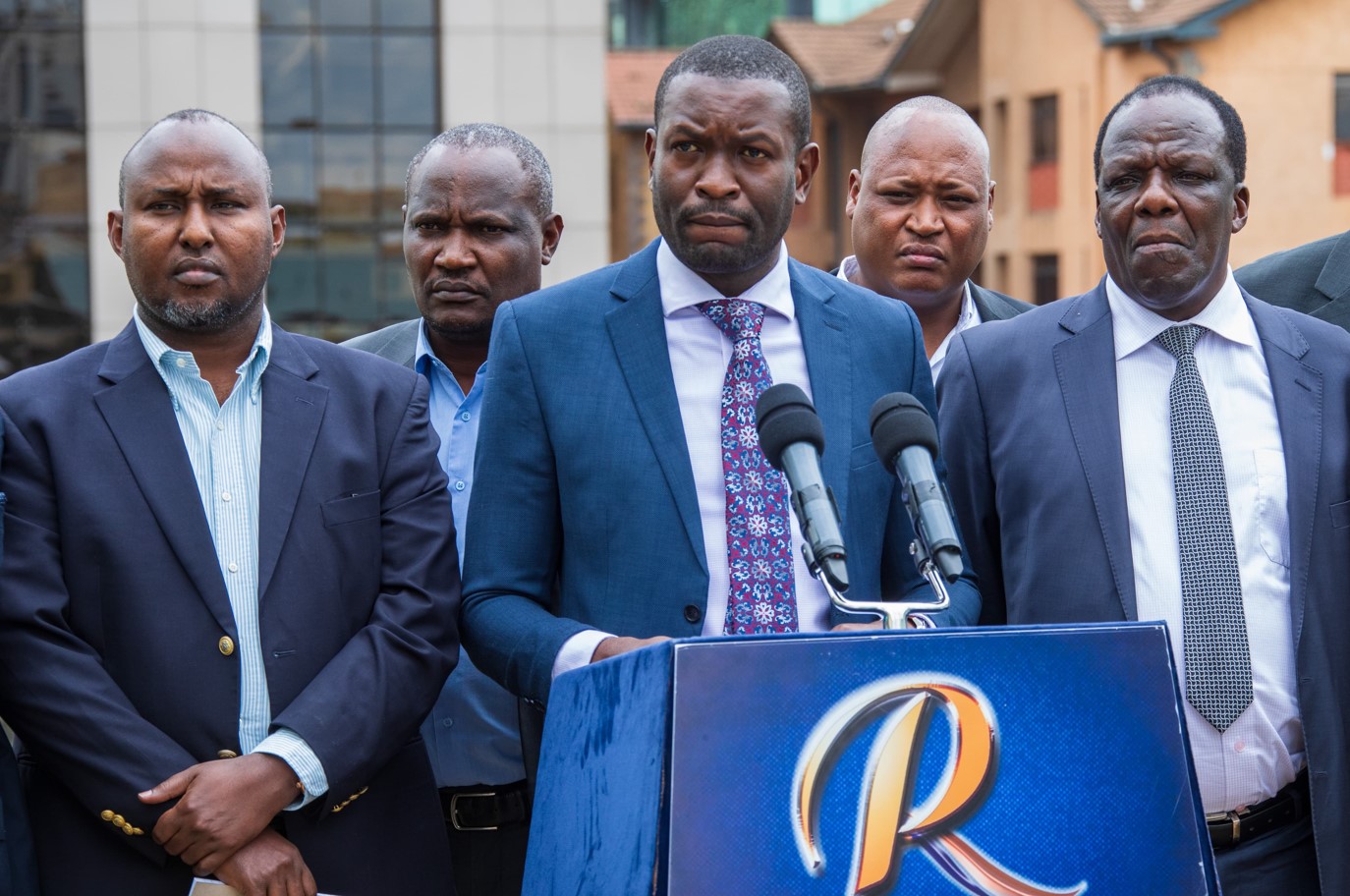
Five years after his first Senate attempt, Sifuna returned to the race.
In the 2022 General Election, he won the Nairobi Senate seat, becoming the county's elected senator. Parliament currently lists him as an elected ODM senator for Nairobi.
His parliamentary record includes membership of the County Public Accounts Committee and other Senate committees. His published biography also lists bills he sponsored, including legislation concerning county printing, energy, sports and basic education.
In March 2026, he was active in the Senate debate on the Auditor-General's report on Nairobi County, arguing that problems in the capital offered an important test of the effectiveness of devolution.
The break with ODM
The political landscape around Sifuna changed dramatically in 2026.
He was removed from the ODM Secretary-General position and lost his Senate leadership role as Deputy Minority Whip.
The change marked a break from the institutional position he had occupied since 2018 and opened a new chapter in his political career.
The emerging Linda Mwananchi movement subsequently became the platform around which Sifuna's national ambitions began to take shape.
By June, The Star was describing Sifuna as the face of the movement and reporting that its growth was complicating discussions about the opposition's 2027 political line-up.
The potential Ruto challenge
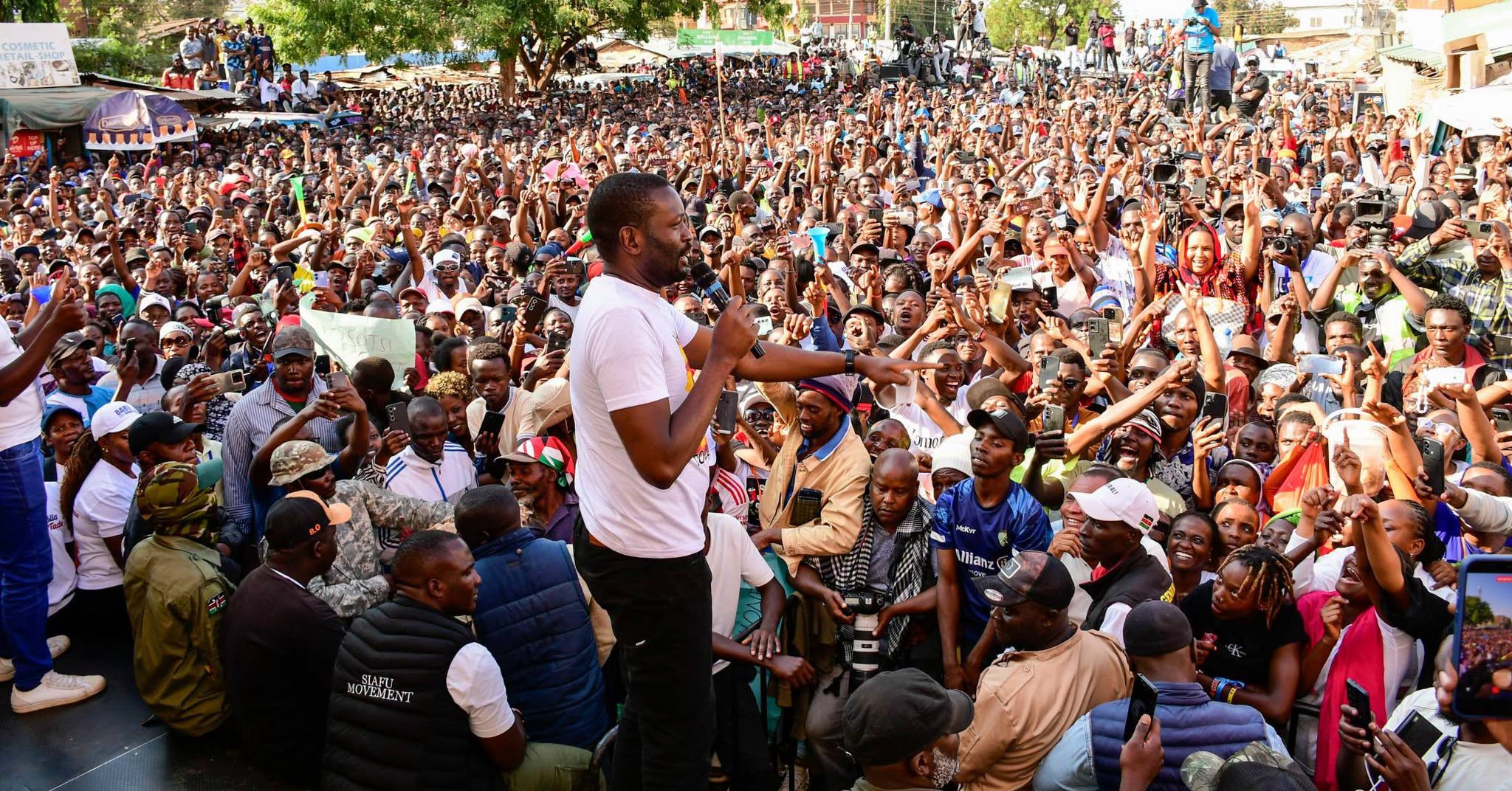
President William Ruto is the man Sifuna would have to defeat if he ultimately secures a presidential ticket.
Ruto, 59, was elected president in 2022 after serving as deputy president for a decade. The official presidential biography records his earlier career as an MP, KANU secretary-general, Cabinet minister and deputy president.
Ruto's political formation is also rooted in the era of retired President Daniel arap Moi.
He entered Parliament in 1997 as an Eldoret North MP on a KANU ticket and became a prominent KANU figure during Moi's final years in power. The Presidential Library's historical account of Moi's administration describes Ruto's political work within the KANU establishment and his role in campaigning for the party.
This is the important distinction in the original description: Ruto, not Sifuna, is the politician whose early political career was forged within the Moi-era establishment.
Sifuna's political formation followed a different route — through the legal profession, constitutional politics and the opposition movements associated with Raila Odinga.
The contrast could become an important part of the 2027 political narrative: Ruto, the veteran of the Moi-era political establishment who rose through successive stages of government, against a younger opposition politician whose career was built around ODM and the post-2010 constitutional order.
Has Sifuna actually declared?
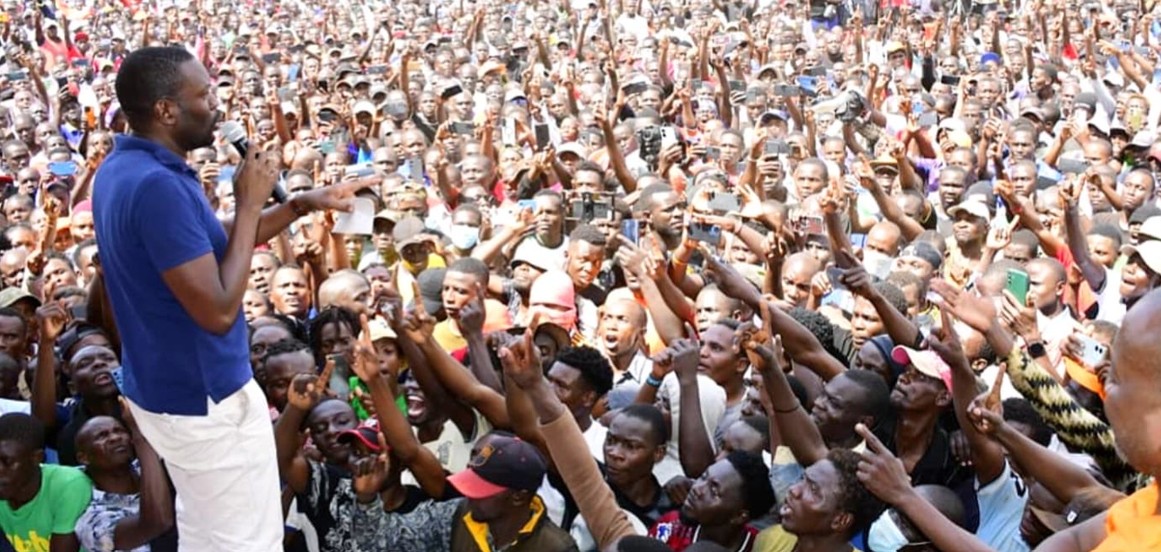
The answer requires some nuance.
Sifuna has made increasingly explicit statements about the possibility.
In July 2026, he said he would not reject a presidential bid if Kenyans collectively decided that he should run. He said Linda Mwananchi was consulting supporters across the country before making a final decision.
He also said the movement wanted to visit all 47 counties before deciding whether it had sufficient national support to field a presidential candidate. At the time, he said the movement had reached 14 counties.
But the rhetoric has since become more assertive.
In July, Kenya News Agency reported that Sifuna told supporters in Bungoma to allow him to seek a new political vehicle that could take him to the presidential ballot.
The political machinery around him has therefore moved beyond simple speculation, even though the precise form of his presidential candidacy remains part of the opposition's wider negotiations.
A different generation of opposition politics
Sifuna's potential candidacy comes at an unusual moment in Kenyan politics.
For decades, presidential politics has been dominated by figures with long records in national government and opposition — including Jomo Kenyatta, Daniel arap Moi, Mwai Kibaki, Uhuru Kenyatta and Raila Odinga.
Sifuna belongs to a younger political generation.
His rise has also coincided with increased demand for new political faces, particularly among younger voters.
That does not automatically translate into votes. A presidential campaign requires nationwide organisation, financing, coalition-building and the ability to appeal beyond a politician's traditional political base.
For Sifuna, that is the test now confronting him.
The man beyond politics
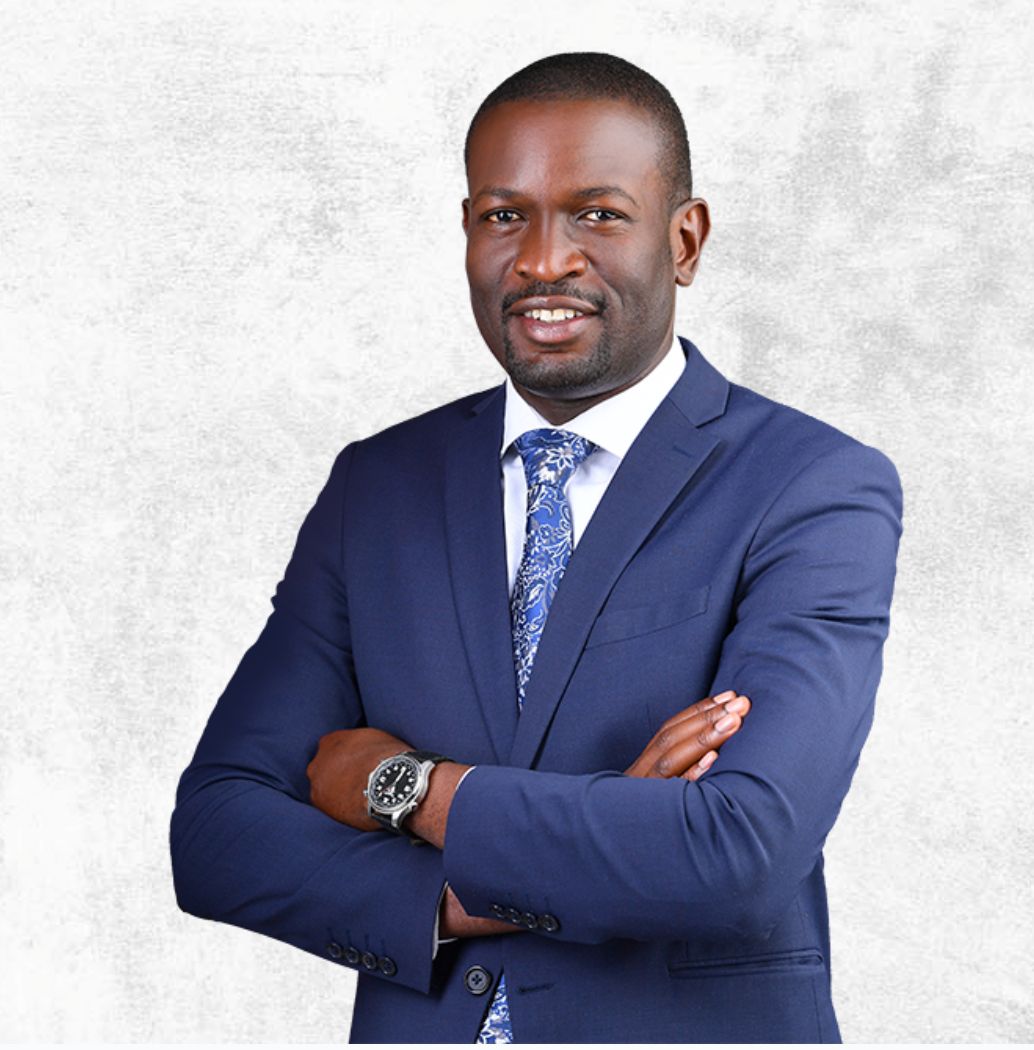
Sifuna is married and has one daughter, according to his official biography. He identifies as a Catholic and has spoken about youth and women's participation in political leadership.
Away from politics and law, he is a football enthusiast who supports AFC Leopards and Chelsea.
But football and family are increasingly secondary to a political question that could define his career.
Can a lawyer from Kakamega who became a Nairobi senator, rose through Raila Odinga's ODM machinery and then broke away from the party build a coalition capable of challenging a sitting president?
For now, Sifuna is positioning himself for that possibility.
The 2027 election will determine whether his transition from opposition organiser to national presidential contender becomes the defining achievement of his political career — or another step in a longer journey.
Related Stories
- Sifuna gets Babu Owino backing as Linda Mwananchi takes 2027 campaign to Meru
- Owalo promises forensic audit of Kenya’s public debt if elected president
- Amnesty demands action as Kenya records 19 disappearances, 69 police killings
Category: Politics · Related Topic: William Ruto
Related Explainer: Fact Check: Did elephants save people during Nepal’s floods?
 Facebook
 Twitter / X
 WhatsApp
 LinkedIn
 Telegram
 Reddit