
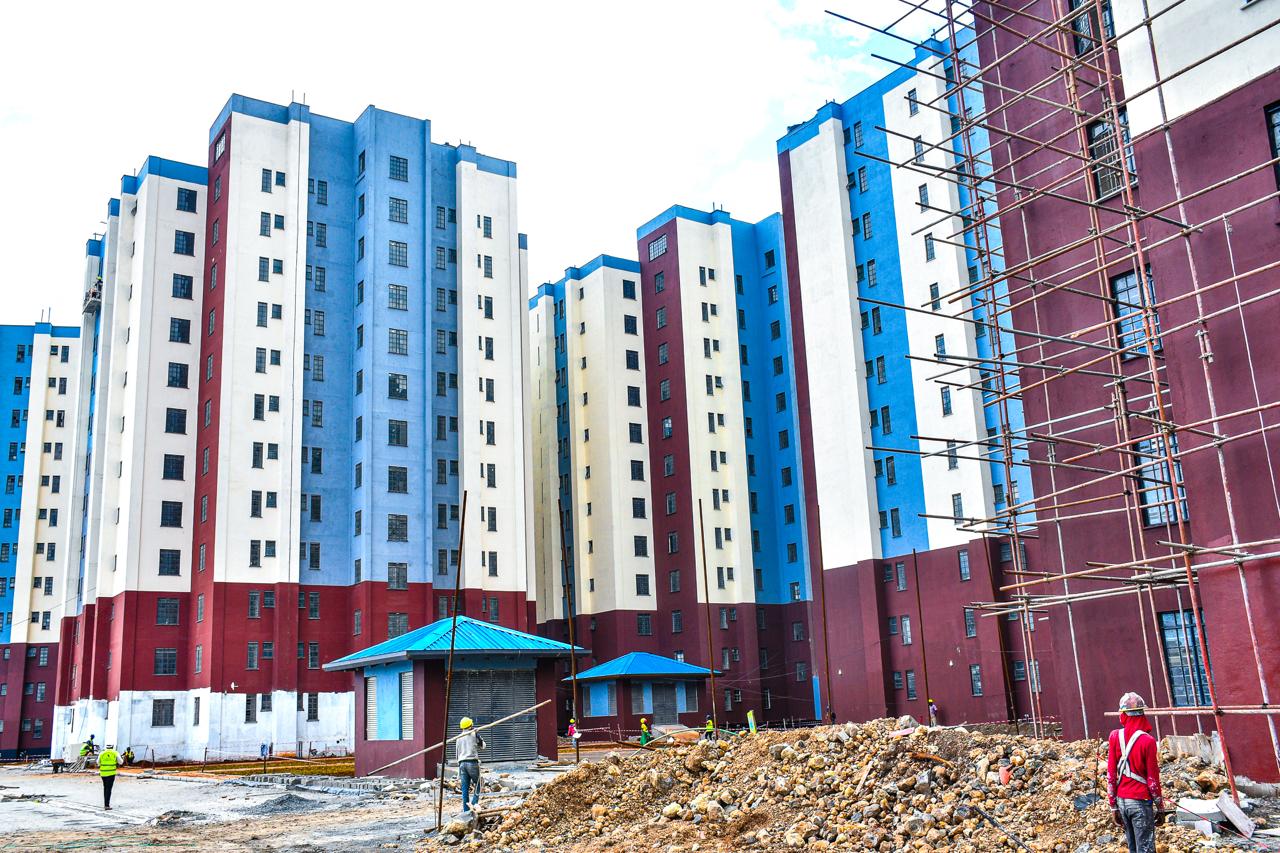
For some Kenyans, the government's affordable housing programme has produced an unexpected message: you earn too much to qualify for the affordable home you want — but not too much to contribute to the scheme.
That apparent contradiction is becoming a source of frustration among applicants.
One applicant seeking a home at the Nyali VOK project in Mombasa says they paid a 5% deposit and continued contributing to the mandatory Affordable Housing Levy.
At the beginning of the application, their payslips showed a gross salary of about KSh550,000 a month. Earlier this year, their salary fell to about KSh300,000.
Then came the rejection.
The applicant was told that the selected housing category was outside their income range and that they should consider other projects.
Their question was simple: if someone earning KSh300,000 cannot qualify for an affordable home, who exactly is the home affordable to?
There is a legal explanation.
Kenya's Affordable Housing Act divides applicants into income categories. Social housing is targeted at people earning below KSh20,000 a month; affordable housing targets those earning between KSh20,000 and KSh149,000; while those earning more than KSh149,000 fall into the affordable middle-class category.
So earning KSh300,000 does not necessarily exclude someone from the wider housing programme.
But it can exclude them from a particular affordable-housing pool.
That distinction is crucial.
It also exposes an uncomfortable gap between the language used to sell the programme and the mechanics of eligibility.
The Affordable Housing Act imposes a levy of 1.5% of an employee's gross salary, matched by another 1.5% from the employer.
For a worker earning KSh300,000, that means KSh4,500 is deducted every month.
The worker contributes.
But whether that worker can access the particular home they want depends on the income pool into which they fall.
And then there is Mukuru
The controversy is not confined to middle-income applicants.
In Mukuru kwa Reuben, residents say they paid deposits towards affordable homes only to later receive messages saying their preferred units were sold out.
One resident told Kenyans.co.ke she had paid KSh80,000 for a bedsitter and was subsequently informed that the units had been sold.
Residents say they were not told who received the homes or what would happen to their applications. Some say they borrowed money to raise the deposits.
These complaints are particularly sensitive because Mukuru residents were told that the housing development would help transform the lives of people living in informal settlements.
President William Ruto handed over thousands of homes in Mukuru in 2025, with the larger project expected to deliver thousands more.
The government says it is now verifying complaints about allocations.
That investigation matters.
Because there is a fundamental difference between saying the allocation system is imperfect and alleging that connected or wealthy Kenyans have taken houses meant for poorer residents.
The latter requires evidence.
At present, there is no independently verified evidence establishing that political connections determined the disputed Mukuru allocations.
But residents' complaints raise an equally important question: is the allocation process transparent enough for applicants to know why they did or did not receive a house?
Does the Constitution guarantee everyone a house?
Not exactly.
Article 43 of Kenya's Constitution gives every person the right to accessible and adequate housing and reasonable standards of sanitation.
Article 27 guarantees equality before the law and equal protection and benefit of the law, and prohibits direct or indirect discrimination by the state on specified grounds. The list includes characteristics such as social origin, disability, religion and birth, although it is not necessarily an exhaustive list.
But the Constitution does not say that every Kenyan is entitled to the same house at the same price.
The government can design targeted programmes to assist people according to need.
Indeed, Article 27 expressly permits affirmative-action measures designed to address disadvantage, provided benefits are based on genuine need.
That makes income-based housing categories potentially defensible.
The bigger constitutional and policy question is therefore not simply whether richer applicants are excluded.
It is whether the system is transparent, rational, fairly administered and genuinely directed at the people most in need.
Who gets the house?
That is where the programme faces its biggest credibility test.
If a low-income Mukuru resident can pay a deposit, receive confirmation and then be told the house is sold, they deserve to know what happened.
If a worker contributing thousands of shillings every month to the housing levy is told they earn too much for an affordable unit, they deserve to know which category they actually qualify for.
And if another applicant receives the home, the allocation criteria should be capable of being explained publicly.
The government should be able to answer straightforward questions:
Who was allocated each unit?
What income category did they fall into?
When was their eligibility verified?
When did the successful applicant pay the deposit?
What happens to deposits paid by unsuccessful applicants?
And perhaps most importantly:
Can applicants independently track where they stand in the allocation process?
The 2025 Affordable Housing Regulations appear to recognise precisely this need. They require housing units to be divided into income-based allocation pools and provide for an electronic allocation system capable of tracking applications, recording timestamps and providing transparency to applicants.
That is potentially significant.
Because transparency is the antidote to the suspicion that connections matter more than need.
The paradox
Kenya's housing programme is trying to solve a genuine crisis.
Millions of people need decent housing.
The government is building thousands of units.
But a programme financed partly through a compulsory levy carries a special burden of public trust.
A Kenyan earning KSh300,000 may reasonably ask why they must contribute to a national housing scheme but cannot access the particular category of home they regard as affordable.
A Mukuru resident who has borrowed KSh80,000 may ask why their house was apparently sold to somebody else.
Neither question proves discrimination.
Neither proves corruption.
But both deserve answers.
Because the danger for Boma Yangu is not simply that some applicants may fail to get houses.
It is that people begin to believe the system is designed for everyone except them.
And once that belief takes hold, even thousands of completed apartments may not be enough to convince Kenyans that the programme is truly affordable, fair — and meant for them.
The question facing the government is therefore bigger than who gets a house.
It is whether every Kenyan who pays into the system can understand the rules — and trust that need, eligibility and transparent allocation, rather than wealth or connections, determine who gets the keys.
You may also like
Category: Business
Related Video: What Dangote’s proposed Lamu oil refinery could mean for East Africa
 Facebook
 Twitter / X
 WhatsApp
 LinkedIn
 Telegram
 Reddit