
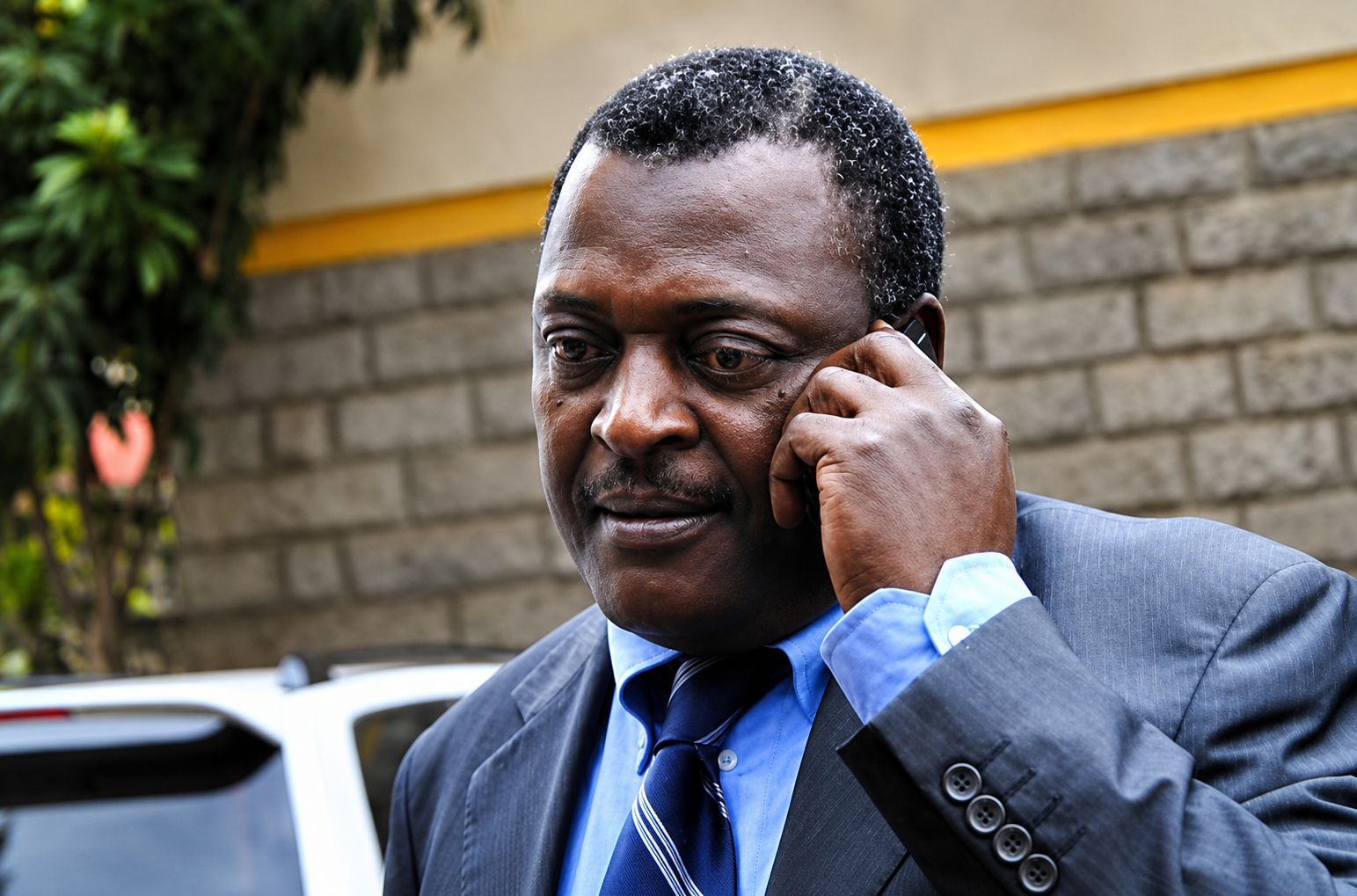
There was something almost theatrical about Cyrus Jirongo.
For decades, his name seemed to travel with money, large sums of it, moving between politics, business, property and the people around him. He was a political operator, businessman, power broker and, at various points, one of the most talked-about figures in Kenya's public life.
Now, several months after his death, the conversation around Jirongo has returned to the subject that followed him for much of his adult life: money.
His family has gone to court to begin the process of administering his estate. And the figures emerging from the succession proceedings offer a striking final chapter to the story of a man who once famously said he was a billionaire by the age of 30.
Cyrus Jirongo: Even in death, the deals, debts and drama follow him
The estate has been reported at about KSh1 billion, while liabilities have been put at roughly KSh3 billion. If those figures are ultimately confirmed by the court, Jirongo's heirs could inherit not a fortune to divide, but a financial puzzle to untangle.
It is, in some ways, a fittingly complicated ending for a life that was rarely straightforward.
The man behind the money
Jirongo first became a national political figure in the early 1990s as the force behind Youth for KANU '92, the movement associated with President Daniel arap Moi's re-election campaign.
The era gave him an enduring place in Kenya's political folklore.
The KSh500 note was introduced during that period and became popularly associated with Jirongo because of the huge amounts of cash reportedly distributed during YK'92 campaigns. His nickname became inseparable from the currency.
But Jirongo insisted that politics did not create his fortune.
He maintained that he had accumulated substantial wealth through business and property and that his involvement in YK'92 ultimately damaged him financially. One account of his life quotes him saying: “YK'92 never made me; it destroyed me financially.”
For a time, however, the distinction hardly mattered.
Jirongo appeared to embody the extraordinary possibilities of Kenya's new political-business class.
He served as Lugari MP from 1997 to 2002, returned to Parliament from 2007 to 2013, and briefly served as Minister for Rural Development in Moi's government in 2002.
His political influence was matched by an appetite for ambitious business ventures.
Land was central to that story.
Billions on paper, battles in court
One of the most consequential disputes involved a vast tract of land in Ruai, Nairobi.
A loan originally taken in the 1990s by companies associated with Jirongo was secured against the property. What began as a loan of about KSh1.1 billion became the subject of decades of litigation and claims involving vastly larger sums as interest accumulated.
By 2020, the Central Bank of Kenya and Jirongo were embroiled in a dispute reported at about KSh20 billion, with the Ruai property at the centre of the battle.
This was the paradox of Jirongo's financial life.
He could appear extraordinarily wealthy while simultaneously being locked in extraordinary debt.
A 2017 report by The Nation described him as being caught between valuable property and creditors, including a dispute over a proposed multi-billion-shilling development in Ruai. The property itself was potentially worth billions, but its title was entangled in the old Postbank loan.
In 2017, a Kenyan court also declared him bankrupt over a debt of about KSh700 million. That decision was later overturned by the High Court in 2018 after Jirongo challenged the process.
The legal battles did not make him disappear.
If anything, they became another part of the Jirongo legend.
The debts that remain
The latest succession proceedings introduce a new cast of creditors.
The figures circulating in connection with the estate include claims attributed to people such as Sam Nyamweya, Francis Atwoli, Ambrose Rachier, George Khaniri, Sundip, Theon Ali and Chege & Group.
The amounts listed in the material provided for this story total about KSh1.577 billion.
That is important because it does not, by itself, explain the reported KSh3 billion debt figure. The difference suggests that there may be other liabilities or claims not included in the list currently circulating.
Those figures should therefore be treated as claims reported in connection with the succession proceedings, rather than debts finally established by a court.
There is, however, historical evidence that some of Jirongo's financial disputes were substantial.
Francis Atwoli, the long-serving trade union leader, was among those who pursued Jirongo over a large debt. In 2017, Atwoli sued over a loan he said Jirongo had taken from him.
For Jirongo, borrowing money was never simply a private matter.
His business dealings frequently intersected with politics, influential individuals, major parcels of land and institutions that themselves became embroiled in Kenya's long-running battles over bad loans.
Then there is the family
Perhaps the most difficult part of the story now belongs not to the creditors, but to the family.
Reports surrounding the succession proceedings describe a large and complex family structure, including three wives and children from outside marriage.
The figures supplied for the family distribution are:
Ann Kanini — three children.
Christine Nyokabi — four children.
Ann Lanoi — six children.
Children outside marriage — 17.
The precise legal rights of each person will be determined through the succession process.
And that process could be lengthy.
Kenya's succession law requires the estate of a deceased person to be properly administered, including the identification of assets and liabilities and settlement of enforceable debts before beneficiaries receive what remains.
That means Jirongo's children and surviving family members may have to wait while lawyers, administrators, creditors and the court establish what their father actually left behind.
The question may not simply be who gets what.
It may first be what is actually there to give.
A final journey
Jirongo's death was itself surrounded by public attention.
He died on 13 December 2025, aged 64, after his vehicle was involved in a collision with a bus at Karai along the Nairobi-Nakuru highway. The Directorate of Criminal Investigations investigated the circumstances surrounding the crash.
The DCI later said its investigations had ruled out foul play, although an inquiry into the circumstances of the accident continued.
His death brought together many of the contradictions that had defined his public life.
Politicians mourned him.
Friends remembered his generosity.
Business associates remembered his ambition.
Critics remembered the controversies.
And now his family and creditors are left to deal with the paperwork.
The Jirongo paradox
There is a temptation, when writing about Jirongo, to reduce his life to the size of his bank statements.
That would miss the man.
He was more complicated than the debts attached to his name, just as he was more complicated than the wealth he displayed.
People who knew him have described a man who could be extraordinarily generous. One remembrance published after his death recalled stories of Jirongo giving money freely to friends, helping people in difficulty and maintaining an expansive family life.
But generosity and financial discipline are not the same thing.
Jirongo's life demonstrated the intoxicating possibilities of political influence and business ambition, and the risks that accompany both.
He built, borrowed, invested, fought, lost, recovered and tried again.
Even when bankruptcy threatened, he continued to pursue large deals.
Even when creditors came calling, he continued to see possibilities in land and business.
Even after political power diminished, the businessman in him remained.
And now, in death, the negotiations continue.
His heirs must establish the value of his property.
His creditors must establish what they are owed.
The courts must determine competing claims.
And his family must confront the most difficult inheritance of all: the difference between wealth owned on paper and wealth that can actually be passed on.
Cyrus Jirongo spent his life moving between those two worlds.
It appears that, even in death, he has not quite left them behind.
Subscribe to our newsletter
Get the latest updates and stories from LiveNow Africa, delivered to your inbox.
Choose your news updates
Select the stories you care about and how often you want them delivered.You may also like
Category: Features
Related Video: Human Ladder Reaches Dangerous Heights as Climbers Keep Going
Related Explainer: Ebola contact tracing: Why the 21-day window matters in Kenya’s response
 Facebook
 Twitter / X
 WhatsApp
 LinkedIn
 Telegram
 Reddit