
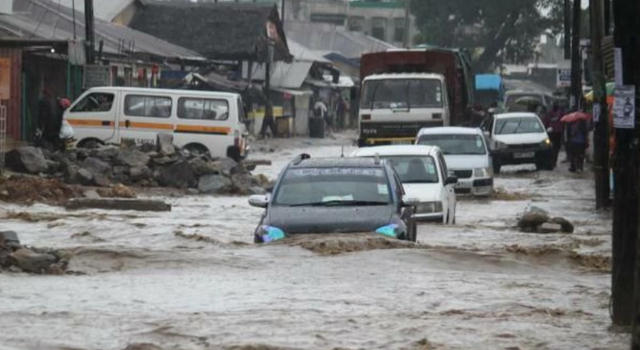
Kenya is stepping up preparations for the October–December rainy season, with the government warning people living in flood and landslide hotspots to be ready to move as above-normal rainfall is expected across much of the country.
The Ministry of Interior and National Administration said on Tuesday that evacuation plans are among seven measures being rolled out ahead of the anticipated rains.
The warning is particularly aimed at people living along rivers and riparian reserves, in low-lying settlements, flood-prone urban areas and locations vulnerable to landslides.
Temporary holding grounds have already been identified for communities that may be displaced by flooding or other rain-related emergencies.

The ministry urged residents to move to safer areas when officially directed to do so.
“We urge those living along river banks, riparian reserves, low-lying areas, areas prone to flash floods and landslides, and other identified high-risk locations to heed evacuation advisories and move to safer ground when directed to do so,” the ministry said.
Why the government is acting now
The preparations come as climate agencies warn that the Greater Horn of Africa is likely to experience wetter-than-normal conditions during the final quarter of 2026.
The regional outlook issued by the IGAD Climate Prediction and Applications Centre (ICPAC) says El Niño has developed over the Pacific and is expected to strengthen during the remainder of the year. The outlook points to an increased likelihood of above-normal rainfall across much of the region, including Kenya.
The World Meteorological Organization has also warned that the combination of wetter conditions and heavy rainfall could increase the risk of flooding, crop losses, damage to infrastructure and disruption of essential services.
Kenya's latest seasonal outlook indicates enhanced rainfall during the October–December season, with prolonged wet spells and isolated storms expected in several areas. Some parts of western Kenya may experience an earlier onset than other regions.
That means the immediate concern is not simply whether it will rain, but where heavy rainfall will occur, how intense it will be and whether drainage systems and infrastructure can cope.
High-risk areas mapped
The government has identified several areas requiring particular attention.
They include riverine and low-lying settlements, the Coast, highland areas prone to landslides, northern and arid and semi-arid counties, as well as urban centres with a history of flooding.
Western Kenya, parts of Nyanza and sections of northern and north-eastern Kenya are among the areas expected to require early preparedness because of differences in rainfall onset.
Recent forecasts have also pointed to the possibility of enhanced rainfall in many counties, although rainfall distribution is expected to vary significantly from one region to another.
Government clears drains, checks roads and bridges
Authorities are also working to reduce the impact of flooding before the rains intensify.
Drainage channels, culverts and other water pathways are being cleared and desilted to improve water flow, particularly in flood-prone urban areas.
Government agencies have also been directed to inspect bridges, roads and other critical infrastructure in vulnerable locations.
The aim is to identify weak points early and carry out preventive work before heavy rainfall puts additional pressure on the infrastructure.
But the government has warned that preparedness measures cannot eliminate the risk.
Heavy rainfall can overwhelm drainage systems, rivers and roads, particularly in settlements that have expanded into floodplains or other vulnerable areas.
The ministry warned that possible consequences include displacement, loss of livelihoods, damage to infrastructure, disruption of essential services and, in severe cases, deaths.
What residents should do
The government is asking Kenyans to take official warnings seriously and avoid waiting until floodwaters arrive before moving to safety.
Residents in vulnerable areas have been urged to monitor official weather and emergency updates, report blocked drainage channels and rising water levels, and alert authorities when roads, bridges or other infrastructure become unsafe.
People living near rivers and in flood-prone settlements are also being advised to identify safer locations in advance and prepare for the possibility of temporary displacement.
The warning comes with memories of recent devastating floods that exposed weaknesses in drainage systems and emergency response in parts of the country.
The government now faces a test of whether early warnings can be translated into early action.
For communities living in high-risk areas, that could make the difference between moving safely before the water rises and being forced to escape after flooding has already begun.
You may also like
Category: News
Related Video: Dolly Parton’s Family Announces Her Passing in Emotional Tribute
Related Explainer: EXPLAINER: Why Kenya’s aviation workers are striking — and what travellers need to know
About the Author
Maureen Onyango is a journalist passionate about storytelling, life coaching and spiritual lessons. She studied at the Kenya Institute of Management and enjoys telling stories that inform, inspire and empower communities.
 Facebook
 Twitter / X
 WhatsApp
 LinkedIn
 Telegram
 Reddit